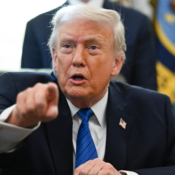
Canada and the US are set to resolve the $4.7 billion dispute regarding the Detroit-Windsor bridge following Trump’s threats to impede its opening.
Canadian Prime Minister Mark Carney announced on Tuesday that Canada and the United States are anticipated to resolve their disagreement regarding the $4.7 billion Gordie Howe International Bridge, which connects Detroit and Windsor, Ontario.
In a conversation with reporters, Carney affirmed that he had discussions with US President Donald Trump earlier in the day regarding various topics, including the controversial bridge project.
“The situation will be resolved,” Carney stated, refraining from offering additional information regarding the timeline or specifics of the resolution.
The conflict intensified when Trump warned of obstructing the bridge’s opening, referencing various trade-related issues with Canada. These encompassed Canada’s funding of the bridge, its decision not to stock specific US alcoholic beverages on Canadian store shelves, tariffs on dairy products, and the continuous trade discussions with China.
Trump suggested that the bridge would be entirely owned by Canada, a statement that Carney promptly clarified.
“I clarified that Canada, naturally, funded the construction of the bridge, amounting to over $4 billion.” “The ownership is shared between the state of Michigan and the government of Canada,” Carney stated.
The bridge, fully funded by Canada following the refusal of US authorities to participate, is expected to open in the upcoming months. The construction expenses will be recovered via tolls over the upcoming 30 years.
Business leaders in Michigan have cautioned about the possible economic consequences if the project faces delays or is obstructed. The Detroit Regional Chamber characterized the bridge as “the most significant infrastructure project in the state and region of this generation.”
“Any attempt to obstruct this project would result in significant repercussions for the region, state, and nation,” the Chamber stated.
The project originated in 2012 when Michigan’s then-Governor Rick Snyder accepted Canada’s proposal to cover most of the bridge expenses, circumventing the state legislature by utilizing executive authority. Construction commenced six years later, in 2018.
On January 30, the US Department of Homeland Security officially designated the bridge as a port of entry, providing a significant enhancement to the project. Officials indicate that the bridge is expected to save travelers approximately $12.7 million each year by alleviating congestion, improving traffic flows, and shortening travel times.