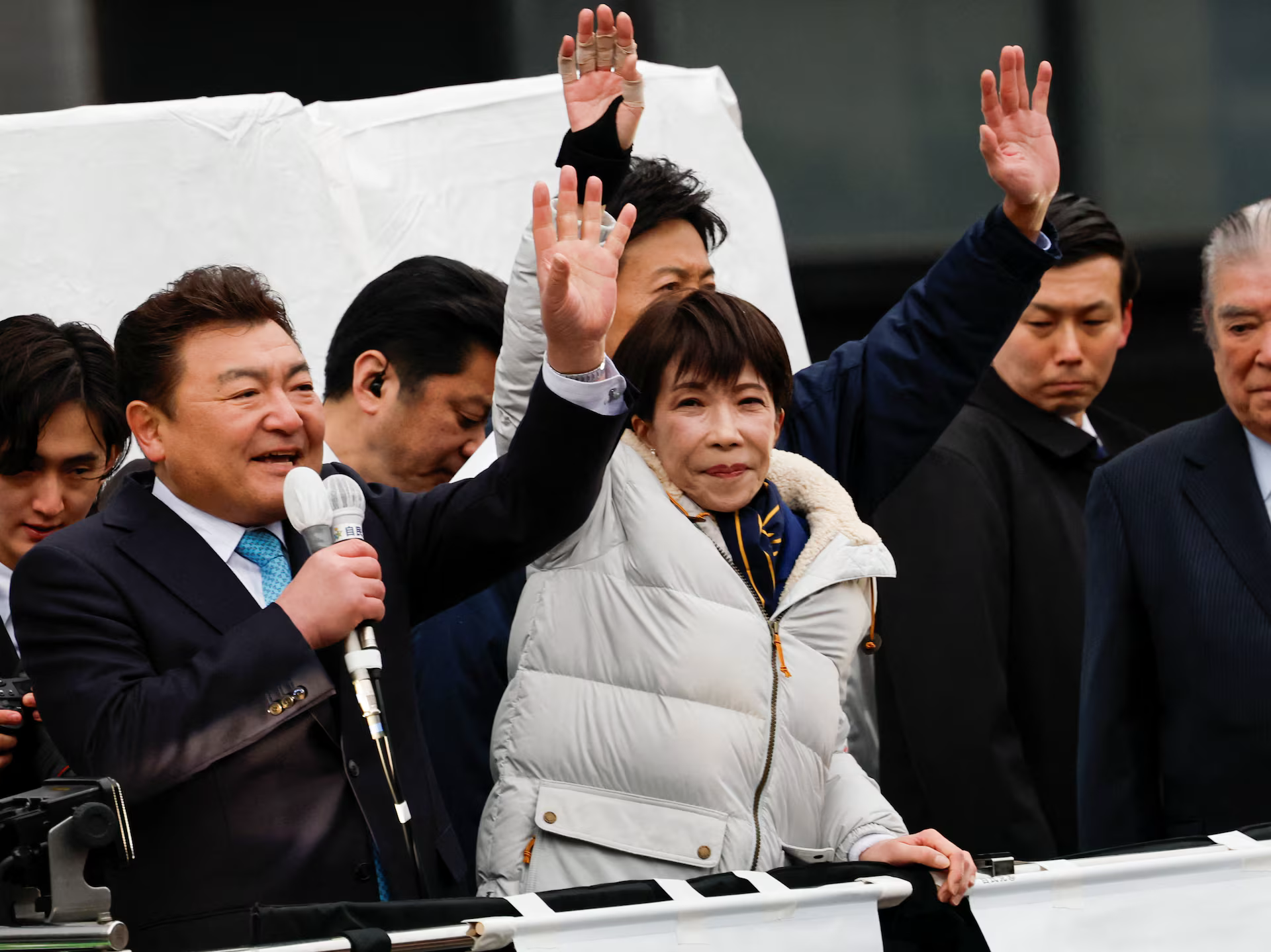
Takaichi, known as Japan’s ‘Iron Lady,’ achieves a groundbreaking victory in the election
Japanese Prime Minister Sanae Takaichi’s coalition achieved a remarkable election victory on Sunday, setting the stage for anticipated tax cuts that have unsettled financial markets and increased military spending focused on countering China.
Takaichi, Japan’s first female leader and a conservative inspired by Britain’s “Iron Lady” Margaret Thatcher, achieved a remarkable outcome by securing 316 of the 465 seats in the lower house of parliament for her Liberal Democratic Party, marking its best result to date.
Takaichi, in coalition with the Japan Innovation Party, known as Ishin, holds 352 seats, achieving a supermajority of two-thirds. This strengthens her legislative agenda, allowing her to override the upper chamber, where she lacks a majority.
WINTER ELECTION BRINGS BLIZZARD OF VOTES “This election involved significant policy changes — particularly a notable shift in economic and fiscal policy, along with an enhancement of security policy,” Takaichi stated in a television interview as the results came in. “These are policies that have faced considerable opposition … If we have garnered the public’s support, then we must address these issues with all our strength.”
U.S. President Donald Trump extended his congratulations to Takaichi on her achievement, expressing his hopes for her “great success in passing your Conservative, Peace Through Strength agenda” through a social media post. “Sanae’s courageous and astute choice to call for an election yielded significant rewards,” remarked Trump, who is set to host Takaichi at the White House next month.
Takaichi, 64, announced the unusual winter snap election to take advantage of her strong personal approval ratings following her rise to lead the long-ruling LDP late last year.
Voters are attracted to her direct, diligent persona; however, her nationalistic tendencies and focus on security have created tension with China’s influential presence, and her tax cut pledges have unsettled financial markets.
Residents made their way through the snow to cast their ballots, as record snowfall in certain areas disrupted traffic and led to the early closure of some polling stations. This marked just the third postwar election conducted in February, as elections are usually scheduled for the milder months.
Outside a polling station in the town of Uonuma in the mountainous Niigata prefecture, teacher Kazushige Cho, 54, faced below-freezing temperatures and deep snow to cast his vote for Takaichi’s Liberal Democratic Party. “It feels like she’s creating a sense of direction – like the whole country is pulling together and moving forward,” Cho expressed.
However, Takaichi’s election pledge to halt an 8% sales tax on food to assist households facing increasing prices has unsettled investors worried about how the country, which has the highest debt burden among advanced economies, will finance the initiative.
Takaichi stated on Sunday that she would expedite the evaluation of the sales tax reduction while prioritizing fiscal sustainability. “Her proposals for the reduction in the consumption tax raise significant questions regarding funding and the methods she will employ to ensure the numbers align,” remarked Chris Scicluna, head of research at Daiwa Capital Markets Europe in London.
DRIVEN BY A YOUTH-DRIVEN FRENZY
Yoshinobu Tsutsui, the head of Japan’s leading business lobby Keidanren, expressed his approval of Takaichi’s victory, viewing it as a means to restore political stability. He stated, “Japan’s economy is currently at a pivotal point for attaining sustainable and robust growth.”
The LDP, which has governed nearly the entirety of Japan’s postwar era, had relinquished control of both houses in elections during the last 15 months under Takaichi’s predecessor, Shigeru Ishiba.
Takaichi has successfully revitalized the party’s prospects by resonating with younger voters.
She has even ignited a “sanakatsu” phenomenon, which can be roughly translated as “Sanae-mania”. Her handbag and the pink pen she uses to jot down notes in parliament have garnered significant attention.
China, on the other hand, is not supportive.
Weeks after assuming office, Takaichi ignited the most significant conflict with Beijing in more than ten years by openly detailing how Tokyo could react to a Chinese assault on Taiwan, the democratic island that China asserts as its own.
China implemented various countermeasures, such as advising its citizens against traveling to Japan.
Taiwan President Lai Ching-te was among the first foreign leaders to extend his congratulations to Takaichi, expressing his hope that her victory would “bring a more prosperous and secure future for Japan and its partners in the region”.
Takaichi’s robust mandate may expedite her initiatives to enhance Japan’s defenses, potentially exacerbating tensions with Beijing, which views her actions as an attempt to resurrect the nation’s militaristic history.
On Sunday evening, Japan’s Defense Minister Shinjiro Koizumi informed TV stations of his intention to advance policies aimed at bolstering Japan’s defense, all while seeking to maintain dialogue with China.
“Beijing will not welcome Takaichi’s victory,” stated David Boling, principal at the Asia Group, a firm that provides counsel to companies on geopolitical risk.
“China now confronts the undeniable truth that she is firmly established — and that attempts to isolate her entirely have proven unsuccessful.”