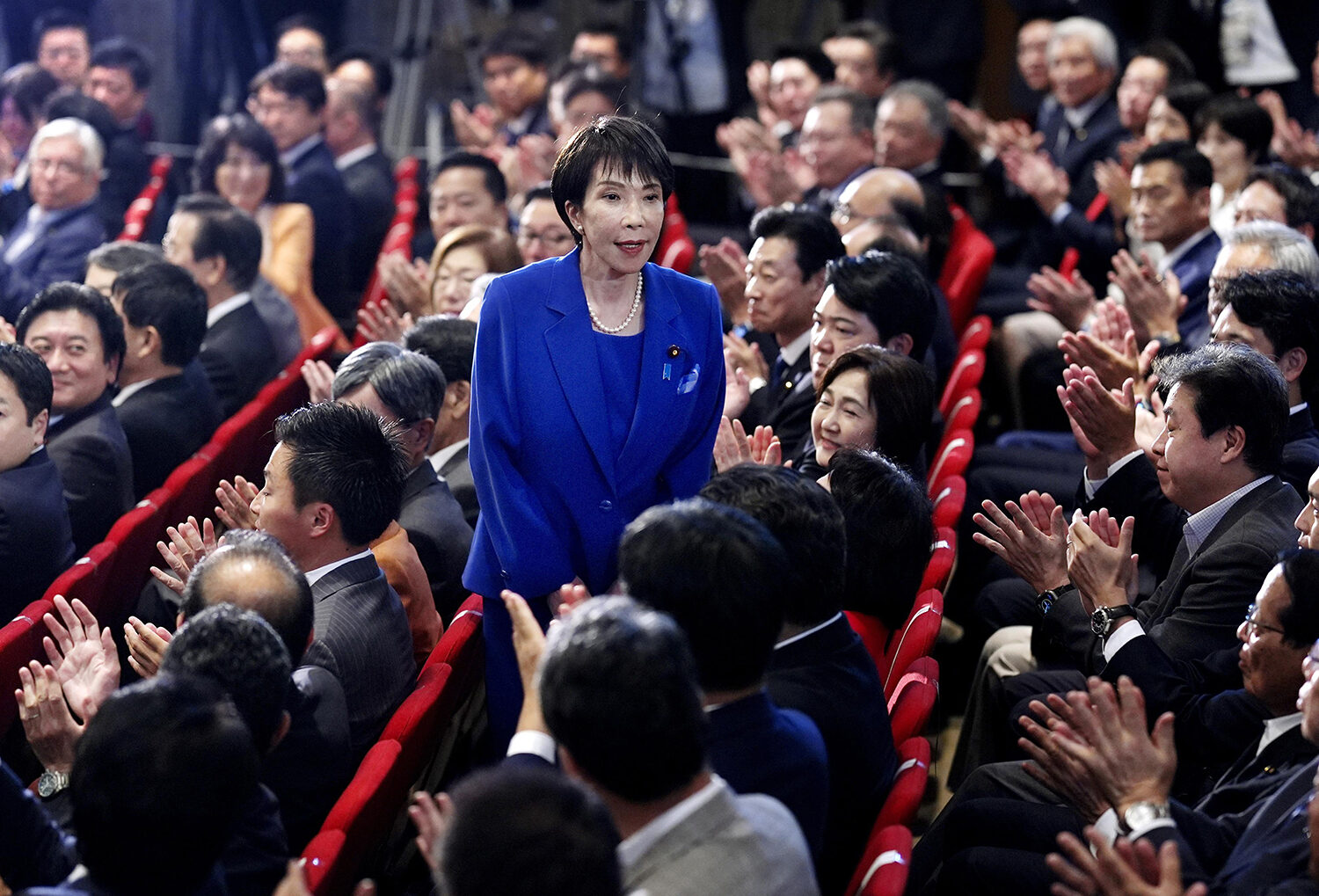
Tokyo expects that voters would give PM Takaichi more power to oppose China
China might reconsider its increasing pressure strategy on Japanese Prime Minister Sanae Takaichi should she achieve a significant win in the snap election scheduled for February 8, according to insights from current and former Japanese officials and political analysts.
Weeks after assuming office last year, Takaichi ignited the most significant diplomatic conflict with Beijing in more than ten years by openly detailing how Tokyo could react to a Chinese assault on Taiwan, the self-governing island that China claims.
Beijing requested that she withdraw her comments, which she has not done, and subsequently implemented a range of retaliatory actions that are beginning to impact the world’s fourth largest economy. “China’s initial strategy was likely aimed at destabilizing the Takaichi government,” noted Kazuhisa Shimada, a former vice minister of defence. “This election holds significant importance… a fragile government will not be regarded seriously.”
Japan’s inaugural female leader aims to leverage her strong personal approval ratings, which remain largely unaffected by the dispute with China, to strengthen her coalition’s slim majority in parliament.
A poll released on Thursday indicated that she might be on track to achieve that, although analysts have characterized the ballot as Japan’s most uncertain in years.
A significant victory will convey to Beijing that its assaults have not undermined her domestically, a high-ranking Japanese government official stated, requesting anonymity due to the sensitive nature of the issue.
The economic restrictions imposed by China on one of its leading trading partners may have unintended consequences, while efforts to portray Takaichi as a perilous ideologue resurrecting Japan’s militaristic history are not resonating on the global stage, the official noted.
He stated that those factors will ultimately compel China to re-establish engagement with Japan.
Up to this point, Beijing has demonstrated no indications of retreating.
The foreign ministry of China chose not to respond to particular inquiries regarding this report.
The statement referenced comments made by spokesperson Guo Jiakun during a press conference on January 27, where he indicated that Takaichi had “severely threatened” the “political foundation of China-Japan relations”.
A Chinese official, who requested to remain unnamed, recognized that the election might provide Takaichi with immediate political advantages; however, they cautioned that the Japanese populace would eventually perceive the diplomatic and economic repercussions of antagonizing China.
Takaichi, who has indicated that she will step down if her coalition fails to maintain its majority, did not reply to a request for comment sent to her office.
ADDRESSING COERCION
Although domestic cost-of-living concerns have taken center stage in the campaign, the looming tensions with China pose a significant threat to Japan’s fragile economic growth, prompting the government to intensify its security measures.
On January 19, Takaichi revealed the election decision, highlighting concerns over Chinese military exercises near Taiwan and instances of “economic coercion”.
China’s response to her previous comments on Taiwan has involved a state-directed boycott of travel to Japan, resulting in a nearly 50% decrease in the number of Chinese visitors in December.
According to Chinese state media, Beijing is considering restrictions on the export of rare earths and critical minerals. According to analysts at Daiwa Institute of Research, implementing such a ban could reduce Japan’s GDP by as much as 3%, equating to approximately $117 billion, and potentially lead to the loss of 2 million jobs.
A Reuters survey conducted this month revealed that over two-thirds of Japanese companies anticipate that strained relations with China will have an economic impact. Additionally, an Asahi newspaper survey indicated that 60% of voters are worried about the economic consequences, an increase from 53% in December.
Paul Midford, a professor of international studies at Meiji Gakuin University in Yokohama, suggested that economic anxiety might have influenced Takaichi’s choice to call the election at this time. The subsequent vote for the lower house is scheduled for late 2028.
IN THE FOOTSTEPS OF HER MENTOR
Takaichi’s choice to seek to strengthen her power might also be shaped by recollections of her mentor, former premier Shinzo Abe, who regained power in 2012 amid a previous phase of heightened tension with China, noted Shimada, the former vice minister. “Abe consistently won elections and established a remarkably strong political foundation,” he remarked. “After that occurred, China was compelled to engage with the Abe administration.”
Abe managed a notable upper house election victory in 2013 and engaged with Chinese President Xi Jinping in late 2014, shortly before his ruling coalition secured another significant majority in a lower house election.
According to Jeremy Chan, a senior analyst for Northeast Asia at the political risk consultancy Eurasia Group, a crucial measure of Takaichi’s success will be her party’s ability to secure a majority independently.
That would necessitate an additional 35 seats on top of the 198 it currently holds in the 465-seat lower house.
“Should she succeed in this endeavor, it would indicate to Beijing that her tenure as prime minister is likely to continue for several years, suggesting that China’s pressure campaign against her has ultimately failed,” remarked Chan, a former U.S. diplomat with experience in both China and Japan.
“On the other hand, if Takaichi secures only a narrow victory, it is probable that Beijing will escalate its coercive measures against Japan.”