Zelensky: 90% of the peace deal between Ukraine and Russia is ready
Volodymyr Zelensky asserts that the ultimate conditions will determine the future of Ukraine and Europe, while Russia raises concerns about the current peace negotiations.
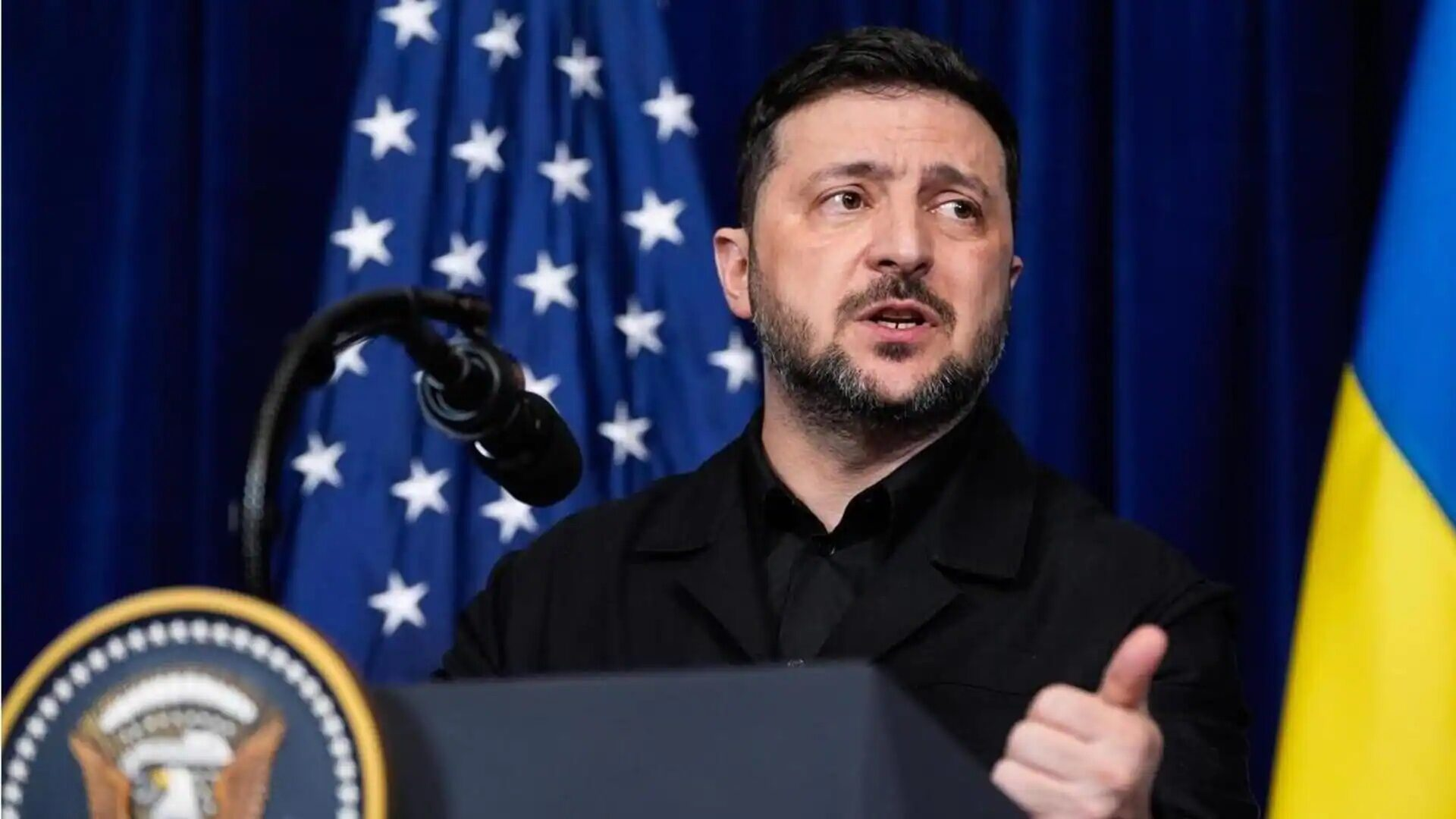
Ukrainian President Volodymyr Zelensky stated that a peace agreement to conclude the war with Russia is “90 per cent ready” during a New Year address that primarily emphasized the resistance against Moscow’s full-scale invasion.
Zelensky stated that the final 10 percent of the agreement to conclude nearly four years of conflict would “determine the fate of peace, the fate of Ukraine and Europe,” according to a report by the BBC.
In his New Year address, Russian President Vladimir Putin expressed confidence in his troops, stating, “we believe in you and our victory.”
On Wednesday, Moscow presented what it claimed to be evidence of Ukraine employing drones to strike Putin’s private residence on Lake Valdai in north-west Russia, a charge that Kyiv has firmly rejected.
A map was included, purportedly indicating that the drones were launched from the Sumy and Chernihiv regions of Ukraine, along with a video depicting a downed drone resting in a snowy woodland. A serviceman beside the wreckage asserted that it was a Ukrainian Chaklun drone.
The BBC reported that it was unable to verify the footage, and determining the location of where it was filmed is not feasible.
The Kremlin stated that Russia would reassess its stance on the current peace negotiations due to the reported incident. On Wednesday, Kaja Kallas, the EU’s leading diplomat, characterized the Russian claims as a “deliberate distraction” aimed at undermining the peace process.
During his 20-minute address to the nation, Zelensky stated that Ukraine did not seek peace “at any cost,” emphasizing that “we want the end of the war – not the end of Ukraine.”
He stated that a Ukrainian withdrawal from the eastern Donbas region signifies “everything will be over,” alluding to Russia’s maximalist demand for full control of the industrial area in any peace agreement.
Moscow presently holds approximately 75 percent of the Donetsk region, along with around 99 percent of the adjacent Luhansk. The two areas are referred to together as Donbas.
The situation has posed a significant challenge during negotiations, as Russia has remained steadfast in its pursuit of complete control over Donbas.
Zelensky expressed gratitude to the leaders who have backed Ukraine, emphasizing that “intentions must become security guarantees, and therefore – be ratified.”
After discussions between Zelensky and his US counterpart Donald Trump in Florida earlier this week, the Ukrainian leader stated that Washington had provided security guarantees for a duration of 15 years; however, the timeline for their implementation remains uncertain.
“Signatures on fragile agreements merely exacerbate conflict,” Zelensky stated in his address. “The world must either put an end to Russia’s war, or risk being pulled into it,” he stated.
In contrast, Putin’s New Year address was notably more concise. In discussing the conflict in Ukraine, which Moscow refers to as a “special military operation,” Putin stated: “We aim to provide joy and warmth through our support for those in need and, of course, to stand by our heroes – the participants in the special military operation – in both word and deed.”
In his New Year message, North Korean leader Kim Jong Un commended the “invincible alliance” between Pyongyang and Moscow, while also lauding the soldiers engaged in battles in “alien lands.”
According to South Korean officials, North Korea has dispatched thousands of troops to support Russia in its invasion, in addition to providing missiles and long-range weapons. According to estimates from South Korea, at least 600 of those soldiers have lost their lives.
French President Emmanuel Macron stated that European nations and allies scheduled to convene in Paris on 6 January “will make concrete commitments to protect Ukraine and ensure a just and lasting peace on our European continent.”
On Wednesday, discussions took place between Trump’s advisers, Zelensky, and national security advisers from the UK, France, and Germany regarding the resolution of the war in Ukraine.
US special envoy Steve Witkoff stated that they talked about “enhancing security guarantees and creating effective deconfliction mechanisms to help bring an end to the war and prevent its resurgence.”
However, any agreement will ultimately require Russian approval, which appears to be lacking – and the reported drone incident over Putin’s residence may have pushed this even further away.