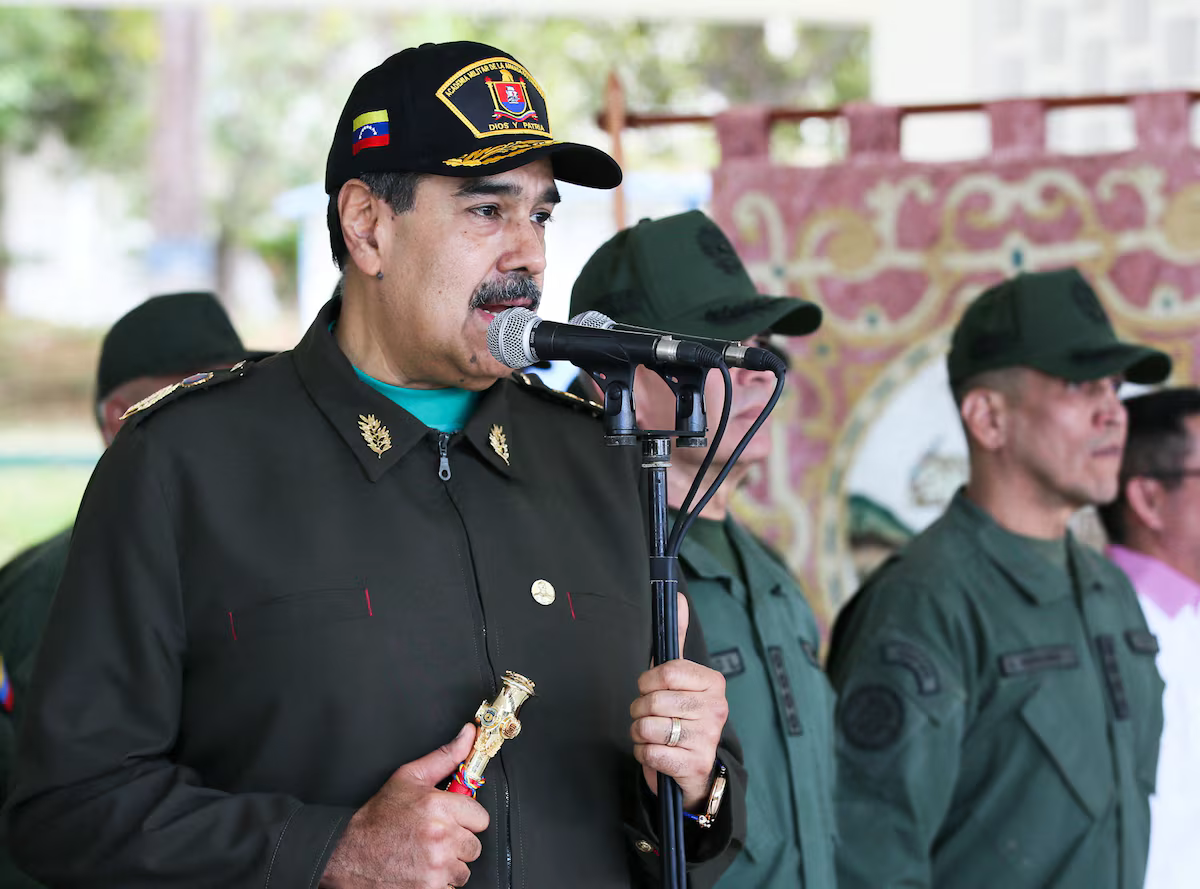
In a New Year’s interview, Venezuelan President Nicolas Maduro stated that his nation is open to receiving American investment in its oil industry, working together to combat drug trafficking, and engaging in meaningful negotiations with the United States.
Maduro stated, “We must start to speak seriously, with the facts in hand,” during his yearly interview with a Spanish journalist. The interview was first published in the Mexican newspaper La Jornada and shown on Venezuelan state television on New Year’s Day.
“We are prepared if they wish to discuss a deal to combat drug trafficking in a serious manner.Venezuela is willing to accept American investments, such as those made by Chevron, whenever, wherever, and however they choose to produce their oil.
The remarks are in line with Maduro’s earlier declarations that he is open to speaking with Donald Trump, despite the fact that the president of the United States has increased pressure on Maduro through more than two dozen strikes on ships suspected of engaging in drug trafficking in the Caribbean Sea and Pacific Ocean, increased sanctions, and a heightened U.S. military presence in the area.
According to Maduro, the pressure is an attempt to seize control of Venezuela’s abundant natural riches.
“What is the United States trying to achieve? In the interview, Maduro stated, “They’ve said it.” “To grab all the oil of Venezuela…the gold, the rare earths.”
ASSISTING WITH DRUG TRAFFICKING
This week, Trump claimed that American soldiers had attacked a drug-loading dock in Venezuela, although he did not specify the location. In the interview, Maduro did not confirm the attack, but he did say he might talk about it in the days ahead.
“What I can say is that our national defensive system, which combines popular, military and police forces, has guaranteed and will guarantee territorial integrity (and) the peace of the country,” Maduro stated.
The incident took place this week on a narrow spit of coast on the La Guajira peninsula, according to a blog affiliated with Venezuela’s ruling party. Reuters was unable to confirm the report on its own.
Maduro has consistently refuted American charges that he is the head of a narco-state. He claimed that Venezuela has “the perfect model” to fight drug trafficking and that cocaine transported via the region comes from neighboring Colombia.
Exports of oil are halved by sanctions.
Venezuela’s typical rate of oil exports has been cut in half due to U.S. sanctions and recent arrests of oil ships; however, U.S. corporation Chevron, which has a special permission from the US to export Venezuelan oil, has continued to do so.
The decline in oil exports is expected to result in a decline in foreign exchange flows to Venezuela’s private sector, which would increase inflation and exacerbate the country’s already challenging economic situation for its citizens. Over 2025, the bolivar lost 83% of its value.
Despite being at extremely distressed levels, the price of Venezuela’s defaulted foreign bonds has more than doubled since Trump took office in January 2025, thanks to optimism about a change of administration.