As protests against economic hardship deepen, deadly skirmishes break out around Iran, resulting in many fatalities amid escalating national turmoil.
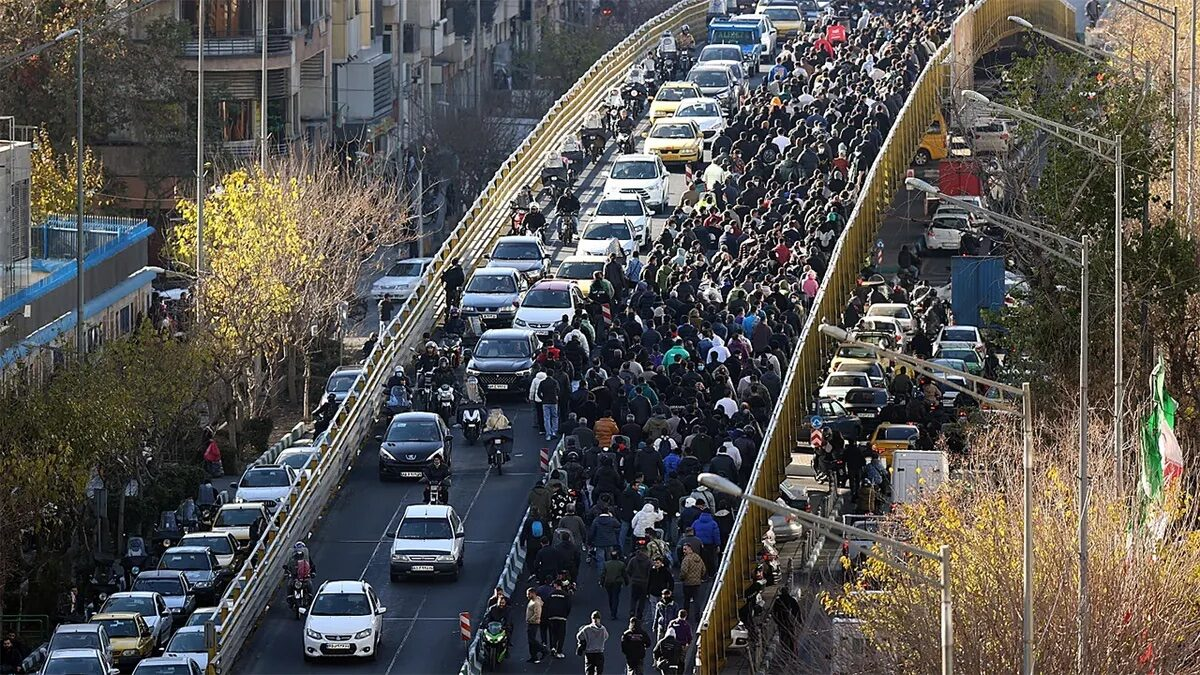
As statewide protests over skyrocketing living expenses enter their fifth day, deadly clashes between demonstrators and security forces have escalated throughout Iran, with numerous fatalities recorded in several western and southern cities.
At least two people were murdered during clashes in the southwest Iranian city of Lordegan, according to reports from the semi-official Fars news agency and the Kurdish human rights organization Hengaw. However, Fars did not specify if the victims were protestors or security forces. Fars also said that three people died in Azna and another in Kouhdasht, both of which are in western Iran.
Hengaw named Ahmad Jalil and Sajjad Valamanesh as the two demonstrators who were slain in Lordegan. Independent confirmation of the deaths has not been obtained.
Videos that went viral on social media on Thursday showed burning cars and clashes between protesters and police officers while cries against Iran’s clerical establishment reverberated in multiple towns. Protesters have expressed support for reinstalling the monarchy, while others have demanded an end to the supreme leader’s rule.
Protests were seen on verified video in southern Fars province’s Marvdasht, Lordegan, and Tehran. As the turmoil grew, there were rumors of fights between the Basij militia and Iran’s Revolutionary Guards. According to state television, one member of the security force was killed in Kouhdasht on Wednesday night. On the other hand, protesters said the victim was a protester who was shot by security.
At least 13 police officers and Basij members were hurt by stones thrown during fighting in the area, according to state media.
On Wednesday, authorities formally cited energy conservation owing to cold weather as the reason for ordering the closure of public institutions, including schools and universities across the country. However, the action was perceived by many Iranians as an effort to quell the demonstrations.
A steep decline in the value of the national currency relative to the US dollar infuriated Tehrani retailers, who started the protests. They subsequently expanded to universities and other urban areas, developing into more extensive demonstrations against Iran’s political authorities.
Though on a smaller scale, the unrest is the most extensive protest since the 2022 rallies that were triggered by Mahsa Amini’s death in detention. Since then, security has been increased in important parts of Tehran where the protests initially broke out.
Though Prosecutor General Muhammad Movahedi-Azad cautioned that any attempt to destabilize the nation would be met with a “decisive response,” President Masoud Pezeshkian stated that his administration is willing to hear the demonstrators’ “legitimate demands.”