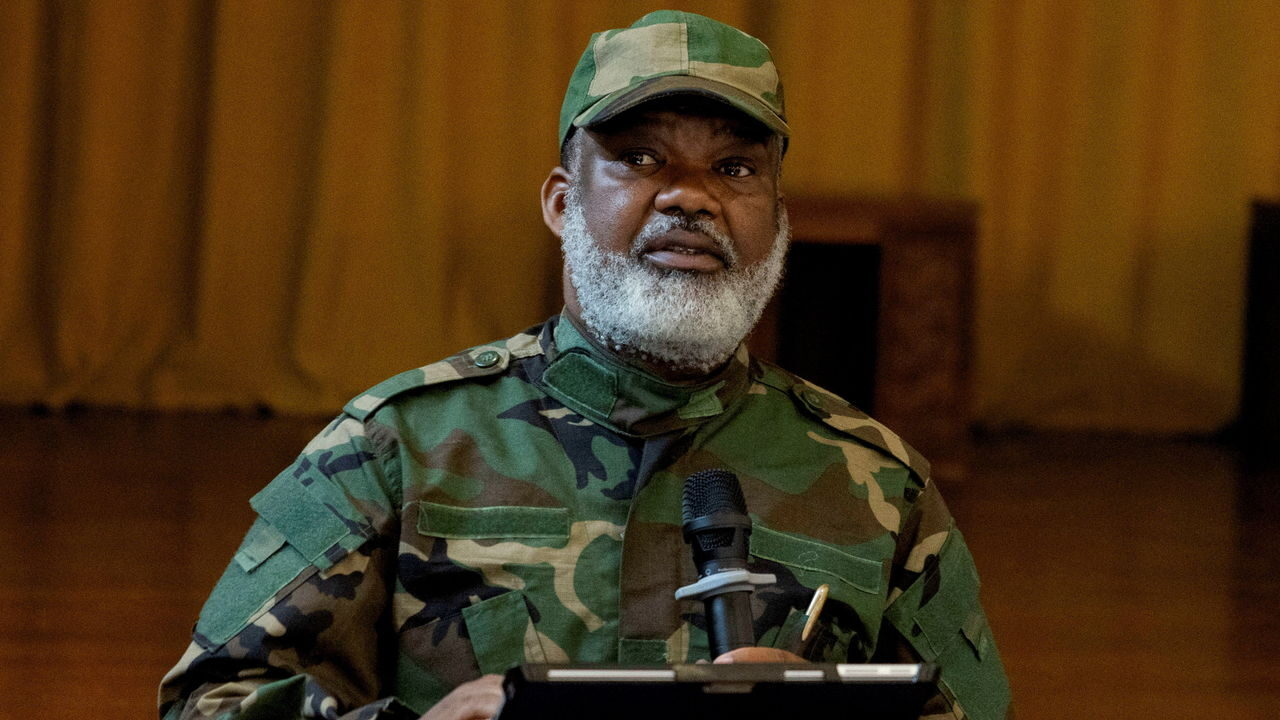
The Kinshasa administration has come under fire from the leader of the AFC/M23 rebel movement in eastern Democratic Republic of the Congo for encouraging ethnic violence against Tutsi communities.
Corneille Nangaa, whose movement has taken control of large portions of North and South Kivu province, claimed in his year-end speech that President Tshisekedi’s administration has implemented a divisive policy that marginalizes a portion of the Congolese populace.
“Hate speech has now become a doctrine of the state,” Nangaa declared on Wednesday, December 31.
“It is adopted, carried, and conveyed by the highest political and military officials of the state; it is no longer marginal or underground. Spots on the national public channel that promote ethnic hatred and bigotry are deliberately preparing people’s brains for the irreversible.”
Less than a week after the Congolese armed forces spokesperson (FARDC) made anti-Tutsi remarks that sparked widespread outrage, the election chief-turned-rebel leader made this statement. In the run-up to the Rwandan Genocide against the Tutsi in 1994, the military official rehashed stories.
“The objective is obvious: they are our Kinyarwanda-speaking brethren, specifically the Tutsi. Swahili-speaking Congolese have been included,” he stated.
“These compatriots, labeled enemies from within because of their features, their language, or their ethnicity, have been savagely massacred, sometimes even cannibalized, under the indifferent, or even complicit, gaze of a silent National and International Community.”
Violation of the ceasefire
Nangaa also noted that the government has not fulfilled its obligations under agreements reached in 2025.
“The signed obligations have been blatantly broken since not a single prisoner has been released to date. Furthermore, the ceasefire is being deliberately undermined by frequent and systematic violations, which is slowly turning a tenuous truce into an open, widely enforced war,” he added.
Important developments in the conflict between the governing coalition and the AFC/M23 insurgents occurred during the past year.
The provincial capitals of North and South Kivu, Goma and Bukavu, respectively, were captured by the rebels in January and February.
Thanks to Qatar’s mediation, the two sides had their first direct peace negotiations in April. Despite the agreements and ceasefire violations, the conflict has persisted on the ground.