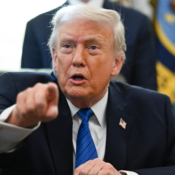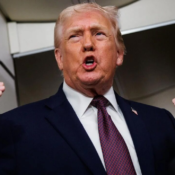
Trump threatens Iran with further US military strikes during talks with Netanyahu in Florida
Trump warns of more powerful US strikes during Netanyahu’s visit to Florida and warns Iran against reviving its nuclear program.
When he met with Israeli Prime Minister Benjamin Netanyahu in Florida for high-level talks, U.S. President Donald Trump threatened to conduct further military attacks against Iran if Tehran tried to develop its nuclear defenses.
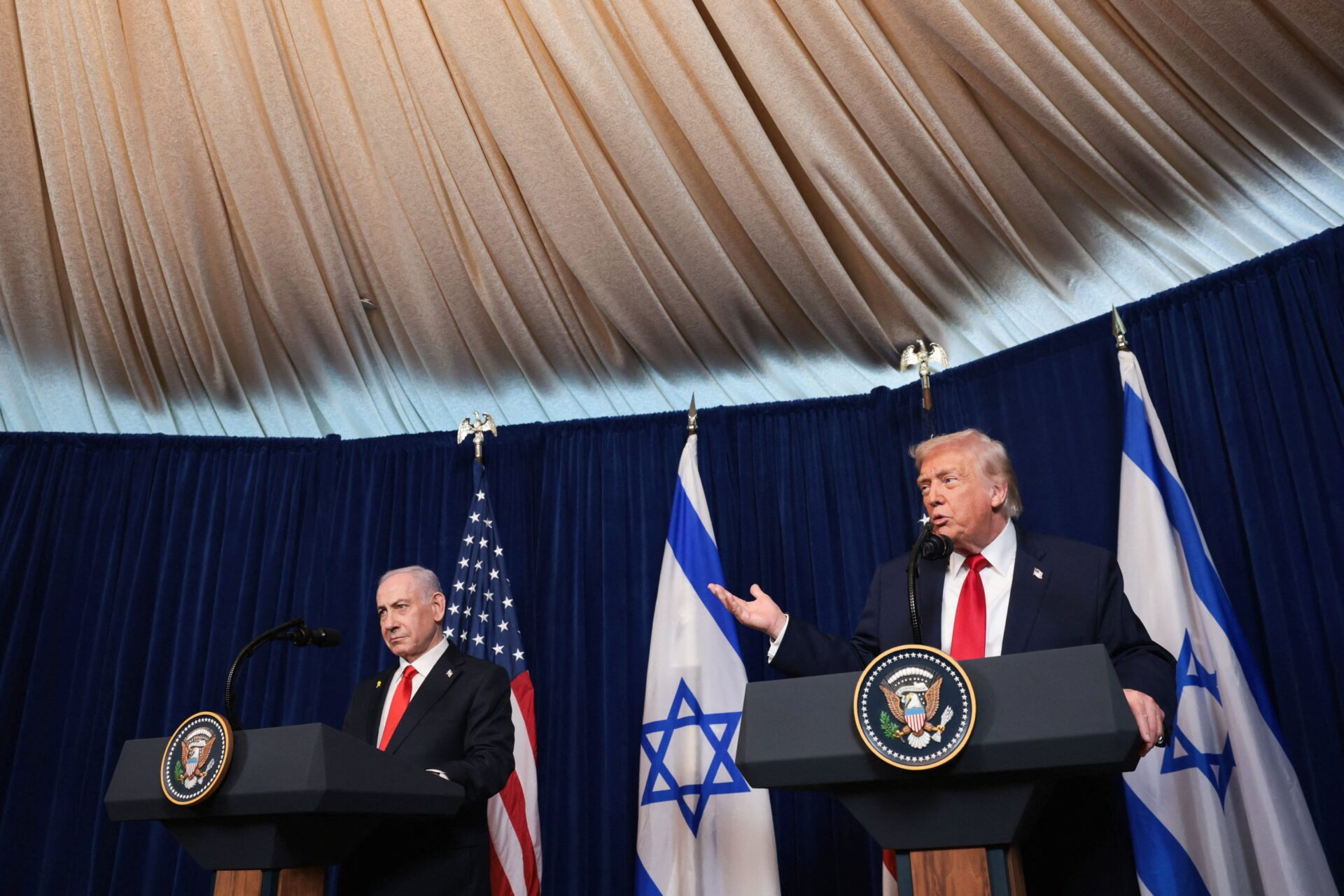
Only months after US strikes attacked Iran’s nuclear enrichment facilities, Trump made the comments on Monday at his Mar-a-Lago residence in Palm Beach, where he hosted Netanyahu for extensive talks centered on Iran, the Gaza ceasefire, and regional security.
Despite prior US assurances that the facilities had been destroyed, Trump told reporters that intelligence reports revealed Iran may be trying to continue nuclear-related activity outside of previously targeted areas.
Trump told reporters assembled at his Mar-a-Lago home, “I’ve heard that Iran is attempting to re-establish itself.” In the event that they are, we will have to take them down. We’ll defeat them. We will completely destroy them. Hopefully, though, that isn’t taking place.
After US strikes in June, the president had earlier declared that Iran’s nuclear capabilities were “completely and fully obliterated,” but he raised the prospect of further action if Tehran continued its reconstruction efforts.
Following their discussion, Trump and Netanyahu made a joint appearance when he restated his warning and indicated that the US was ready to take strong measures if Iran’s activities were verified.
Trump claimed that if it is proven, “they are aware of the consequences, and they will be very powerful, possibly more powerful than the last time.”
Iran has maintained that it is still open to talks with Western nations about its nuclear program and has continuously denied starting uranium enrichment at any location. Requests for response to Trump’s most recent warning were not immediately answered by the Iranian representation to the UN.
Tensions between the old rivals have increased as Israeli authorities have been cited in local media as expressing concern that Iran may also be replenishing its supply of long-range missiles capable of striking Israel.
Trump’s warning coincides with his administration’s efforts to keep the US-brokered truce between Israel and Hamas moving forward. The ceasefire is in danger of stagnating before moving on to its more difficult second phase.
Trump, standing next to Netanyahu, stated that he wanted the next phase of the deal to get forward, but he emphasized a crucial requirement.
Trump went on to say, “But Hamas must be disarmed.”
Trump has supported the truce, which has mainly maintained since its initial phase started in October, only days after the two-year anniversary of the attack on Israel by Hamas that claimed approximately 1,200 lives. The 251 hostages who were abducted during the raid have all been freed, either alive or dead, with the exception of one.
But as Israel and Hamas accuse one another of violations and disputes arise among the US, Israel, and Arab mediators on the next steps, the second phase’s development has stalled.
During his visit, Netanyahu also had separate meetings with US Secretary of State Marco Rubio and Defense Secretary Pete Hegseth. He has cautioned against moving on with the next step while the remains of hostage Ran Gvili are still in Gaza.
Trump stated in reference to the Gvili family:
“They are awaiting their son’s return home.”
Rebuilding a demilitarized Gaza under international supervision, disarming Hamas, and forming a multinational security force are all part of the ceasefire’s second phase, which is still very controversial.
A Western diplomat described a “huge gulf” between US and Israeli expectations and those of regional and European partners on the proposed International Stabilization Force’s mandate, highlighting ongoing disagreements over it.
Although the US and Israel want the force to disarm militant groups and play a commanding security role, nations being asked to provide troops are concerned that this could make the force a “occupation force.”
Trump and Netanyahu also showcased their long-standing relationship by praising one another during the meeting. Netanyahu broke with tradition by announcing that Trump will receive the Israel Prize from Israel’s education ministry.
Netanyahu stated, “President Trump has broken so many conventions to the surprise of people.” “Therefore, we chose to either break a convention or establish a new one.”
In the midst of Netanyahu’s ongoing corruption prosecution, Trump reiterated his demand that Israeli President Isaac Herzog pardon him.
A hero throughout the war, he served as prime minister. How come you don’t pardon? “I said,” Trump said.
Herzog’s office then stated that no direct communication had occurred since the request was made, adding that any decision will be made in accordance with established legal procedures.