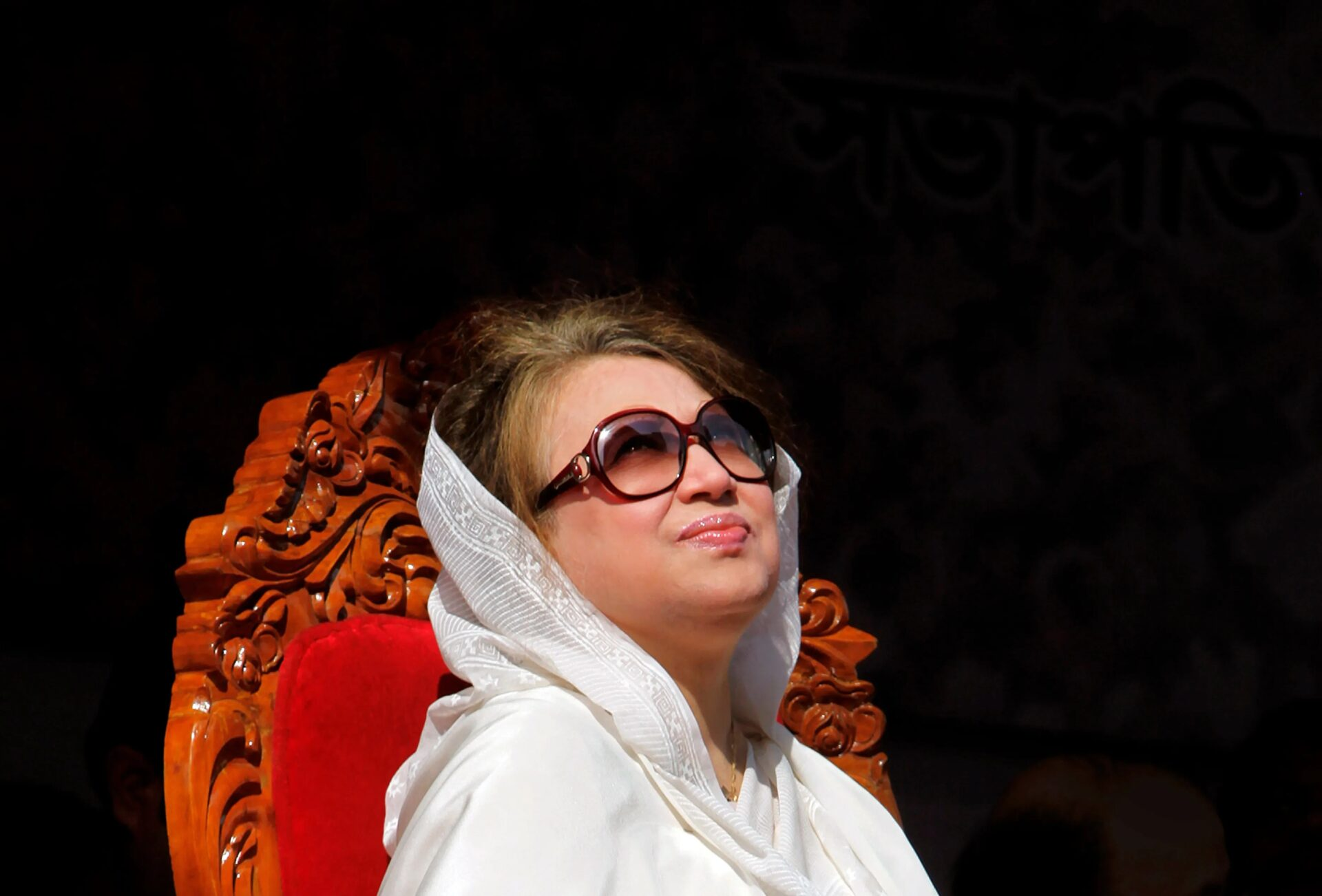
Bangladesh laments the passing of former prime leader Khaleda Zia, bringing an end to a long period of rivalry, opposition, and political struggle.
Khaleda Zia, the first female prime minister of Bangladesh, passed away at the age of 80 following a protracted illness, according to her party. Her passing signifies the conclusion of one of the most significant and divisive periods in the political history of the nation.
At Dhaka’s Evercare Hospital, Zia, a longtime adversary of ousted leader Sheikh Hasina, was placed on life support after medical professionals deemed her condition “extremely critical.” At 6 a.m. on Tuesday, the Bangladesh Nationalist Party (BNP) announced her death, and masses gathered outside the hospital.
She broke through hurdles in a male-dominated political system when she was thrust into politics when her husband, President Ziaur Rahman, was assassinated in 1981. She rose from relative obscurity to lead the BNP and become prime minister in 1991.
Restoring parliamentary democracy and promoting women’s education during her first term, Zia is praised for her unwavering opposition to military authority in the 1980s. Later administrations, however, face criticism due to contested elections and accusations of corruption, which she continuously refutes.
Zia has been imprisoned, under house arrest, and in political exile for the past sixteen years, serving as a symbol of resistance to Hasina’s leadership. After the Awami League administration is overthrown by widespread protests, she is freed in January 2025.
In spite of her deteriorating health, Zia is still a major player ahead of the next elections, as her party is indicating a return to power and establishing her son Tarique Rahman as a potential leader.
Both overseas and throughout Bangladesh, tributes are flooding in. Muhammad Yunus, the interim leader, refers to her as a “symbol of the democratic movement,” while Prime Minister Narendra Modi of India thanks her for fostering closer regional ties.
With family at her side, Zia passes away, leaving a legacy of tenacity, rivalry, and a profound mark on Bangladesh’s democratic transition.