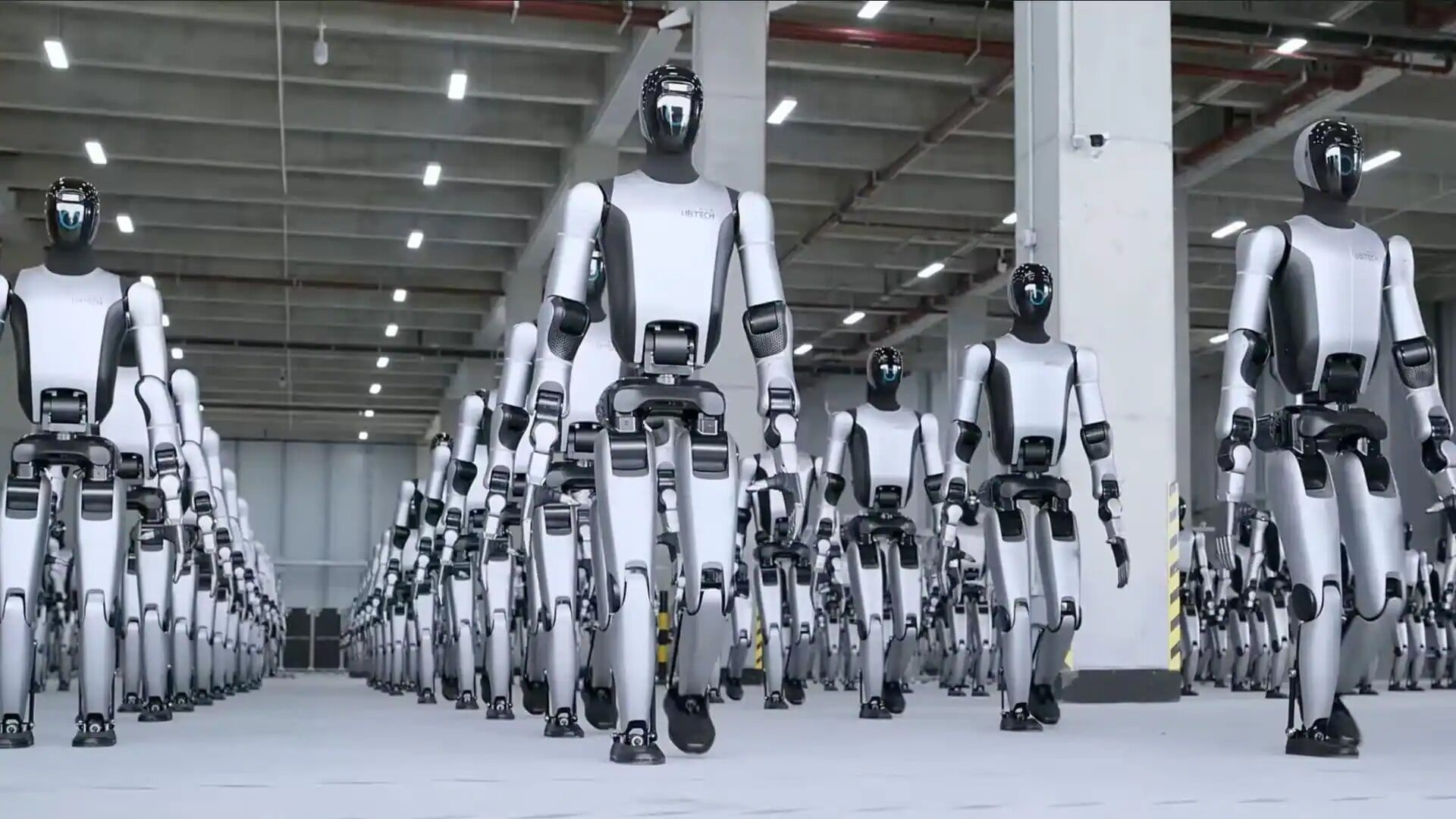
China will use UBTECH’s Walker S2 humanoid robots to assist with logistics, patrols, and inspections at a border crossing with Vietnam.
The deployment of humanoid robots for border patrol and inspection tasks along China’s congested border with Vietnam is a major step toward the practical application of AI-powered devices in public safety.
A $37 million contract has been awarded to Shenzhen-based UBTECH Robotics Corp. to use its Walker S2 humanoid robots at the Fangchenggang border crossing in Guangxi, a coastal area close to Vietnam. This month is when deployment is anticipated to start.
The border crossing is a busy transportation hub where buses, cargo vehicles, and day travelers move often, making it a demanding place with little room for delays. Because inspections need to be completed on time and without interruption, Chinese planners see the site as a perfect stress test for humanoid robots.
With its jointed arms, legs, and torso, the Walker S2 is a full-size humanoid robot that can maneuver through areas intended for people. The robots can replace battery packs without human help and have little downtime thanks to their autonomous battery swapping technology.
The robots use force feedback in their joints, depth sensors, and cameras to track movement in their environment in order to stay balanced and prevent collisions. The Walker S2 is positioned as a general-purpose worker rather than a single-task industrial machine thanks to the hardware and software integration.
The robots will help border officials at Fangchenggang by directing cars, directing passenger lines, and responding to common traveler inquiries. In order to keep an eye on blocked exits or crowd patterns that might necessitate the involvement of human officials, certain units will patrol waiting rooms and hallways.
Additional robots will work in cargo lanes to assist logistics workers by verifying seals, verifying container identifying numbers, and providing dispatch centers with status updates. Beyond the border, portions of the fleet are anticipated to travel predetermined routes through hot industrial locations in order to assess steel, copper, and aluminum facilities.
The Fangchenggang project expands upon UBTECH’s previous humanoid robot deployments in data centers and factories around China in 2025. “This isn’t just a number; it’s proof of real-world value and the accelerating commercialization of humanoid robots globally!” stated company scientists in response to recent transactions.
The Walker S2 series’ total 2025 orders, including prior procurement agreements and domestic projects, now reach around $157 billion, according to UBTECH. The company continues to lose money despite increasing revenue, and it is under pressure to show that rising demand may result in long-term profitability.
China’s larger governmental focus on humanoid robotics is consistent with the border trial. Guidelines for a national innovation system for humanoid robots by 2025 were released by the Ministry of Industry and Information Technology in 2023. In order to create industrial regulations, the ministry launched a standardization technical committee consultation in 2024.
Humanoid robots are regarded by Chinese authorities as a strategic industry, and corporate executives have been involved in the development of national guidelines that will regulate deployments such as Fangchenggang. Regulators are supposed to keep a careful eye on accountability, safety, and dependability during the trial.
Beijing has also built a humanoid robot data training center in Shijingshan District to aid in development. In order to create training data for upcoming deployments, the facility, which is approximately 3,000 square meters, now houses over 100 humanoid robots practicing jobs in mock workplaces.