Nigeria collaborates on an airstrike to prevent unilateral US intervention
Nigeria’s government may have avoided humiliating unilateral military action that President Donald Trump had threatened a month ago by openly collaborating with the US on a Christmas Day airstrike.
However, security analysts question if such attacks can really deter Islamist extremists who have long threatened local communities.
On Thursday, Trump said on Truth Social that the Nigerian government had asked U.S. soldiers to strike Islamic State fighters in northwest Nigeria. He claimed that Christians in the area had been the group’s focus.
On the evening of Christmas Day, the local media reported hearing huge explosions in the town of Jabo. The existence of casualties has not been verified by Reuters.
Trump announced on Friday that he has authorized a one-day delay in the U.S. military operation against Islamic ISIS extremists in Nigeria, which was initially scheduled for Wednesday.
“They were going to do it earlier,” Trump stated in an interview with Politico. “I replied, ‘Nope, let’s give a Christmas present.'” We hit them hard, but they didn’t anticipate that. Each camp was completely destroyed.
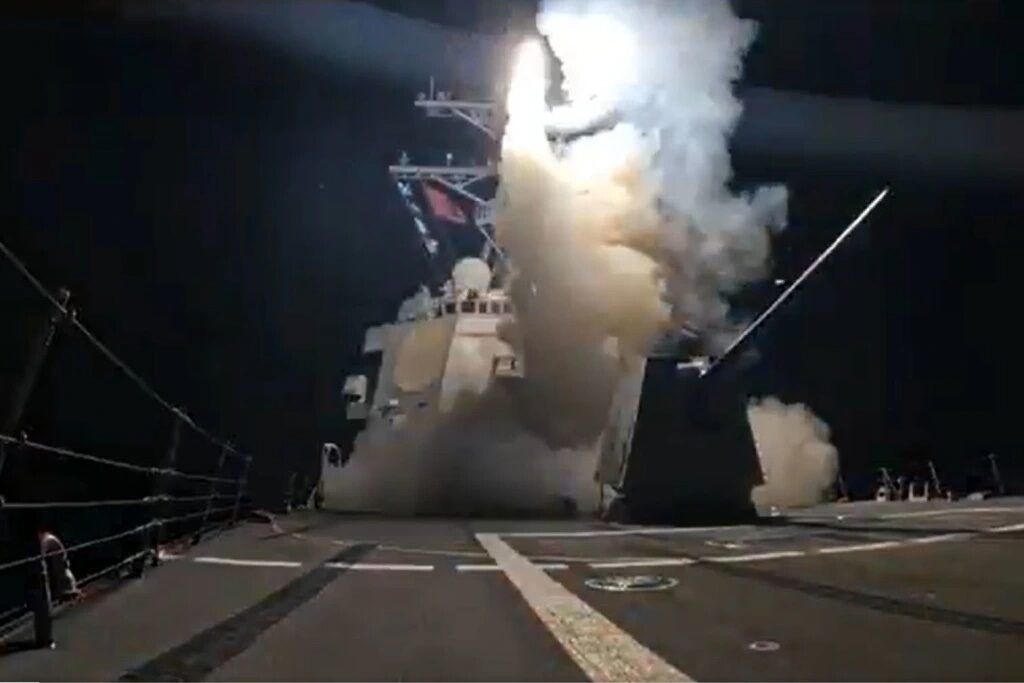
Speaking on condition of anonymity, a U.S. defense official told Reuters that roughly a dozen Tomahawk missiles fired from a U.S. Navy warship in the Gulf of Guinea were responsible for the strike.
Abuja affirmed that the action was authorized. Nigeria had cooperated with the United States, according to Foreign Minister Yusuf Tuggar on Friday, but no particular faith had been targeted.
Tuggar told Nigeria’s Channels Television, “Nigeria is a multi-religious country, and we’re working with partners like the U.S. to fight terrorism and protect lives and property.”
LONG-TERM OR SYMBOLIC IMPACT?
Following the attack, U.S. Defense Secretary Pete Hegseth stated on X that “more to come.”
Although the U.S. official did not rule out future operations, he stated that another strike did not seem likely.
According to the person, the United States carried out this particular strike in part because Nigerian forces couldn’t get to the spot.
According to the official, “it’s partially symbolic,” with the additional goals of deterrence and conveying the Trump administration’s readiness to use force.
The US strikes ISIS fighters in Nigeria with an airstrike.
Since 2024, members of the Lakurawa sect, a hardline Sunni Islamist faction that has ties to the Islamic State group, have been more violent in the northwest region where Thursday’s airstrike occurred.
The gang, which started out as a vigilante group, developed into a jihadist movement that imposed harsh Islamist authority on hundreds of nearby villages. Early this year, Nigeria designated the group as a terrorist organization.
Confidence MacHarry, senior analyst with SBM Intelligence in Lagos, stated, “It’s very likely this is the group Trump mentioned when mentioning U.S. military strikes in Nigeria.” “They’ve also been linked to widespread cattle theft, with most of the stolen animals ending up in markets along the Nigeria-Niger border.”
The strike is unlikely to have a significant influence in the immediate future, according to Cameron Hudson, a former U.S. official who worked on matters pertaining to Africa.
“It’s not realistic to think that a few cruise missiles are going to change much in the short term,” Hudson stated. “The Trump administration will have to demonstrate its own long-term commitment to ending this militancy if it hopes to have any effect.”
THREATING ACTION TO PROTECT CHRISTIANS, TRUMP
Christians, who make up the majority in the south, and Muslims, who make up the majority in the north, make up about equal parts of Nigeria’s population of approximately 230 million.
Trump said last month that if Nigerian authorities did not cease what he called Christian persecution, he would order American troops to launch a military campaign there.
Nigeria vehemently disputes that Christians face systematic persecution, despite the country’s ongoing security issues, which include bloodshed and kidnappings by Islamist terrorists in the north.
In response to Trump’s threat, its government rejected U.S. terminology that implied Christians were particularly at risk and stated it planned to cooperate with Washington against militants.
“We saw a Nigerian delegation visit the U.S. after Trump threatened to come guns-blazing in Nigeria,” stated Kabir Adamu, managing director of Beacon Security and Intelligence Limited, based in Abuja.
“Agreements were signed, and the attorney general was involved. Then we discovered that American surveillance operations were mapping the whereabouts of terrorists.
By taking part in the strike, the government runs the risk of being seen as supporting Trump’s remarks regarding broader sectarian conflict, which has always been a delicate subject in Nigerian history.
“Trump is pandering to domestic evangelical Christian objectives with his ‘Christian genocide’ narrative,” Adamu stated.