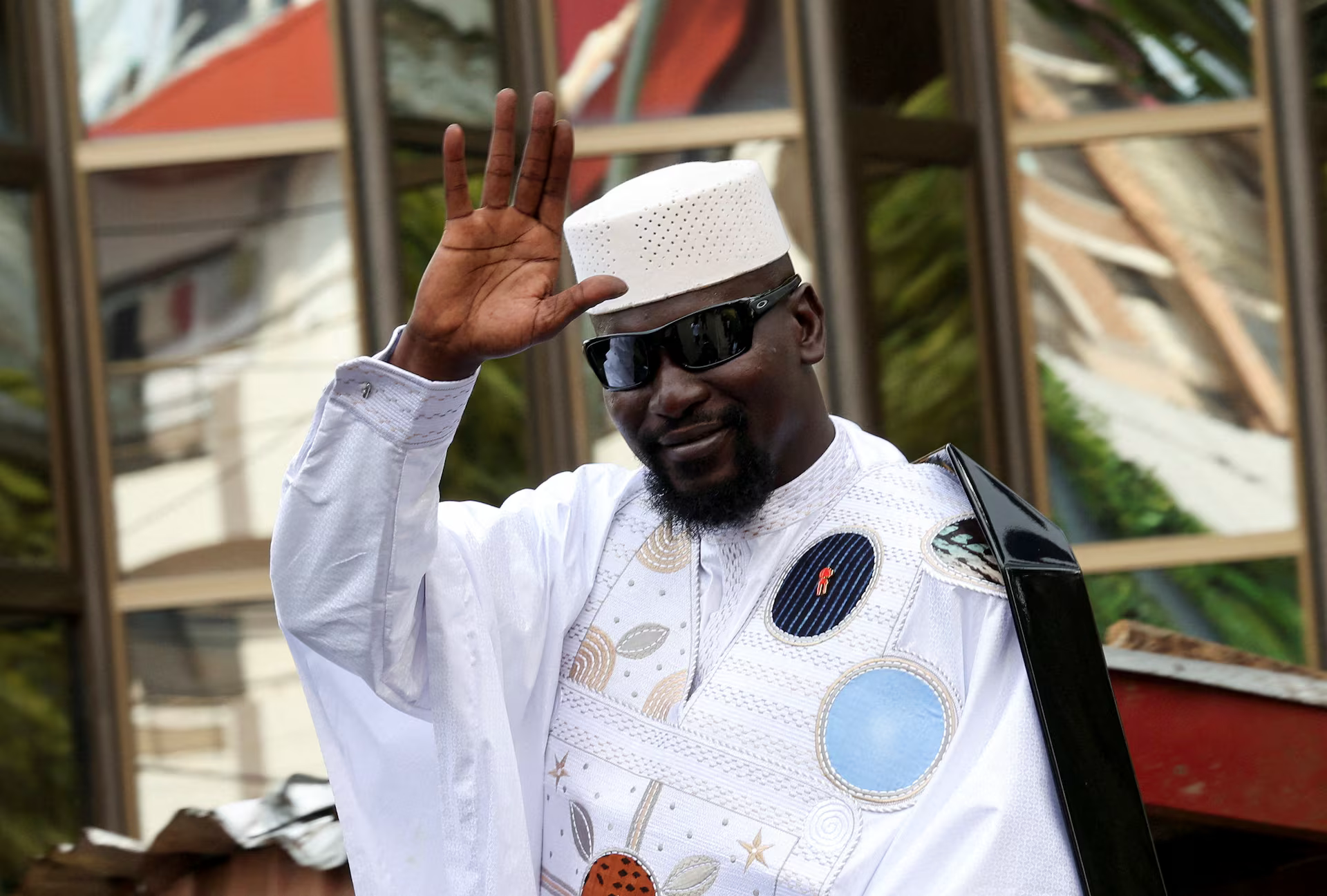
Mamady Doumbouya, the leader of the coup in Guinea, is predicted to easily win Sunday’s presidential election thanks to the opening of a long-awaited iron ore mega-mine and a lackluster field of rivals.
In one of nine coups that have rocked West and Central Africa since 2020, Doumbouya, who was then chief of special forces, overthrew President Alpha Conde four years ago.
After initially vowing not to run for office, a new constitution that was enacted in September increased the presidential term from five to seven years and eliminated language that would have prohibited him from doing so.
Conde and veteran opposition leader Cellou Dalein Diallo are in exile, while other prospective opponents were eliminated for not submitting the necessary paperwork. Eight opponents remain, none of whom are anticipated to pose a serious threat to Doumbouya.
Bella Bah, a political analyst from Guinea, stated, “Let’s not fool ourselves: there can be no other opponent who can challenge him.” However, that isn’t the most crucial factor. Bah urged Doumbouya to have conversations with those outside the military, saying, “The president needs to take a step back and realize that he now has to exercise power after the election.”
Under Doumbouya, political discourse has been restricted, and civil society organizations charge his administration with suppressing opposition activity, prohibiting protests, and limiting press freedom.
MILESTONE MINING
Guinea has the richest unexplored iron ore deposit at Simandou, which was formally opened last month, and the greatest bauxite deposits in the world.
Simandou’s 1997 planned production date had been postponed for a long time. In order to examine how national interests would be protected after it came online, Doumbouya’s junta ordered work to be halted in 2022.
Doumbouya’s vision for Guinea is centered on Simandou, as evidenced by the national development strategy known as Simandou 2040.
The 75% Chinese-owned project is planned to reach a peak annual production of about 120 million metric tons, and proponents claim Doumbouya will make sure Guinea receives its fair part of the profits.
During a campaign event last month, government spokeswoman Ousmane Gaoual Diallo said, “Dear Guineans, Guinea is no longer for sale.” “Guinea is no longer up for grabs, Guinea is standing tall.”
Following a refinery dispute, Guinea Alumina Corporation, an EGA subsidiary, had its license canceled by Doumbouya’s transitional administration, which subsequently transferred its assets to a state-owned company.
Doumbouya’s popularity has increased due to the shift towards resource nationalism, which is also seen in other military-ruled nations in the region, such as Mali, Burkina Faso, and Niger.
“Politics is conducted differently now than it was in the past. There remains zeal even though our campaigns are no longer aggressive,” said Mohamed Keita, 65, of Conakry.
“People are out in the field, everyone expresses their opinions without violence.”
TIES IN THE REGION WARMING
According to Gilles Yabi, founder of the West African think tank WATHI, the campaign has progressed quietly, although it is barely fair due to Doumbouya’s strong hold.
“This is obviously a context that doesn’t allow for any hope of a free and fair presidential election,” Yabi stated.
“The mere fact of holding a presidential election will not change the reality of power, which will remain primarily in the hands of the military.”
The West African regional body ECOWAS is sending monitors in spite of these worries, indicating “growing rapprochement” despite Guinea’s official suspension since the 2021 coup, according to a note from consultancy Signal Risk.
Approximately 6.7 million people are registered to vote, and within 48 hours of the polls closing, preliminary results are anticipated.