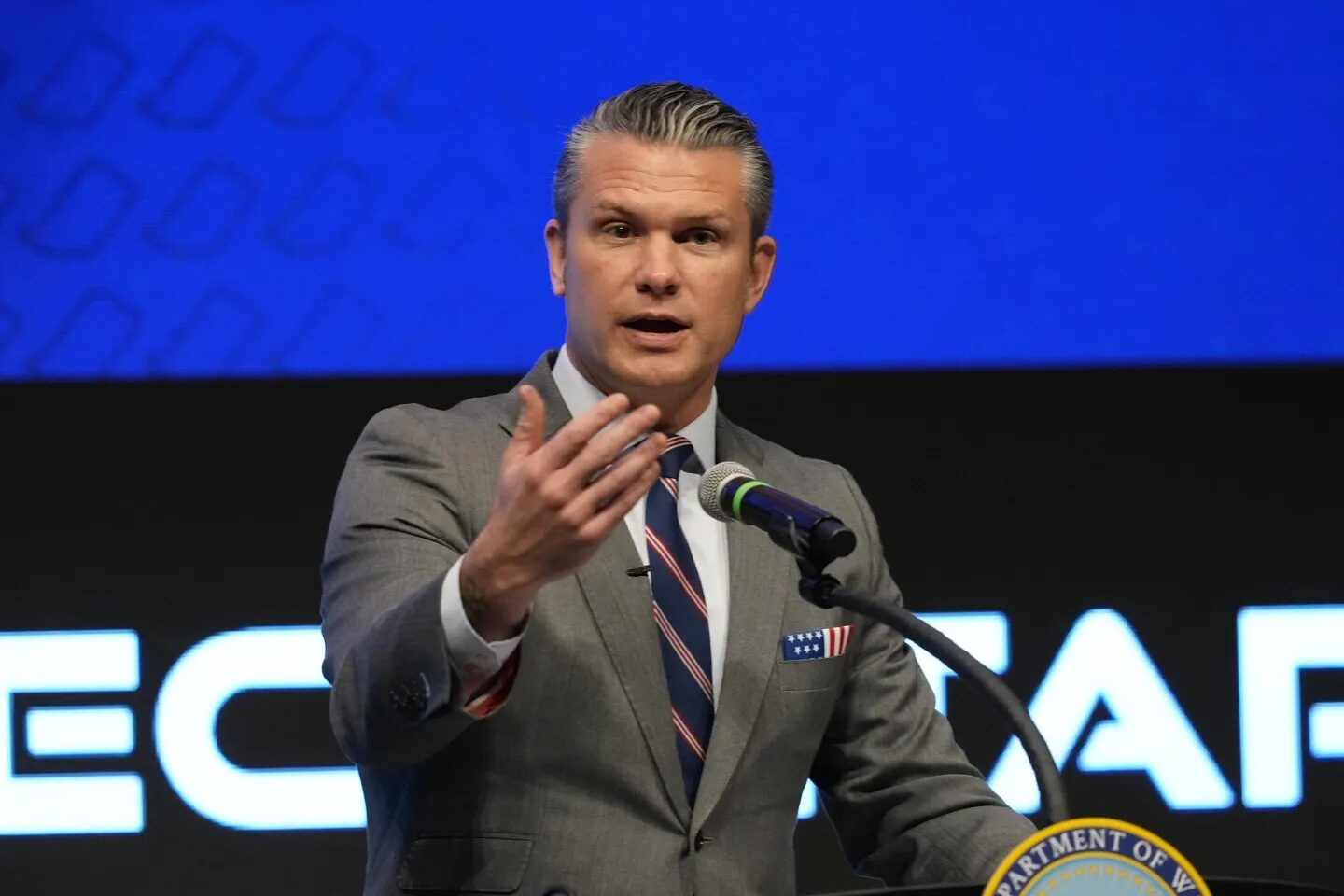
US lawmakers are demanding clarification following a report that claims Hegseth instructed a follow-up strike to eliminate survivors of the Venezuelan boat attack.
US lawmakers are seeking clarity from the Trump administration following reports that Defence Secretary Pete Hegseth ordered a subsequent military strike aimed at eliminating survivors of an initial attack on a suspected Venezuelan drug-smuggling vessel.
On Friday, The Washington Post reported that a US strike on September 2 resulted in the destruction of a boat in the Caribbean, with two survivors remaining. The report indicates that a Special Operations commander subsequently ordered a second strike to adhere to what was characterized as Hegseth’s verbal directive to “kill everybody” on board.
Hegseth characterized the story as “fake news,” and President Donald Trump expressed his support for him, stating he had complete confidence in the defense secretary. The allegation has sparked bipartisan concern in Congress, with lawmakers cautioning that if the claim is accurate, it poses significant legal and ethical issues.
Committees led by Republicans that oversee the Pentagon have pledged to conduct “vigorous oversight” regarding a series of US maritime strikes in international waters near Venezuela and Colombia. The strikes are a component of an intensified American anti-narcotics initiative that has increased the US military footprint in the Caribbean. Since early September, over 80 individuals have lost their lives in these operations.
The Trump administration maintains that the campaign is both lawful and defensive, aimed at intercepting boats transporting illegal drugs destined for the United States. The report from The Washington Post, however, has heightened examination of the rules of engagement.
During appearances on Sunday talk shows, lawmakers from both the Republican and Democratic parties expressed uncertainty regarding the occurrence of the reported second strike, while emphasizing that targeting survivors would breach both domestic and international law.
Democratic Senator Tim Kaine cautioned on CBS Face the Nation: “If this is accurate, it constitutes a war crime.”
Republican congressman Mike Turner, who previously chaired the House Intelligence Committee, expressed similar concerns, noting that Congress did not have evidence of a subsequent strike but concurred that such an action would be “very serious” and “illegal.”
The Senate Armed Services Committee, chaired by Republican Roger Wicker and Democratic Senator Jack Reed, announced that it had initiated formal inquiries to the Pentagon. The House Armed Services Committee announced that it was undertaking “bipartisan action” to secure a complete account of the operation.
In a post on X, Hegseth dismissed the accusations as “fabricated, inflammatory, and derogatory,” asserting that the strikes were “lawful under both US and international law.” He asserted that every trafficker identified is associated with a “Designated Terrorist Organisation.”
While speaking on Air Force One, Trump stated that the administration would “look into” the issue, noting that he “wouldn’t have wanted” a second strike.
The National Assembly of Venezuela has denounced the attacks and announced its intention to carry out an independent investigation, while accusing Washington of heightening regional tensions to undermine the Maduro administration.
Experts in international law observe that although the US has not signed the UN Convention on the Law of the Sea, its military legal advisers typically suggest adhering to its guidelines. The regulations limit the application of lethal force on ships in international waters, allowing it only in specific situations, like during a valid “hot pursuit.”
Professor Luke Moffett from Queen’s University Belfast recently clarified that while force can be employed to halt a vessel, non-lethal measures are typically necessary, which renders the claims of a second lethal strike especially grave.