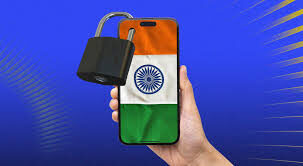
India orders smartphone manufacturers to preload the Sanchar Saathi software, which raises concerns in the industry and may conflict with Apple’s regulations.
Apple and other international phone manufacturers are likely to object to India’s telecom ministry’s rule requiring all major smartphone manufacturers to preload a government-owned cybersecurity application on new devices.
Companies like Apple, Samsung, Vivo, Oppo, and Xiaomi have been given 90 days to make sure the Sanchar Saathi software is loaded on every new smartphone sold in India, according to a directive seen by Reuters on November 28. Additionally, the ruling says that users cannot disable the app.
Installing the app is essentially required for all major brands of devices that are already in the supply chain because manufacturers are required to deliver the app through an over-the-air software update.
Sanchar Saathi was introduced in January in India, one of the biggest mobile markets in the world with over 1.2 billion users. According to government statistics, the software has blocked more than 3.7 million stolen or lost devices and assisted in the recovery of over 700,000 lost phones—including 50,000 in October alone. Additionally, it has assisted in the termination of more than 30 million fraudulent mobile connections.
Through a centralized tracking system intended to prevent scams associated with duplicate or counterfeit IMEI numbers, the app enables users to verify IMEI numbers, record questionable calls, and disable stolen devices. It is crucial, according to authorities, to counter what they call a “serious endangerment” to India’s telecom cybersecurity.
Apple, meanwhile, has a history of opposing government-mandated software. According to a source with knowledge of Apple’s business practices, the company’s internal regulations prohibit the pre-installation of government or third-party apps prior to a device being sold, potentially leading to a conflict akin to its earlier run-in with India’s telecom regulator over an anti-spam program.
Requests for response from Apple, Samsung, and Xiaomi were not answered, and the telecom ministry of India has not officially addressed industry concerns. Concerns over privacy, user choice, and operational viability were raised by the directive, according to two unidentified industry officials.
Notwithstanding the worries, the government insists that the app improves online safety, aids law enforcement in tracking down stolen devices, and prevents fake phones from being sold in one of the fastest-growing tech markets in the world.