With compensation negotiations stalled ahead of Sunday’s deadline over the players’ demand for a larger portion of the league’s exponential income growth, the Women’s National Basketball Association (WNBA) is rapidly approaching a possible lockout or strike.
The current Collective Bargaining Agreement (CBA) has been extended until November 30 instead of October 31. The likelihood of a work stoppage that would ruin the 2026 season, however, is growing as a settlement seems less and less possible.
Daniel Kelly II, an assistant dean and professor at New York University who focuses in sports law, stated in an interview on Wednesday that “they’ll probably do another extension, yet if we get to the New Year without an agreement a strike becomes a realistic option.”
“For players, that has historically resulted in the best bargain. Following the 2011–12 strike, the NBA reached a 50–50 agreement. To achieve the deal you want, it almost seems like you have to go to the extreme,” he continued.
The league has suggested lifting the minimum compensation to $220,000, the average player salary to over $460,000, and the highest salary from $250,000 to $1.1 million, according to local media sources.
But WNBA players aren’t content with pay raises alone. They think they should take the NBA’s lead, which started with their first CBA in 1970 and reached an agreement to divide basketball-related revenue 50/50 by 2011.
“Players are pushing for revenue-sharing arrangements similar to those in men’s professional leagues, rather than fixed salary increases that don’t keep pace with the WNBA’s growth in media deals and team valuations,” Kelly stated. “The business is growing exponentially, yet they want the players salaries to increase at a fixed amount.”
Pressure is increased by rival leagues and complex ownership.
The ownership structure complicates the conversation further. 42% of the WNBA is owned by the NBA, another 42% by club owners, and the other 16% is controlled by a private equity firm.
“Cathy Engelbert represents three parties in her role as commissioner of the WNBA. Negotiations against the players’ union are much more challenging than straightforward two-party bargaining because she has several stakeholders to answer to in various positions, Kelly said.
The situation is made more difficult by rival leagues that hang eye-popping paychecks. With benefits including on-site childcare, Unrivaled, a 3-on-3 basketball league that started play in January, claimed an average salary of $222,222.
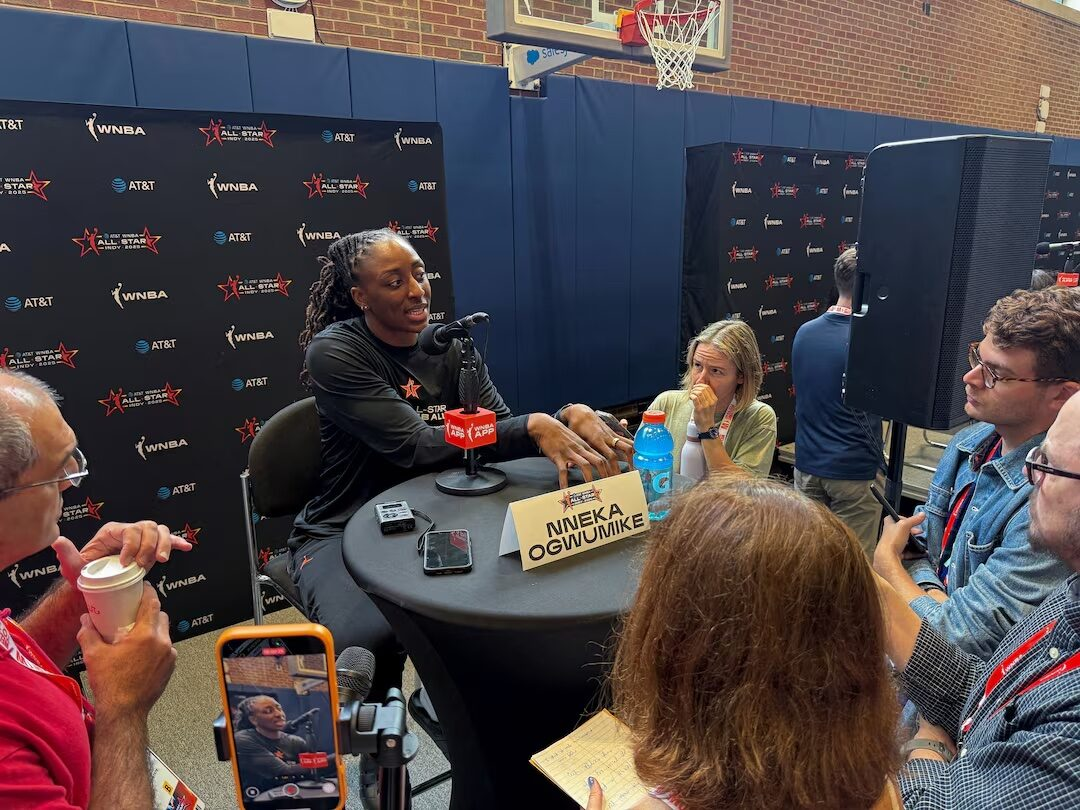
Project B, which is allegedly promising salaries as high as $2 million and is scheduled to start next fall with men’s and women’s 5-on-5 basketball, is much more dangerous. Along with well-known figures like Alyssa Thomas and Sophie Cunningham, it has signed Nneka Ogwumike, president of the WNBA Players Union (WNBPA).
“Are these new leagues able to maintain those salaries? Since they haven’t existed for several seasons, we don’t. But it gives athletes a way to tell the league that they have other options,” Kelly continued.
He suggested a hybrid plan that incorporates guaranteed revenue-sharing percentages that increase in tandem with the firm, while maintaining minimum and maximum salaries.
“Players look for clarity and the league needs to show them the long-term plan, the possibilities of how you get to 50-50, even if it’s 20 years from now,” he stated.
Both parties must make a crucial choice as the deadline approaches on Sunday: reach a settlement now, or risk a work stoppage that could erode their hard-earned momentum.