Trump claims that Venezuelan airspace ought to be shut down
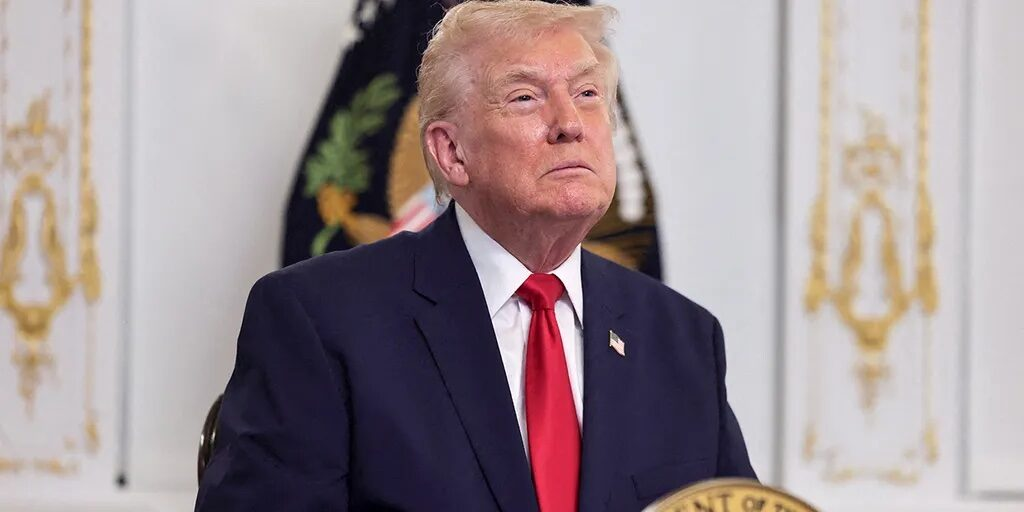
U.S. President Donald Trump said on Saturday the airspace above and surrounding Venezuela should be considered “closed in its entirety,” but gave no further details, creating concern and confusion in Caracas as his administration ratchet up pressure on President Nicolas Maduro’s government.
“To all Airlines, Pilots, Drug Dealers, and Human Traffickers, please consider THE AIRSPACE ABOVE AND SURROUNDING VENEZUELA TO BE CLOSED IN ITS ENTIRETY,” Trump said on Truth Social.
U.S. officials contacted by Reuters said they were not aware of any continuing U.S. military activities to enforce a blockade of Venezuelan airspace and were taken aback by Trump’s declaration. Requests for response from the White House and Pentagon were not answered.
The government of Venezuela denounced Trump’s remarks in a statement on Saturday afternoon, calling them an incompatible with international law and a “colonialist threat” to the sovereignty of the South American nation.
According to the statement, the appointment of the U.S. president “represents a hostile, unilateral and arbitrary act, incompatible with the principles of international law.”
CARIBBEAN’S MASSIVE MILITARY BUILDUP
Trump’s declaration, according to retired lieutenant general David Deptula, who oversaw a no-fly zone over northern Iraq in 1998 and 1999, raises more issues than it answers. The objectives of the airspace shutdown could determine how much planning and resources are needed to impose a no-fly zone over Venezuela, he said.
“The devil’s in the details,” Deptula remarked.
In an effort to counter what it has depicted as Maduro’s involvement in the supply of illegal drugs that have killed Americans, the Trump administration has been considering measures pertaining to Venezuela. The president of Venezuela, a leftist, has denied any involvement in the illicit drug trade.
According to Reuters, the U.S. military is ready for a new phase of operations following a significant military buildup in the Caribbean and nearly three months of strikes on suspected drug boats off the coast of Venezuela. One of the alternatives being considered by the U.S. is an attempt to topple Maduro. Additionally, Trump has given the go-ahead for secret CIA activities within the nation.
Maduro, who has held the position since 2013, has argued that Trump is trying to remove him and that the military and people of Venezuela will oppose any such effort.
Earlier this week, Trump informed military personnel that the United States will “very soon” start conducting land operations to apprehend alleged drug traffickers from Venezuela.
The United States is accused of “colonial ambitions” by Venezuela.
Trump’s announcement was condemned by Caracas residents who talked to Reuters.
“I think it’s unfair because people need to travel to work, to do business, to see their family, and us Venezuelans aren’t at fault for these situations,” said Manuel Romero, a cooking assistant.
Lawyer Carmen Castillo expressed concern that many individuals won’t be able to spend the holidays with their relatives who live outside of Venezuela.
“Here in Caracas, Venezuela, we are limited. Naturally, it has an impact on us,” she stated.
The Venezuelan administration urged the world community to condemn what it called an unethical act of aggression, claiming that the United States was displaying “colonial ambitions” in Latin America.
According to the Venezuelan government’s statement, Trump’s announcement also amounted to a unilateral suspension of the migrant deportation flights that have recently sent roughly 14,000 Venezuelans back to their homeland from the United States. Flights have been taking place twice a week in recent months amid the Trump administration’s immigration crackdown.
According to security and diplomatic sources, Maduro and senior government officials—some of whom appear on state television nearly every day—have recently denounced U.S. imperialism. However, they have not specifically mentioned Trump because the Venezuelan government may be attempting to defuse the situation. Even allusions to U.S. Secretary of State Marco Rubio, who had previously been the target of Venezuelan official ire, have dwindled in recent weeks.
In the isolated state of Sucre in northeastern Venezuela, authorities have enhanced surveillance in response to the U.S. boat bombs. Four locals and one recent visitor claimed that the increased patrols by security services and sympathizers of the ruling party had heightened local anxiety.
In recent weeks, the U.S. buildup has also disrupted GPS signals in Venezuela.
Following the U.S. Federal Aviation Administration’s warning last week that major airlines risked a “potentially hazardous situation” when flying over Venezuela due to a “worsening security situation and heightened military activity in or around” the nation, Trump made his declaration on Saturday.
Six big foreign airlines that had halted flights to Venezuela following the FAA notice had their operating permits revoked.