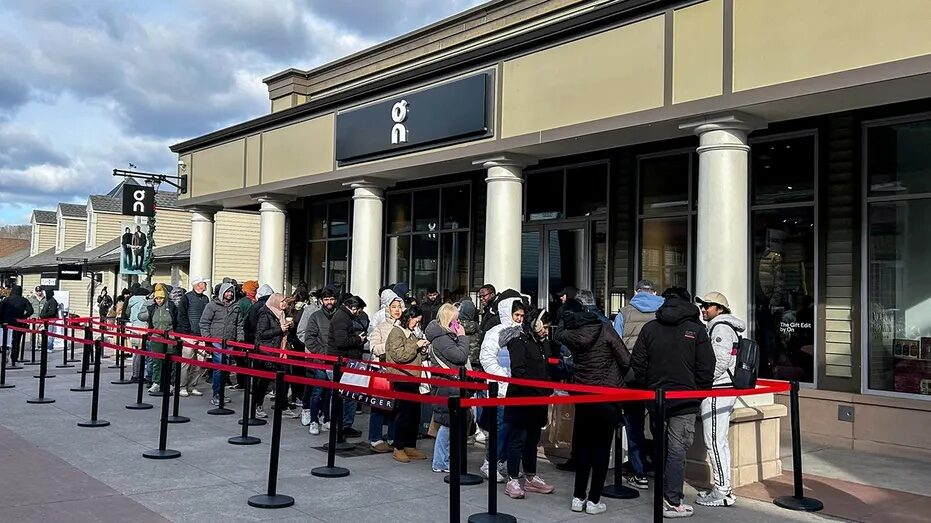
Amid worries about tariff-driven price hikes, shoppers used chatbots to check pricing and secure discounts on Black Friday, avoiding crowded stores and contributing to a spike in U.S. internet spending.
Adobe Analytics, which monitors 1 trillion visits to online retail websites, reports that on the busiest shopping day of the year, U.S. consumers spent a record $11.8 billion online, up 9.1% from 2024.
With tighter budgets, unemployment approaching a four-year high, U.S. consumer sentiment plummeting to a seven-month low, and price tags that have consumers scrutinizing every dollar, the holiday shopping season approaches.
According to Mastercard SpendingPulse, which recorded a 10.4% increase in e-commerce sales on Black Friday compared to an in-store sales growth of 1.7% in 2024, demand for online shopping surged as customers displayed savvy over the holiday season.
According to Adobe, AI-driven traffic to U.S. retail websites increased by 805% over the previous year, when artificial intelligence products like Amazon’s Rufus and Walmart’s Sparky had not yet been introduced.
“Consumers are using new tools to get to what they need faster,” eMarketer analyst Suzy Davidkhanian stated. “Gift giving can be stressful, and LLMs (large language models) make the discovery process feel quicker and more guided.”
LEGO sets, Pokemon cards, gaming systems like the Nintendo Switch and PlayStation 5, and items like Apple AirPods and KitchenAid mixers were also top sellers on Black Friday.
Globally, AI agents impacted $14.2 billion in online sales.
According to software company Salesforce, AI and agents impacted $14.2 billion in Black Friday online transactions worldwide, with $3 billion coming from the US alone.
According to Salesforce, whose data includes non-discretionary products like groceries, American shoppers spent $18 billion online on Black Friday sales, up 3% from the previous year. The most popular categories were luxury clothing and accessories.
Salesforce reports that while U.S. consumers spent more on Black Friday than they did the previous year, price rises hindered online demand, as buyers bought fewer items at checkout.
In comparison to 2024, discount rates also stayed unchanged, with AI assisting consumers in finding the best offers and price increases making it challenging for merchants to offer deeper discounts.
According to Davidkhanian, the final pricing doesn’t seem as appealing to customers, and promotions and discounts might not feel as sharp as they did last year because of increased product costs brought on by tariffs and inflation.
Michael Ashley Schulman, the Chief Investment Officer at Running Point, claims that consumers no longer get the true value of Black Friday deals because of the mix of flat discounts and increased costs.
Average selling prices increased 7% while order volumes decreased 1%. According to Salesforce, customers also bought less things at the register, with a 2% decline in units per transaction year over year.
“The average selling price in the United States is rising due to two factors,” stated Caila Schwartz, Salesforce’s director of consumer insights.
“The first is unquestionably the effect of tariffs, particularly on those discretionary categories where the selling price has increased significantly. The second is the strength in the luxury category, which shows that we’re witnessing a far stronger higher-income earner than average-income earner,” she continued.
According to Adobe, the spending spike paves the way for an even more successful Cyber Monday, which is expected to generate $14.2 billion in sales, up 6.3% year over year and the biggest online shopping day of the year. According to Adobe, Cyber Monday is predicted to bring the biggest discounts on electronics, with items up to 30% off list prices. There will also be significant savings on laptops and clothing.
However, Black Friday bargain hunting was comparatively low at physical stores, with some customers expressing a fear of overspending due to a soft labor market, trade-driven uncertainty, and ongoing inflation.