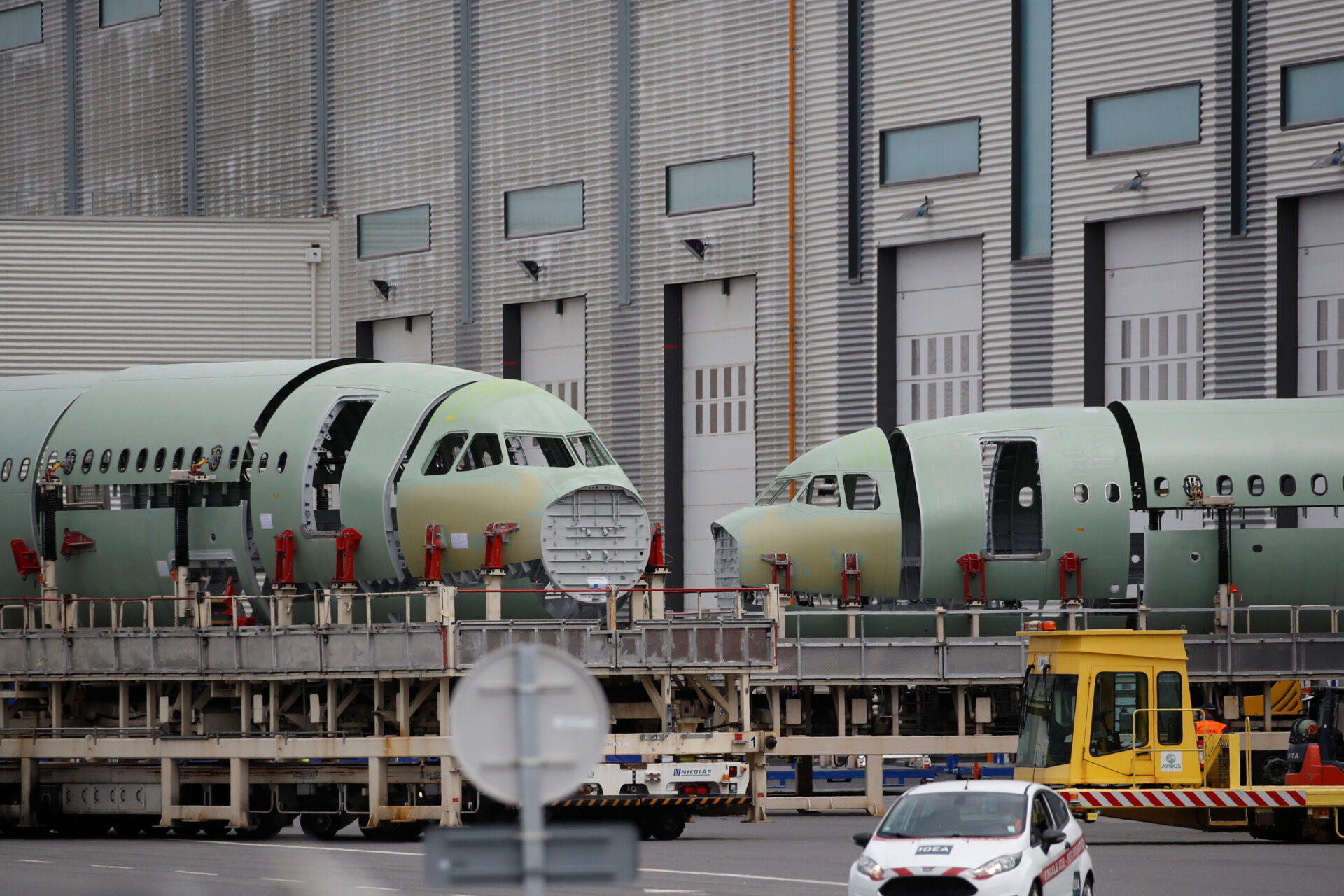
Airbus threatens extensive worldwide disruption with a significant A320 recall
Europe’s Airbus (AIR.PA), which opens a new tab, announced on Friday that it was ordering immediate repairs to 6,000 of its popular A320 family of jets in a global recall that affects over half of the fleet. This could cause disruptions globally and threaten disruptions during the busiest travel weekend of the year in the United States.
The setback occurs weeks after the A320 surpassed the Boeing 737 as the most-delivered aircraft, and it looks to be one of the biggest recalls to hit Airbus in its 55-year history. There were almost 3,000 A320-family aircraft in the air when Airbus sent out its alert to the aircraft’s 350+ operators.
According to the airline notice reviewed by Reuters, the fix is primarily reverting to older software and is somewhat easy, but it must be completed before the aircraft can resume flight, aside from repositioning to repair centers.
Late on Friday, several airlines operating flights from the United States to South America, Europe, and India announced that the repairs would result in flight delays or cancellations.
American Airlines (AAL.O), the biggest A320 operator in the world, opened a new tab and stated that about 340 of its 480 A320 aircraft will require the repair. With roughly two hours needed for each plane, it stated that it mostly anticipated them to be finished by Saturday.
Other airlines, such as Germany’s Lufthansa (LHAG.DE), India’s IndiGo, and the UK’s easyJet (EZJ.L), announced they would temporarily halt operations to make the repairs.
According to Colombian airline Avianca, the recall impacted over 70% of its fleet, or about 100 aircraft, resulting in major disruptions over the course of the following ten days and forcing the company to stop selling tickets for flights through December 8.
Approximately 11,300 A320-family aircraft are now in service, including 6,440 of the original A320 model, which made its debut in 1987. Major U.S. airlines comprise four of the top ten A320-family operators worldwide: United Airlines, American Airlines, Delta Air Lines (DAL.N), opens new tab, and JetBlue (JBLU.O). The largest clients of the jet are also Chinese, European, and Indian carriers.
As airlines go back to an earlier software version, the recall could potentially cause a brief grounding for around two-thirds of the impacted aircraft, according to industry sources.
Nevertheless, hundreds of Airbus aircraft have been grounded because of lengthy wait times for individual engine repairs or inspections, and airline repair shops are already overloaded with maintenance procedures. There is also a labor shortage in the sector.
A senior airline industry source told Reuters that scheduling the repairs at a time when demand is strong and fleets are already experiencing maintenance delays is anticipated to be a significant difficulty.
The decision aroused concerns about the amount of hangar capacity that would be instantly accessible, according to aviation researcher Rob Morris.
A RECENT EVENT INSPIRES A PROBE
A recent event involving an A320-family aircraft, according to Airbus, showed that solar flares have the potential to contaminate data that is essential to the operation of flight controls.
A JetBlue flight from Cancun, Mexico, to Newark, New Jersey, on October 30, had a sudden decrease of altitude that injured multiple passengers, according to industry sources, which led to the unanticipated repair action.
Following an unplanned drop in altitude and a flight control issue, that aircraft made an emergency landing in Tampa, Florida, which prompted an investigation by the Federal Aviation Administration.
The FAA and JetBlue were silent.
Late Friday, an emergency directive requiring the patch was issued by the European Aviation Safety Agency.
“TWO-HOUR REPAIR.”
An earlier Reuters report was confirmed by an Airbus spokeswoman who estimated that the repairs would impact approximately 6,000 jets overall, spanning multiple models.
More than 1,000 of the impacted aircraft may also require hardware replacements, which could result in considerably longer temporary groundings for maintenance for some carriers, according to the sources.
The sudden recall caused a stir worldwide. A Finnair (FIA1S.HE) flight in northern Europe was delayed for over an hour while pilots determined which software version they were using, according to a passenger.
Air France (AIRF.PA) announced that it was canceling 35 flights in Paris, which represents 5% of the airline’s daily total. Volaris, from Mexico, warned that cancellations or delays could last up to 72 hours.
The A320, which debuted in 1984, was the first commercial aircraft to use fly-by-wire computer controls.
Rivals include Boeing (BA.N) and the recently launched 737 MAX, which was grounded for a long time globally following deadly incidents in 2018 and 2019 that were attributed to shoddy flight-control software.
Tens of millions more people have taken to the skies in recent years due to economic expansion spearheaded by Asia, which has increased demand for the two major manufacturers of workhorse aircraft.
The single-aisle versions were first created to serve hubs, but low-cost carriers eventually embraced them widely. These links now account for a considerable portion of the economy.
According to an Airbus advisory obtained by Reuters, the issue was caused by a flight system known as ELAC (Elevator and Aileron Computer), which transmits signals from the pilot’s sidestick to rear elevators. These in turn regulate the pitch or nose angle of the airplane.
In response to a Reuters inquiry, the computer’s maker, France’s Thales (TCFP.PA), stated that it complies with Airbus specifications and that the capability in question is supplied by software that is not under Thales’ purview.