A general is sworn in as Guinea-Bissau’s new leader, as the former president travels to Senegal
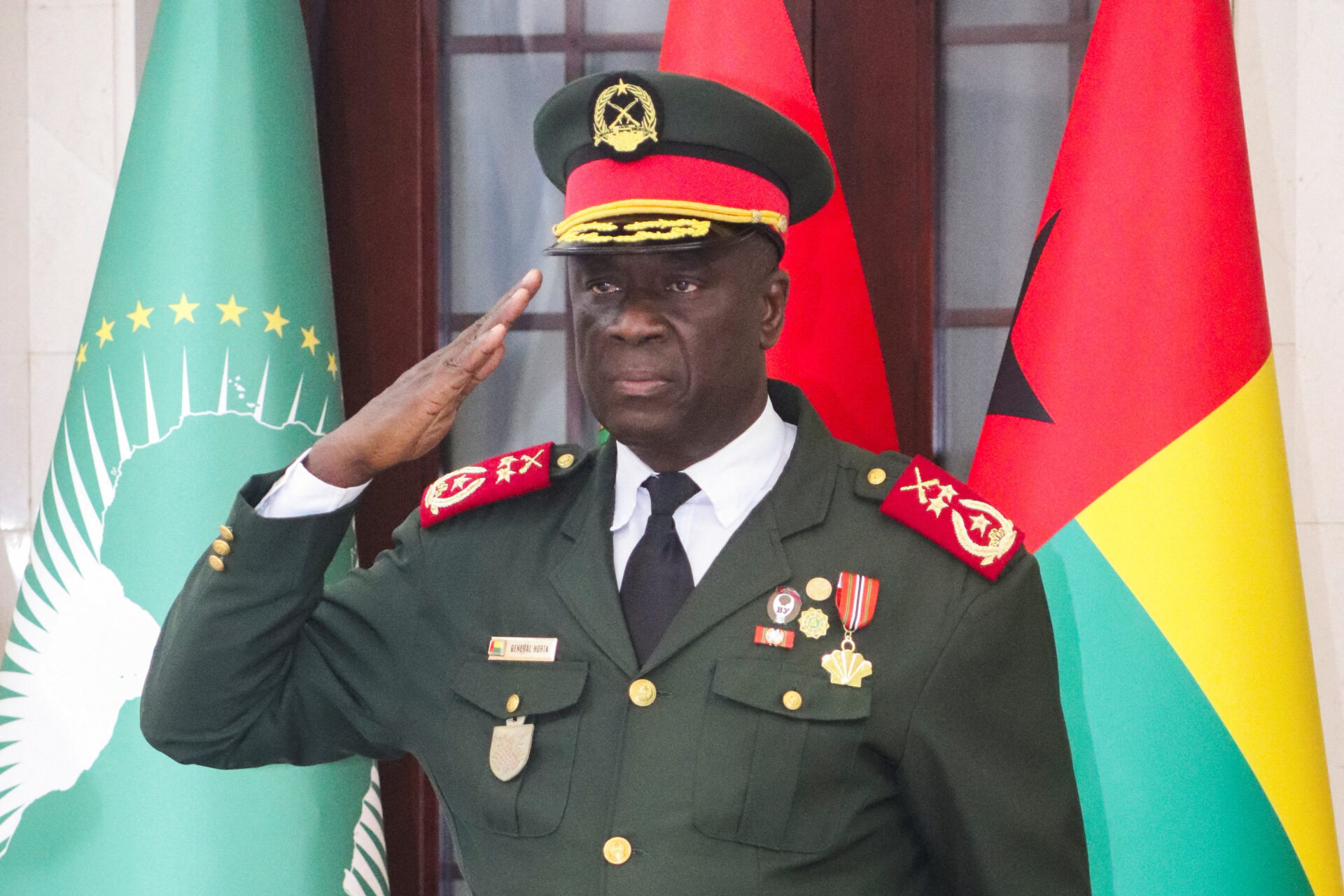
The military of Guinea-Bissau appointed Major-General Horta Inta-a as interim president on Thursday, one day after troops overthrew the civilian government in a hasty coup before the outcome of an election held over the weekend could be known.
Umaro Sissoco Embalo, the president who was overthrown in the coup, landed in Senegal on a chartered jet after the West African regional group intervened, according to a statement released late on Thursday by Senegal’s foreign ministry.
It continued a pattern of instability in Guinea-Bissau, a notorious cocaine distribution hub with a long history of military intrusions in politics, and was the ninth coup in West and Central Africa in five years.
In a televised speech on Wednesday, the self-described “High Military Command for the Restoration of Order” declared that they had taken Embalo’s place. Without providing further information, they claimed that the action was a reaction to a destabilization scheme involving politicians and drug dealers.
At a ceremony that was aired on state television on Thursday, Inta-a made his first public appearance as leader while wearing a military uniform and surrounded by other military officials. He claimed that the coup was required to prevent “narcotraffickers” from attempting to “capture Guinean democracy” and that the changeover would start right away and last for a year.
He appointed Major-General Tomas Djassi as army chief of staff during a swearing-in ceremony later on Thursday.
The coup occurred the day before Embalo and Fernando Dias, a 47-year-old political novice who had become Embalo’s leading presidential opponent, were scheduled to disclose the preliminary results of their contest.
Gunfire erupted in the capital Bissau for approximately an hour on Wednesday, close to the presidential palace and the election commission headquarters, before to the proclamation of the coup.
Embalo announced his deposition by calling the French media.
Prior to Senegal’s announcement of Embalo’s escape, an army statement issued on Thursday claimed that Embalo and other senior officials were “under the control of the High Military Command.”
The status of the pair
In a statement, African Union chairperson Mahmoud Ali Youssouf denounced the coup and demanded Embalo’s release “as well as that of all detained officials.”
According to a post on X, heads of state from the West African regional organization ECOWAS also denounced the coup and thereafter convened a virtual summit to discuss the matter.
Screen shots attached to the article revealed a number of regional officials taking part, including Youssouf of the AU and the presidents of Senegal, Liberia, and Nigeria.
According to the European Union, the vote count should be permitted to continue and constitutional order should be restored.
Even after the overnight curfew ended, soldiers were on the streets and many inhabitants remained indoors Thursday, making Central Bissau largely quiet.
Banks and businesses were shut down.
“I’m very concerned about the prevailing situation,” said Julio Goncalves, a lecturer from Bissau who is thirty years old.
“There isn’t a drugstore open. How may a sick person purchase medication or visit a hospital?
An attempt at a false coup
In a video message prior to Inta-a’s election victory, Dias accused Embalo of a “false coup attempt” to sabotage the poll because he was afraid he would lose.
The Dias coalition called for authorities to be permitted to announce the results of Sunday’s presidential election in a statement to Reuters on Thursday.
According to family members and security sources, former Prime Minister Domingos Simoes Pereira was arrested on Wednesday and the coalition demanded his release.
A tiny demonstration outside the building where Pereira is allegedly detained was put down by security personnel using tear gas. Additionally, witnesses reported that live bullets were fired during the dispersal of a gathering close to Dias’s residence on the outskirts of Bissau.
Neither Wednesday nor Thursday’s unrest was associated with any reported casualties.
HUB FOR COUP-PRONE NARCOTICS
Cocaine travels through Guinea-Bissau, a small coastal country between Senegal and Guinea, on its way from South America to Europe. The cocaine traffic seemed to flourish under Embalo’s leadership.
Lucia Bird Ruiz-Benitez de Lugo, director of the Observatory of Illicit Economies in West Africa, which monitors the cocaine trafficking, stated that another coup is unlikely to alter that.
“Electoral campaigns in these elections were funded by major traffickers. “There is no indication that cocaine’s influence on Bissau’s politics and governance will lessen,” she said.
Between 1974, when it earned independence from Portugal, and 2020, when Embalo seized power, the nation had experienced at least nine coups and attempted coups.
UNACCOUNTED ELECTION OBSERVERS
On Wednesday, ECOWAS and African Union election observers jointly released a statement demanding the immediate release of election officials who had been arrested.
ECOWAS spokeswoman Joel Ahofodji told Reuters that former Nigerian President Goodluck Jonathan, who had been watching the voting as part of the West African Elders Forum, was not available and his location was unknown on Thursday.
According to Nigeria’s foreign ministry, election observers’ safety needs to be ensured. “We warn that those behind this act will be held accountable for their actions,” read a statement.