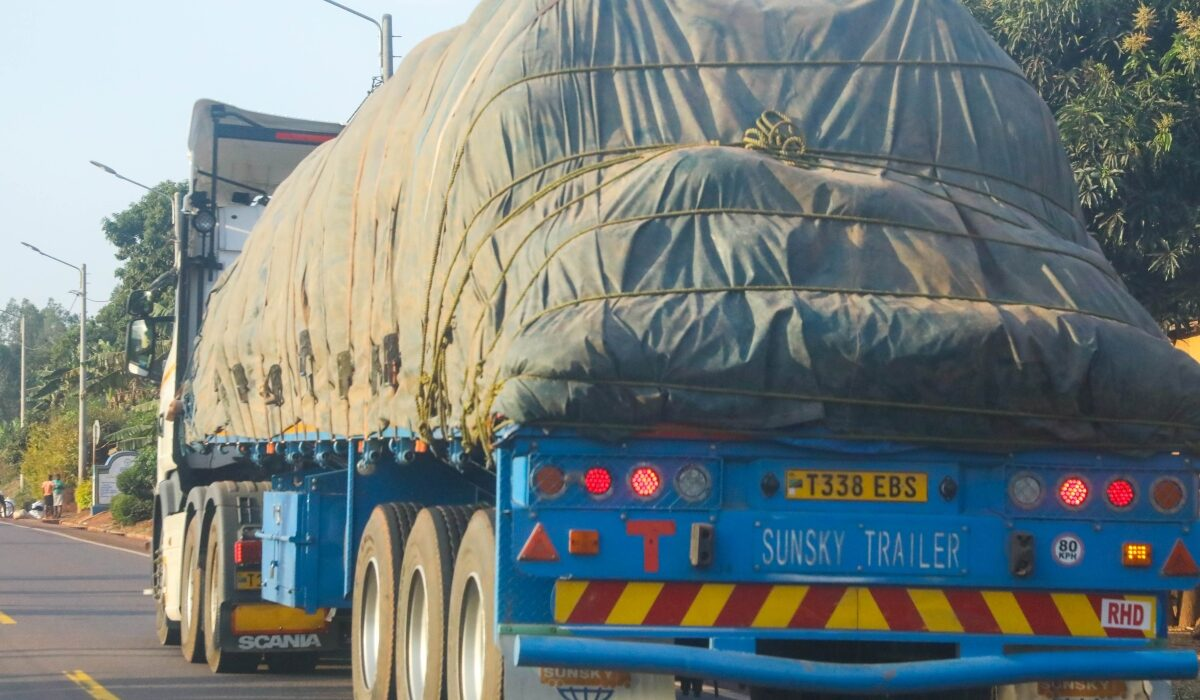
Tanzanian turmoil halts cargo headed for Rwanda
Truck drivers and logistics operators are reporting communication breakdowns, fuel shortages, and lengthy delays on important routes as a result of the ongoing violence in Tanzania, which is interfering with the flow of commodities headed for Rwanda.
There have been protests in the neighboring country for the last four days as many people have taken to the streets to protest the preliminary results of the presidential election, which had placed incumbent Samia Suluhu in the lead.
Some services, such as trucks that deliver products across the border, have been impacted by the protests.
Noel Nkurikiye, the secretary general of the Rwanda Professional Truck Drivers Union, told The New Times that as protests expanded throughout Tanzania’s main regions, the situation grew worse.
He claimed that “communication networks have been cut off.”
It’s no longer feasible for drivers to communicate with their employers for coordination, particularly when they need to refuel. Many of them had to halt where they were after running out of petrol.
He claimed that the protests, which began in Dodoma and Dar es Salaam, have now spread to the Kahama region in Rwanda, almost causing Rwandan trucks to stop or alter their routes.
Trucks were allowed to drive until they arrived at unsafe locations during the early protests. They are currently stranded in the vicinity of the border.
The inability to interact with drivers is still a significant issue, according to Nkurikiye.
He declared, “We are cut off from them.”
Given that the majority of imports depend on Tanzania’s Dar es Salaam Port, which is closer—approximately 1,500 kilometers—than Mombasa Port, which is around 1,800 kilometers distant via Uganda, he emphasized that the disruption presents a significant obstacle to Rwanda’s trade.
Because it’s quicker and more effective, Dar es Salaam is the port we use the most, he stated.
“In order to cut down on travel time and avoid making a lot of weighbridge stops, we frequently choose to route goods through Tanzania rather than Uganda, even when they arrive in Mombasa.”
He clarified that trucks traveling from Mombasa through Tanzania only encounter six weighbridges—two in Kenya and four in Tanzania—whereas those traveling via Uganda encounter a total of twelve.
“Some trucks were forced to reroute through Uganda after they had already left Mombasa for Rwanda via Tanzania,” Nkurikiye stated.
“To avoid Rwanda experiencing shortages of basic supplies, the cargo that is now in route and anticipated to travel to Dar es Salaam should be diverted to Mombasa as soon as possible. The same port should be used by exporters as well.
Businesses are already starting to count their losses as a result of the upheaval, according to economic analyst Jean Claude Rwubahuka.
Due to continuous curfews and poor communication, he said he had even canceled a planned business trip for the upcoming week, stating that the uncertainty has interrupted normal operations and made travel and business activities all but impossible.
“Information flow has been disrupted and internet access is limited, particularly in hotels,” he stated. “Stability is essential to businesses, and when security is compromised, everything slows down. Business activity has decreased by over 50%, as far as I can tell.
Both air and ground transportation are being impacted by the disturbance, he continued.
He claimed that “roadblocks severely disrupt road transportation and even air travel, with some airline websites and systems not functioning properly.”
He explained that the trucks stuck on the highways indicate that the goods they were delivering to Rwanda are delayed, which has an effect on the country’s economy.
He cautioned that losses are always the result of uncertainty. “Tanzania-related businesses are already feeling the pressure,” he stated.
“Due to curfews and road closures that last until 6pm, transportation that would typically take two or three days is now taking a week or longer.”
Tanzania is a major trading partner of Rwanda, even though it serves as the country’s primary entry point for imports and exports via the port of Dar es Salaam.
Tanzanian imports totaled $178.94 million (roughly Rwf260 billion) in the second quarter of this year, according to the National Institute of Statistics of Rwanda (NISR). This accounted for 54.98 percent of Rwanda’s total imports from East African Community partner states and ranked second overall among Rwanda’s top import sources, after China.