The UN criticized police brutality after a narcotics raid in Rio killed at least 119 people, including four police officers.
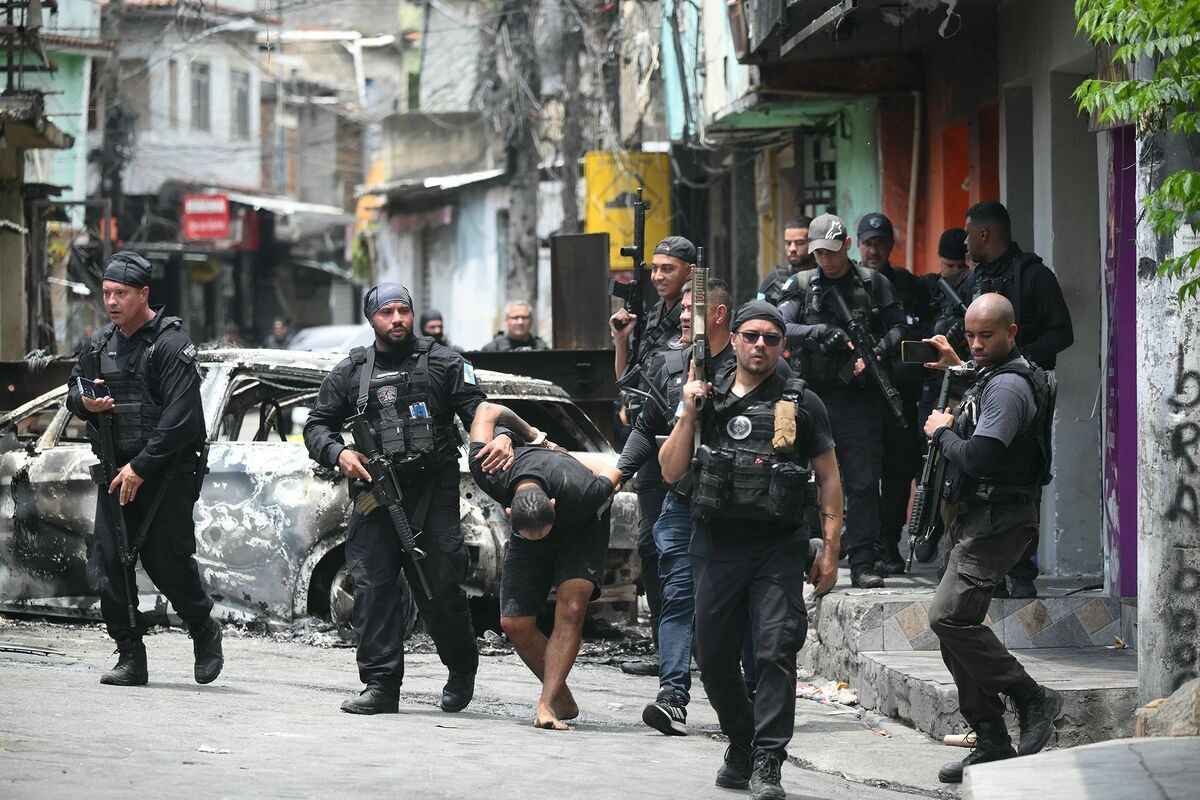
Brazilian authorities announced on Wednesday that four police officers were among the 119 people killed in a huge police raid on a known drug gang in Rio de Janeiro. Rights organizations and foreign observers have harshly criticized the operation, which is among the deadliest in Brazil’s history.
Targeting members of the Comando Vermelho (Red Command) gang, the massive raid took place on Tuesday and involved over 2,500 police officers and soldiers. Two low-income neighborhoods saw hours of intensive gunfire, leaving the streets covered in bodies and the locals in fear.
A 44-year-old community leader named Carlos da Silva declared, “That’s cowardly, it’s carnage.” This only occurs during conflicts like those in Gaza or Iraq. We appeared to have been struck by a tsunami. Bodies were all over the place.
Major routes were blocked as buses were converted into barricades, and nearby schools and a university were shuttered. Witnesses described the scene as looking like a war zone.
The UN Human Rights Office expressed alarm about what it described as a “cycle of extreme brutality” and denounced the carnage.
“We are aware of the difficulties in dealing with violent criminal organizations,” stated Marta Hurtado, Brazil’s UN Human Rights representative. However, the lengthy list of operations that have led to numerous fatalities and disproportionately impact those of African origin raises concerns about the methods used in these raids. Brazil needs to ensure that police activities adhere to international standards for the use of force and end the cycle of extreme brutality.
The state government of Rio justified the operation, claiming that the victims had resisted being taken into custody. Authorities maintained that the raid was required to take down one of the most potent and vicious drug syndicates in the nation.
The startling death toll, however, has rekindled discussions about racial profiling, police brutality, and the government’s divisive strategies in its protracted battle on organized crime.
Human rights activists have frequently charged Brazilian security forces with using disproportionate and indiscriminate force, especially in underprivileged areas with a high concentration of Black residents.
There are strong disagreements about how far authorities should go in taking on the nation’s well-established crime networks, as evidenced by the Rio raid, which is currently one of the deadliest police operations in Brazilian modern history.