Tanzanian police put a ban on Dar es Salaam on Wednesday because of the violent protests that happened during the election. President Samia Suluhu Hassan is expected to win because the two main opposition candidates were disqualified.
Monitor group NetBlocks said that Internet service across the country was interrupted as videos on social media showed young protesters throwing rocks at police and setting a gas station on fire.
Aggressive protests were seen in several areas of Dar es Salaam, the country’s capital city, and a local government office was even set on fire.
A video shared on X by the main opposition party showed dozens of young men chanting “We want our country!” as they ran through the streets of Arusha, a city in northern Tanzania. Dark smoke rose behind them.
People are angry that the two main alternative candidates were not allowed to run in the election and that many people who criticize the government have been allegedly kidnapped.
They were working together on the Zello app, which turns a smartphone into a walkie-talkie.
Police and government spokespeople did not answer calls for comment.
The government has said that the election is fair and disputed claims that human rights were widely violated in the lead-up to it.
The cops put up a curfew at 6 p.m. local time (1500 GMT), and the U.S. embassy said that people working for the American government were told to stay at home.
Protesters are angry that candidates were disqualified.
CHADEMA had called for protests during the election, which it saw as a “coronation” of Hassan, who took over as president when her predecessor died in office in 2021.
The party was kicked out of the election in April because it wouldn’t sign a code of behavior. The leader of the party, Tundu Lissu, was also charged with treason.
The commission also threw out Luhaga Mpina, who was running for the rival party ACT-Wazalendo. This meant that only small parties could run against Hassan.
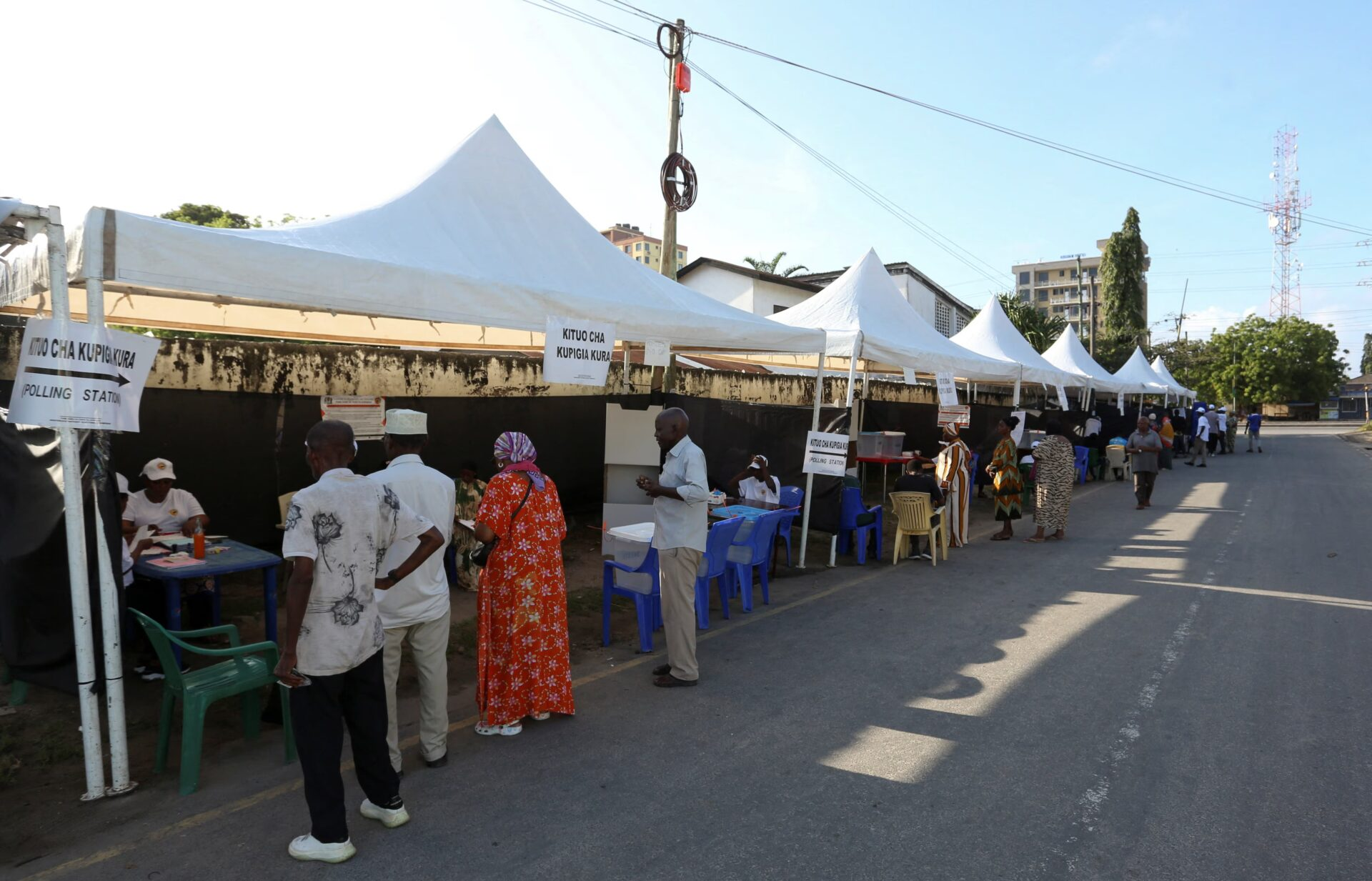
Polling places closed at 4 p.m., and not many people seemed to have gone to vote. Within three days, you should see the results.
In Dodoma, the administrative capital, Hassan told reporters after the vote, “I urge all Tanzanians, those who are still at home, to come out and exercise their right to vote and choose their preferred leaders.”
People also chose members of the 400-seat government, as well as a president and lawmakers for the semi-independent group of islands called Zanzibar.
The government ordered a probe into alleged offences.
Hassan’s CCM has been in charge of national politics since it was formed in 1977. Its predecessor party led the fight for mainland Tanzania’s independence in the 1950s.
Hassan is one of only two female heads of state in Africa. She has been traveling the 68 million-person country to talk about how she has improved transportation and power generation.
People praise her for easing the harassment and censorship of political opponents that were common under her predecessor, John Magufuli.
But in the past few years, rights activists and candidates for the opposition have said that the government has been kidnapping its foes for no clear reason.
Hassan said that she would look into reports of kidnappings last year. The results have not been made public by the government.