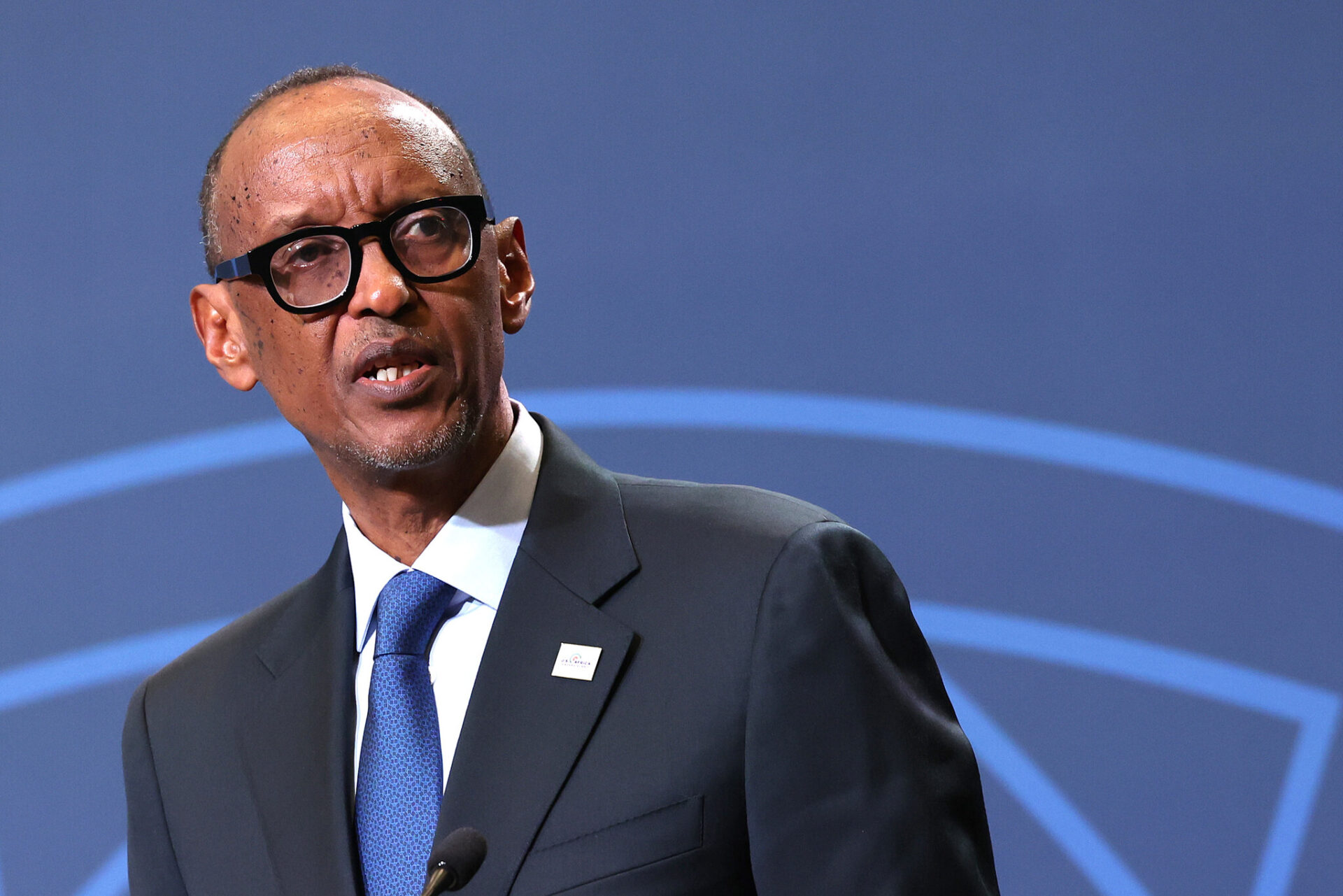
President Paul Kagame has stated that individuals’ trust in leaders is based on their ability to deliver, contending that actions must have an effect on their daily lives.
According to the Head of State, leaders cannot rely on pledges if they are not supported by tangible outcomes that the public can assess.
In the high-level panel discussion “Is Humanity Heading in the Right Direction?” at the 9th Future Investment Initiative (FII9) in Riyadh, Saudi Arabia, Kagame was discussing the global trajectory of growth and shared prosperity.
He stated that although there are numerous facets of leadership, “delivery is the single most important.”
“You have to figure out how to ensure that delivery meets the people’s expectations because, as leaders, you know what they need and expect.”
Prime Minister Edi Rama of Albania, President Gustavo Petro of Colombia, Prime Minister Muhammad Shahbaz Sharif of Pakistan, and President Mohamed Irfaan Ali of Guyana were among the leaders who participated in the panel.
Other speakers were FIFA President Gianni Infantino and Bridgewater Associates Founder Ray Dalio.
According to President Kagame, trust cannot develop when the claims made by leaders and the experiences of the populace do not coincide. According to him, consistent words and deeds are the first step toward accountability.
Making sure what you have supplied is quantifiable is one way to build trust, he continued.
Giving the example of Rwanda’s post-Genocide recovery, Kagame stated that the nation’s development over the previous thirty years has been fueled by a spirit of self-belief and accountability.
Despite our modest size, we are not a people with narrow spirits or minds. When people aren’t working on themselves first, no one will come from anyplace to solve their problems.
Rwanda’s methodology, he noted, is based on gaining confidence, learning from crises, and keeping the emphasis on the country’s development objectives.
When asked what steps developing countries could take to redefine their economic futures, Kagame responded that change starts with doable domestic reforms.
It has more to do with mindset, spirit, and practice than size. By assessing our progress and holding ourselves accountable, we have learned how to manage our business.
Although collaboration is still crucial, Kagame stated that it can only occur once nations have fortified their domestic bases.
“We set the stage for outsiders to join us in trading or investing. Our first priority has been to recognize our limitations and learn how to overcome them while maximizing our own potential.
“The geography did not follow development.”
Guyana’s president, Ali, maintained that worldwide prominence or population number should not be used to determine development.
In order to be competitive and to deal with the demands of migration, food, and climate change, he claimed that investments in infrastructure, people, and technology are crucial.
Guyana’s rapidly expanding economy and significant oil finds have earned it recognition, but President Ali claimed that its contribution to protecting biodiversity throughout the world is still undervalued.
Rising economies, he argued, cannot be constrained by a “big-country mindset” that disregards the ideas coming from smaller countries.
According to Pakistan’s prime minister, rising economies must balance luring in long-term capital with preserving social order. He stated that in order to increase investor confidence and economic resilience, anti-corruption reforms and the digitization of tax systems are essential.
The three-day FII9 conference, with the topic “The Key to Prosperity: Unlocking New Frontiers of Growth,” is bringing together world leaders, top investors and innovators, industry captains, and policymakers from the fields of technology, business, and government.
Stakeholders interested in investing in established solutions to global issues have been gathering annually since 2017 for the FII Institute.
The event focuses on four areas—education, healthcare, sustainability, and AI and robotics—where disparities are evident and encourages collaboration on communal solutions.