Cameroonian infant fatalities demonstrate how US funding cuts hinder the fight against malaria
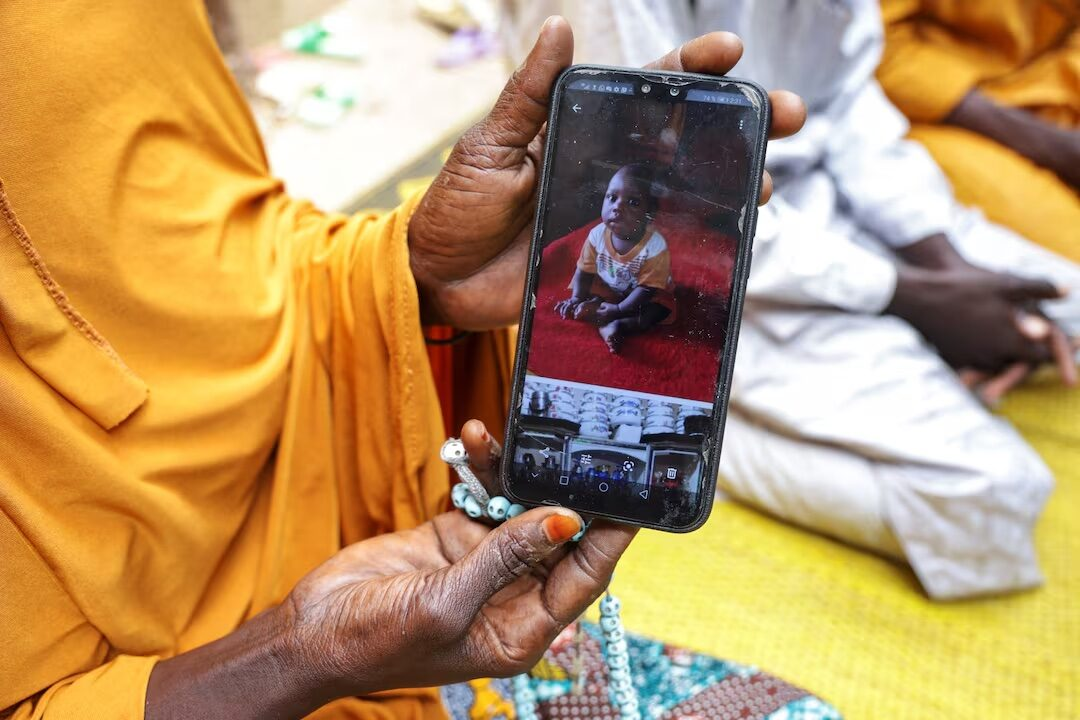
Mohamat was nine months old when his family brought him to the nearest health center in northern Cameroon after he had been suffering from a fever for three days, but it was too late. Malaria killed him that day.
Local health experts blame the U.S. cutbacks in foreign aid for the increase in malaria deaths this year, including Mohamat’s death.
One of the more than 2,000 community health workers financed by the United States who would traverse terrible dirt roads to reach the most remote villages in the region would have diagnosed Mohamat earlier before the cuts.
He may also have received injectable artesunate at the health center, a life-saving medication for severe malaria that was funded by U.S. dollars but is currently in short supply. The center, however, had nothing to offer.
Reuters visited northern Cameroon, where the United States has been at the forefront of the fight against malaria for almost ten years, to show how the abrupt cuts are causing a rise in malaria mortality, delayed diagnoses, and insufficient treatment. Interviews with over 20 physicians, nurses, community health workers, residents, and former U.S. officials involved in malaria programs served as the basis for this narrative.
Mohamat’s father, Alhadji Madou Goni, who grows bananas and sorghum, is grieving for a son he had hoped would one day rise beyond poverty.
“My loss makes me very sad. Sitting outside his house with his wife holding prayer beads beside him, 30-year-old Goni told Reuters, “I hope no one suffers from this (malaria) again.”
“Since there is hardship here, and people don’t have the means, we hope aid comes.”
Cuts disrupt the U.S. Malaria program, and USAID ends
President Donald Trump of the United States halted all foreign aid, including the President’s Malaria Initiative (PMI), which George W. Bush started in 2005, when he took office in January. The PMI is recognized with preventing 2.1 billion cases of malaria and saving 11.7 million deaths.
Life-saving efforts to combat malaria were permitted under a limited waiver granted in February; however, the U.S. Agency for International Development, which is the primary implementer of PMI-funded programs, was dissolved, causing significant disruptions to PMI’s 30 partner countries, the most of which are in Africa.
Goni is in the Far North region of Cameroon, where the changes eliminated funding for community health workers supported by PMI who identified significant cases and provided preventative supplies like bed nets.
The coordinator of the regional technical group for malaria control, Dr. Jean-Pierre Kidwang, stated that PMI provided funding for half of the community health workers in the area, 1,492 out of 2,824 total.
A monthly salary of 15,000 CFA francs ($26), clothing, bicycles, and a transportation allowance were all part of the assistance.
Community health professionals that get funding from the United States are now almost entirely unemployed. 2,105 of the 2,354 U.S.-funded employees in Cameroon’s Far North and North regions were no longer employed, according to Prosper Laurent Messe Fouda, chief of planning, monitoring, and evaluation at the National Malaria Control Programme.
After years of decline, malaria deaths are now increasing.
According to Kidwang, malaria mortality in the Far North decreased from 1,519 in 2020 to 653 in 2024 after PMI designated Cameroon as a target country in 2017. However, they presently seem to be increasing.
“With PMI funding, we moved from a mortality rate of 17% to bring the situation down to 8%,” said Kidwang.
“Now, with the September–October peak underway, available trends indicate that fatalities are rising sharply, even though official data has yet to be released,” he said, including a 15% number for the first half of 2025.
“We may get to a point where all the gains against malaria are reversed.”
No one has died as a result of the cuts, according to Secretary of State Marco Rubio, and the Trump administration claims to be revamping foreign aid that did not fit with its “America First” strategy.
Trump has stated that others should foot the bill for overseas aid since the United States spends a disproportionate amount. The World Health Organization reports that, on average, the United States provided 37% of money for malaria programs between 2010 and 2023.
Although the United States has canceled almost 80% of aid contracts this year, it has stated that life-saving efforts, including those for malaria, will go on. However, following the cancellations, WHO and local NGOs reported “critical gaps” in the malaria response in April.
Although Congress will have the last say later this year, Trump’s initial budget plan for fiscal year 2026 contained a 47% drop to PMI’s budget from under $800 million in recent years.
Rubio’s September announcement of the “America First Global Health Strategy” included certain pledges to lower malaria incidence and mortality, but it omitted reference to PMI or funding. The initiative will continue, a State Department spokeswoman told Reuters.
According to Anne Linn, a former senior community health advisor for PMI, the program provided support to 115,000 community health workers in 30 countries prior to the January cuts, as reported by Reuters. All of it vanished, she said, though it’s unclear how much financing has returned and where governments and nonprofits have filled critical holes.
Prior to requesting governments to co-invest, the State Department spokesperson stated that it would continue to support the fight against malaria through bilateral agreements with partner nations and pledged to keep all of the current U.S. funding for frontline health workers, medications, and nets at 100% in fiscal year 2026. Their current annual budget was not disclosed.
CUTS OCCURRING IN A FEW AFRICAN NATIONS
In other African nations, such as Liberia, where some community health workers are volunteering unpaid, the impact of the reduction has been seen.
The reductions occurred while officials were preparing community health workers to be deployed during the rainy season, which runs from May to October, in Cameroon’s Far North, an area vulnerable to flooding and droughts as well as violence associated with the Islamist Boko Haram insurgency in neighboring Nigeria, according to Kidwang.
Health worker Oumarou Gassi expressed his sadness at losing his job.
“I’m fighting for my life. “I was able to support my family with the little I used to receive from the PMI project,” he stated.
More severe instances of malaria are occurring as a result of health professionals being out of the field, and the supply of injectable artesunate has been impacted by U.S. cuts, according to Kidwang.
He claimed that Far North was mostly out of stock this year.
The region’s needs cannot be met for even three months, he claimed, despite the fact that some 200,000 vials arrived in Maroua, the regional capital, on September 2.
Olivia Ngou, executive director of the nonprofit organization Impact Sante Afrique, stated that authorities are attempting to bridge the gap but are limited in their resources.
Uncertainty as U.S. CUTS AFFECT DATA COLLECTION
PMI also had a significant role in data gathering, so it may be hard to predict just how bad things go.
The data is no longer available online. The website of PMI states that it is “currently undergoing maintenance as we expeditiously and thoroughly review all of the content” in order to adhere to the executive orders set forward by Trump.
Therefore, “we won’t know the extent to which this bounce back is going to occur,” stated Louisa Messenger, a University of Nevada-Las Vegas public health specialist who has participated in PMI and other malaria programs in Africa.
For Djidja and Daouda Amadou, who lost their five-month-old daughter to malaria in July, the big-picture statistics is of little importance.
They took the infant to a health center, where personnel directed them to Maroua, after waiting for the fever to go down, just like Goni had.
Their baby is now buried beneath a pile of dirt in their yard since it was too late when they got there.
“I am devastated,” remarked Amadou in a low voice. “The child’s memory keeps coming back to me.”