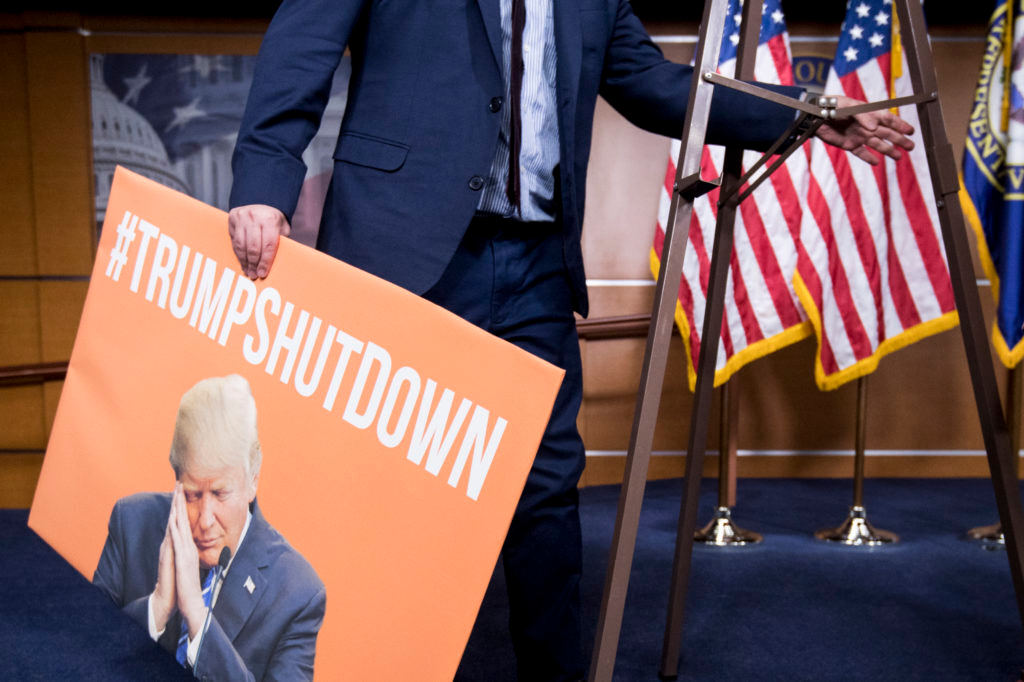
The Senate couldn’t agree on how to fund the government, so it shut down. This stopped services and didn’t pay federal workers.
The US government has been shut down because lawmakers couldn’t agree on a last-minute funding measure. This is the first shutdown of this kind since late 2018. The political standoff in Washington, D.C., on Wednesday is likely to affect a number of public services, but it will not stop critical operations from running, even if workers don’t get paid in some cases.
The government shut down when the Senate turned down a short-term spending bill that would have kept things running until November 21.
President Trump had earlier said that he would fire a lot of government workers in a “irreversible” way if the shutdown happened. Since then, both parties have been sharply arguing over who is to blame. Senate Democratic Leader Chuck Schumer said Republicans were spreading “lies,” while Republican Senator John Thune said his party would not be “taken hostage.”
An earlier White House letter told agencies to carry out their “orderly shutdown” plans, but it’s still not clear how long it will last. Border agents, police officers, hospital staff, and air traffic managers are just a few of the essential workers who will continue to do their jobs, but many of them will do so without getting paid. DHS spokesperson Kristi Noem confirmed that more than 200,000 employees, including 150,000 officers and 50,000 military members, will stay on duty without being paid.
Other government workers are on leave without pay right now. During past shutdowns, national parks were closed all the way, but this time, many will stay partly open thanks to backup plans. But conservationists have said that leaving parks open without enough staff could hurt the scenery and put visitors in danger.
Key government programs like Medicare and Medicaid will keep running, but delays may happen because of a lack of workers. It’s likely that the Supplemental Nutrition Program for Women, Infants, and Children (WIC) will quickly run out of money, which will put at risk families who are already struggling. Also, the National Flood Insurance Program will be shut down, which will make it harder to sell homes. If air traffic managers who aren’t getting paid stay home instead of working, travelers may have to wait in long lines and experience delays.
A disagreement over how much the government should spend is at the heart of the shutdown. The Republicans, who have 53 Senate seats, tried to pass a “clean continuing resolution” (CR) to keep the government running for a short time without making any other policy changes. The bill needed 60 votes, though, so Republicans had to rely on Democratic backing.
Using their power, Democrats asked for healthcare compromises, such as keeping subsidies for low-income health insurance and undoing cuts to Medicaid made by the Trump administration. The shutdown happened because the two sides couldn’t come to an agreement.
The global financial markets don’t seem too upset about the problems; they see the situation as a short-term setback. However, the shutdown still causes worry for a lot of government workers and American families.
There will be a standoff until Congress can pass a new funding bill. This is a high-stakes political fight between two sides, and Americans are caught in the middle.