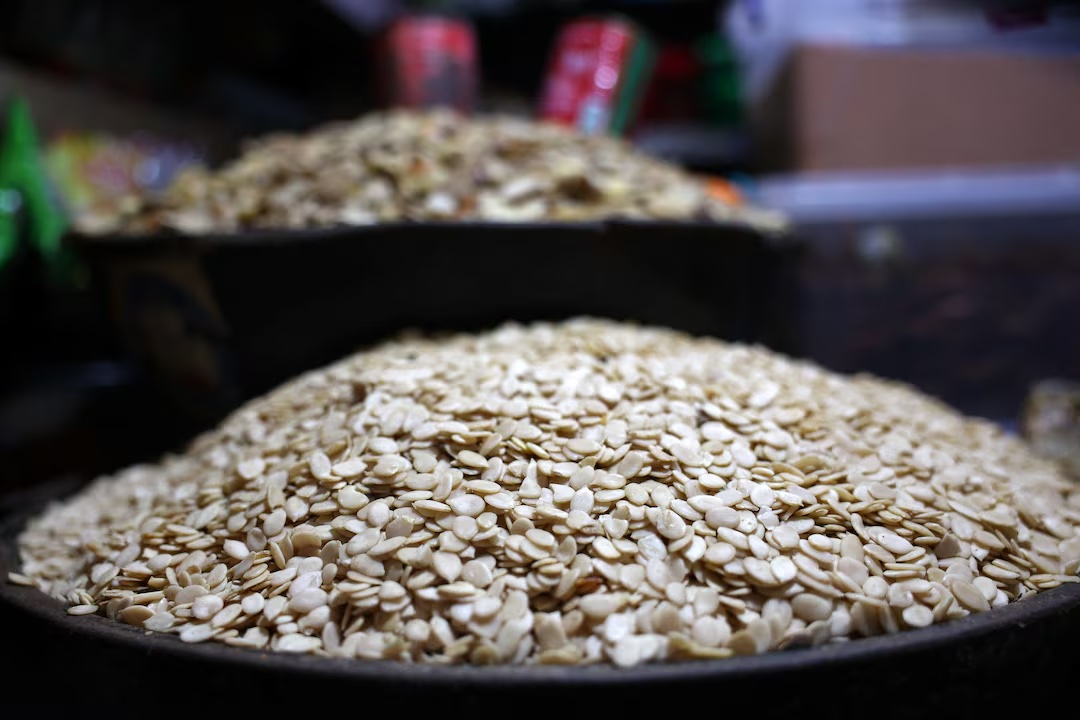
Egusi soup, a fundamental part of Nigerian cuisine, may one day be enjoyed on the Moon or Mars, as melon seeds used to create this thick, aromatic dish orbited the Earth for seven days before returning for analysis by space scientists.
This month, a capsule launched from NASA’s Kennedy Space Center in Florida carried egusi seeds to the International Space Station, as part of a project aimed at studying their reactions to space conditions.
“The aim is that in the coming decades, as people inhabit the Moon and Mars, they will incorporate foods … particularly those native to Africa, into their agricultural practices,” stated Temidayo Oniosun, who chose the seeds for the mission.
“Even in 50 years, if Africans are residing on the Moon, we envision them cultivating and planting egusi,” stated the Nigerian entrepreneur and founder of the intelligence company Space in Africa.
Egusi seeds, known for their high protein content, were carefully placed into specialized test tubes aboard the Crew-11 space capsule, which was launched on August 1 alongside heritage seeds from Costa Rica, Guatemala, Armenia, and Pakistan.
Wagner Vendrame, a scientist from the University of Florida and one of the researchers on the project, stated that future astronauts will require a greater variety and higher quality of foods compared to the ultra-processed freeze-dried meals that currently dominate space diets.
“The ability to cultivate their own produce, such as lettuce, tomatoes, or melons in space, is crucial not just for nutrition and health, but it also has psychological benefits when consuming a fresh melon compared to a processed one,” he stated.
Oniosun, who selected the space-travelling egusi seeds from markets in the southwestern Nigerian state of Oyo, explained that the decision was driven by both the seeds’ nutritional benefits and their cultural significance and symbolism.
“Everyone in Nigeria enjoys egusi, and this extends to individuals in various West African nations and Africans living abroad, making this mission something they can relate to,” he stated. “Egusi is the seed that narrates our tale.”
The seeds that were in orbit are now being allocated to researchers. Vendrame stated that they would be propagated in vitro and examined for genetic changes induced by their time in orbit.
“By examining the alterations in the plants and the seeds themselves, we can determine – are those plants still the same?” Would they continue to offer the same quality of nutrition to astronauts?