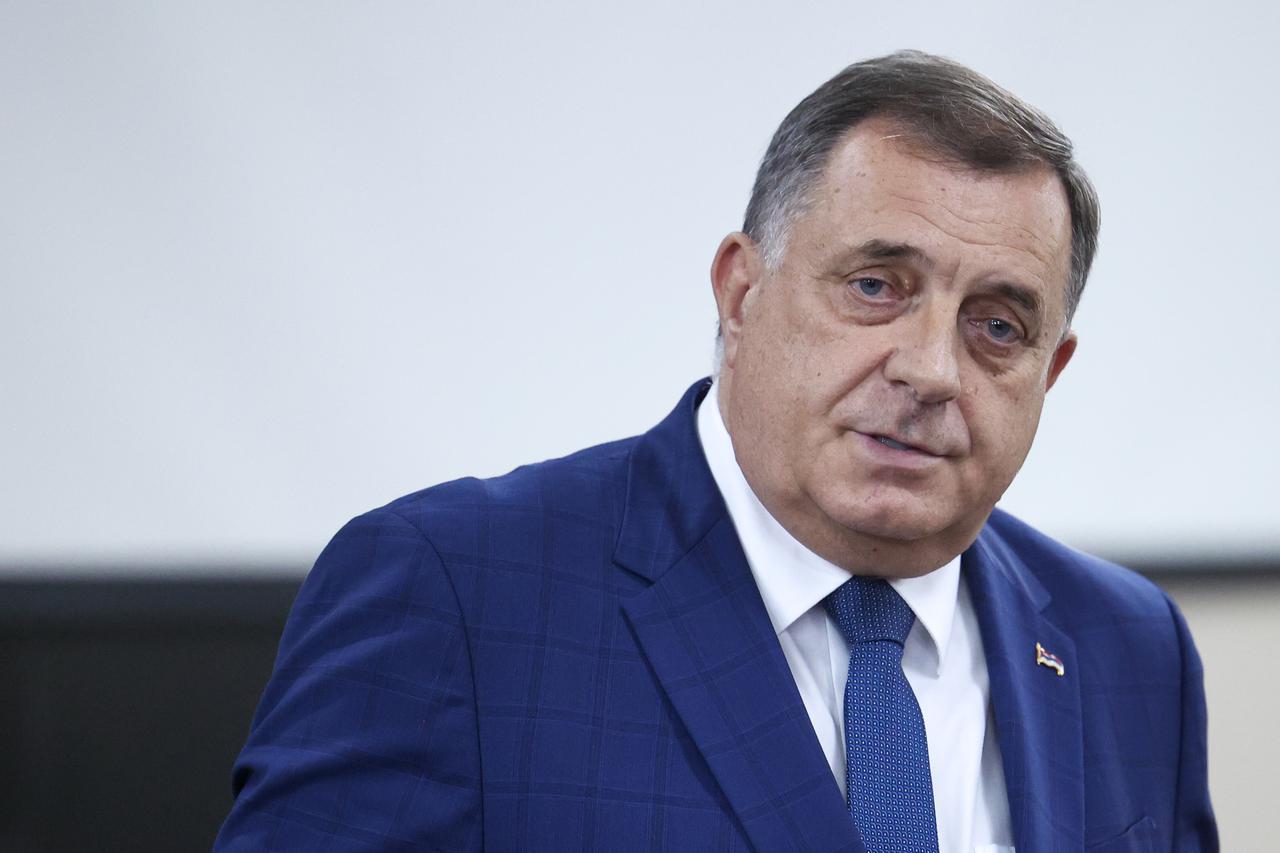
The Balkan nation’s electoral commission said Thursday that Bosnia’s autonomous Serb Republic will hold an early election on November 23 in spite of resistance from the parliament and separatist head of the area.
In an attempt to break the impasse, the electoral commission called for a new Serb Republic president. Milorad Dodik, a pro-Russian Serb nationalist, was stripped of the office, but he has refused to resign.
The Bosnian Serbs’ separatist movement is widely seen as one of the greatest threats to peace in the Balkans since the 1995 Dayton peace accords that put an end to the fighting in Bosnia, and the country is currently experiencing one of its worst political crises since the Balkan conflicts that followed the fall of Yugoslavia.
Dodik was given a one-year jail sentence and a six-year ban from political participation earlier this year for disobeying the constitutional court’s rulings and the directives of an international peace envoy, whose job it is to keep multiethnic Bosnia from reverting to civil war.
Dodik has rejected his conviction and stated that he will remain in office as long as Bosnian Serb MPs support him, despite an appeals court upholding that decision this month.
He proposed last week that the parliament of the Serb Republic organize a referendum on October 25 to find out if the people of the region support international High Representative Christian Schmidt and accept the decision.
Both Dodik’s decision and Schmidt’s power as the final arbiter of the Dayton peace agreement have been rejected by the parliament. Additionally, it has prohibited local election campaigning and opposed an early presidential election in the area.
In an effort to create a larger ruling coalition, Dodik also started a reorganization of the Alliance of Independent Social Democrats, the party that controls the Serb Republic, last week.
As a result, Dodik nominated Agriculture and Forestry Minister Savo Minic as prime minister-designate, and Prime Minister Radovan Viskovic resigned.
Together with the federation shared by Bosniaks and Croats under the terms of the Dayton Accords, which put an end to the 1992–1995 conflict that killed over 100,000 people in Bosnia and displaced another 2 million, the Serb Republic comprises Bosnia and Herzegovina.