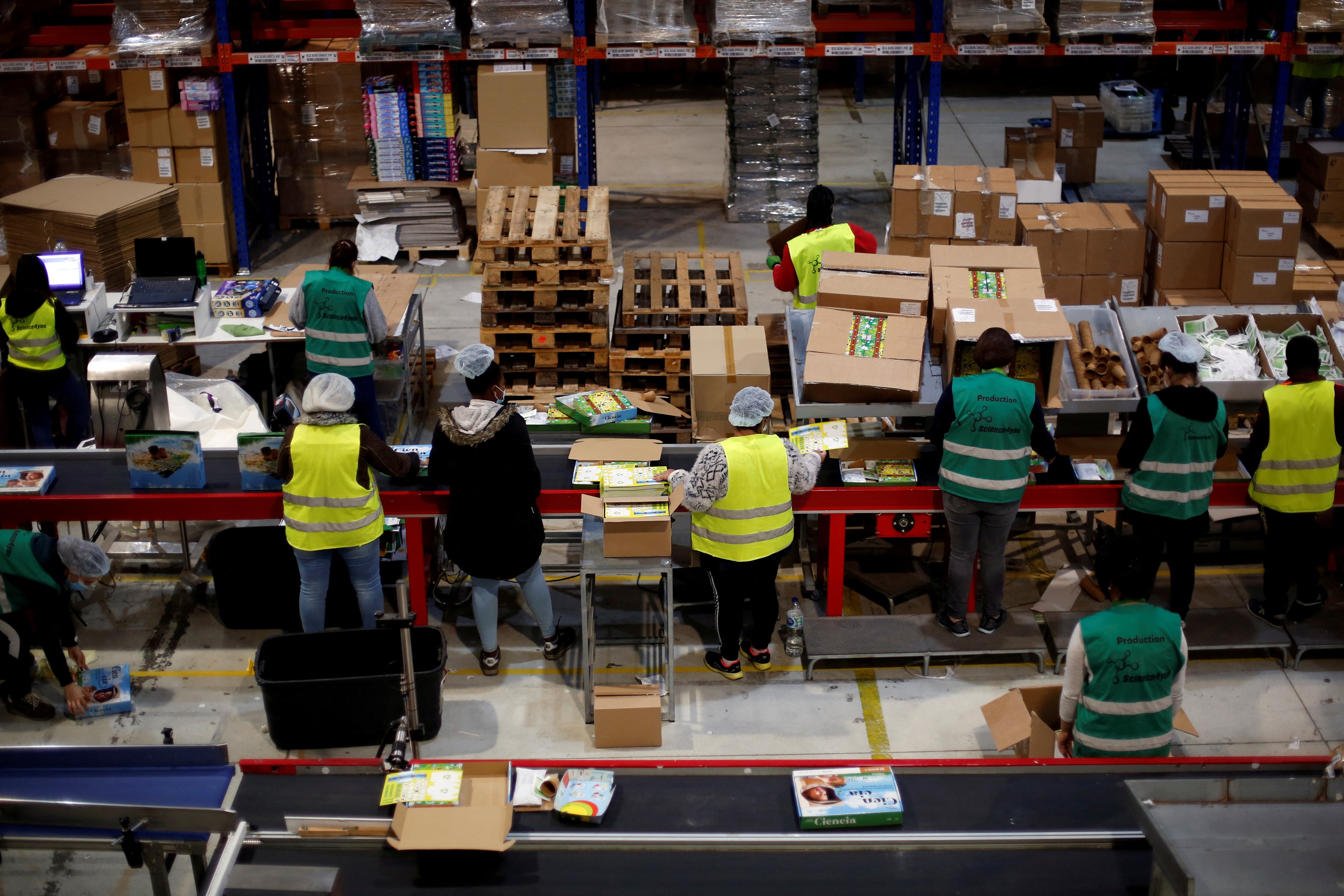
Fears about US trade policies hurt Asian economies, which led to a big drop in manufacturing activity.
Asia’s manufacturing sector fell even more in July because of weak global demand and ongoing uncertainty over US tariffs, according to private sector surveys released on Friday. This casts question on the region’s already shaky recovery prospects.
The downturn happened before the United States and two important Asian economies—Japan and South Korea—signed new trade agreements. These agreements could boost business confidence and industrial activity in the coming months, according to experts.
In countries that depend on exports, like Japan and South Korea, factory output kept going down. The most recent purchasing managers’ index (PMI) statistics showed how President Trump’s trade policies have hurt the global free trade framework that Asia needs for economic growth.
China, which is Asia’s economic powerhouse, also saw things get worse for manufacturers. It went from 50.4 in June to 49.5 in July, which was lower than the 50-point line that splits growth from contraction. This was lower than what Reuters expected, which was 50.4.
This came after an official survey the day before showed that Chinese manufacturing had shrunk for the fourth month in a row. This suggests that the earlier rise in exports before the expected US tariffs is slowing down, while weak domestic demand remains.
According to Zichun Huang, an economist at Capital Economics, the study shows that China’s economy lost some speed last month, mostly because of weakness in its own country.
Japan’s manufacturing PMI dropped from 50.1 in June to 48.9 in July, which suggests that US tariffs were beginning to hurt the world’s fourth-largest economy. A lot of the poll data was collected before Japan and the US reached a trade deal that will lower tariffs from the 25% that were planned to 15%.
S&P Global Market Intelligence put together the study, and Annabel Fiddes, an economics associate director there, said, “It will be interesting to see if this leads to more customer confidence and better sales in the coming months.”
South Korea’s factories have been less busy for six months in a row. The country’s S&P Global PMI fell from 48.7 in June to 48.0 in July, following a long-term trend of slow industrial output.