India pledged Thursday to defend its labor-intensive agriculture sector, which is a major source of contention in the stalled trade negotiations with the United States, after Washington threatened 25% tariffs, which infuriated the opposition and caused the rupee to plummet.
Without an agreement, the rate will take effect on Friday and target India specifically for more restrictive trade restrictions than its major counterparts, which may harm the economy of a vital Asian partner of the United States that is considered as a check on Chinese power.
Although talks are still going on, the United States’ demands that India expand its agricultural markets have caused them to stall.
The industry, which employs more than 40% of the workforce in farming and makes up the most powerful voting group in the most populous country in the world, has long been protected by New Delhi.
Indian Trade Minister Piyush Goyal stated in a statement to the parliament that “the government attaches the utmost importance to protecting and promoting the welfare of our farmers, entrepreneurs, and (medium and small businesses).”
In a Thursday interview with CNBC, U.S. Treasury Secretary Scott Bessent expressed frustration with India and stated that it was now up to India to decide the future of the trade agreement between the two countries.
On Wednesday, U.S. President Donald Trump said that India will be subject to an undisclosed penalty for its relations with Russia and its participation in the BRICS group of countries, in addition to a 25% duty on its imports.
“I don’t care what India does with Russia,” Trump stated Thursday in a post on Truth Social. “They can take their dead economies down together, for all I care.”
During early trading, India’s key equity indices, the Nifty 50 (.NSEI) and BSE Sensex (.BSESN), dropped as much as 0.9% before reversing losses and closing about 0.4% lower.
Later in the day, the rupee hit its lowest level in over five months, closing 0.2% lower against the dollar at 87.5950.
DISCOVERING RELATIONS
Anger was raised among India’s political opposition by the government’s inability to reach a deal with Trump, despite recent agreements being reached with other major global economies such as the European Union, Japan, and South Korea.
Opposition leader Rahul Gandhi told reporters on Thursday, “The government has destroyed our economic policy, has destroyed our defense policy, and has destroyed our foreign policy.”
Experts cautioned that the high tax may harm India’s aspirations for manufacturing and reduce economic growth by as much as 40 basis points in the fiscal year ending in March 2026. There were many who questioned if more talks would result in better conditions.
“It seems unlikely that India will secure a significantly better outcome than its eastern neighbors, even though further trade talks may bring the tariff rate down,” said Priyanka Kishore, an economist at Asia Decoded.
Other nations have negotiated lower U.S. tariff rates; Vietnam agreed to 20%, Indonesia to 19%, and the EU and Japan to 15%.
Trump announced on Wednesday that Washington and India’s bitter adversary Pakistan had reached a trade agreement that, according to Islamabad, will result in lower export taxes. However, neither party has yet to disclose the agreed-upon rate.
Trump’s close ties to Islamabad have angered New Delhi, which has objected and hampered trade discussions since India’s brief but deadly clash with Pakistan in May.
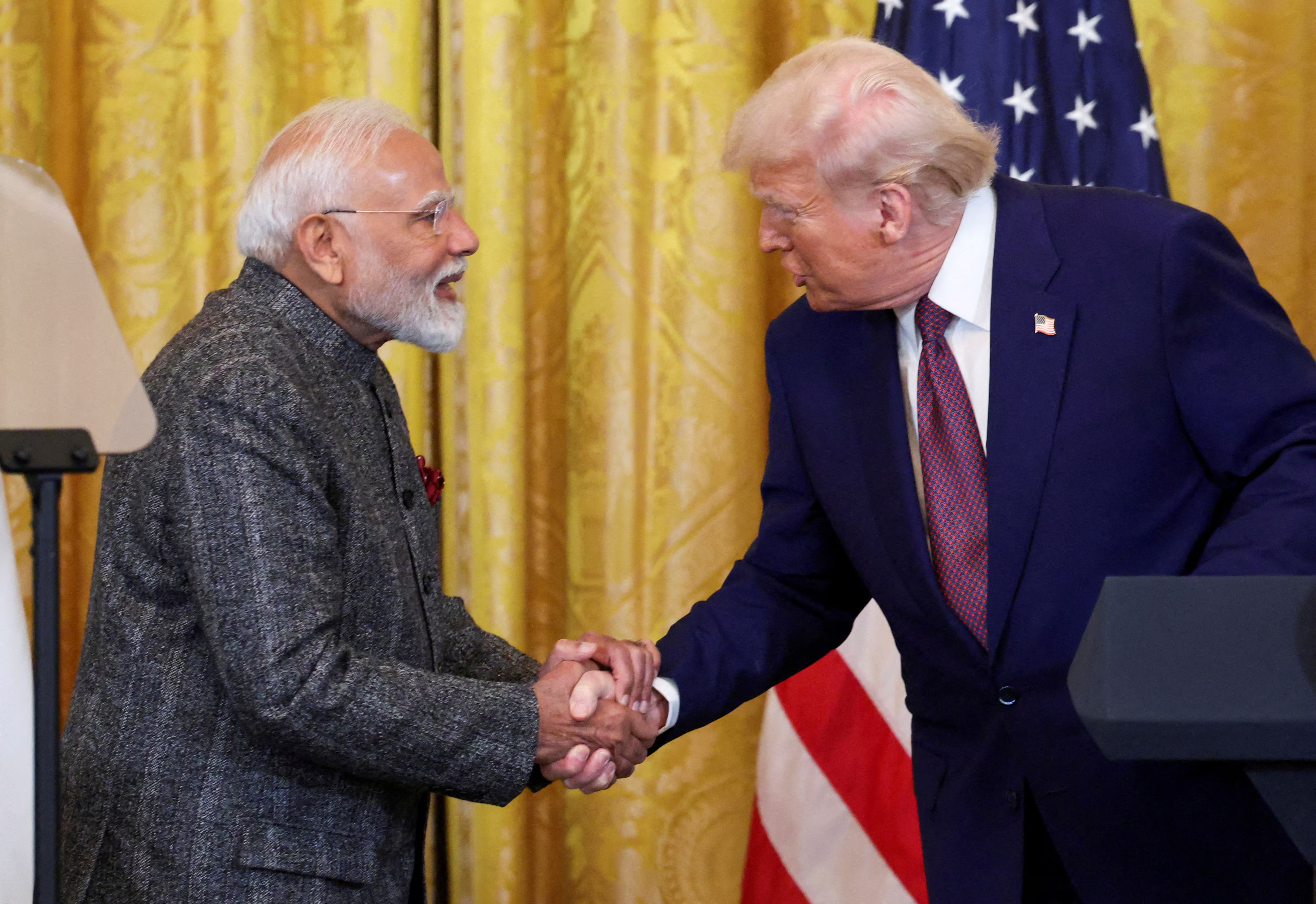
Even while Trump and Prime Minister Narendra Modi have shown public amity in the past, India has been more antagonistic toward the US in recent weeks.
Trump has frequently claimed credit for the truce between India and Pakistan that he declared on social media on May 10. India contests his assertion that his intervention and trade threats were the cause of the ceasefire.
The greatest economy in the world, the United States, now has a $45.7 billion trade deficit with India, which is the fifth largest economy.