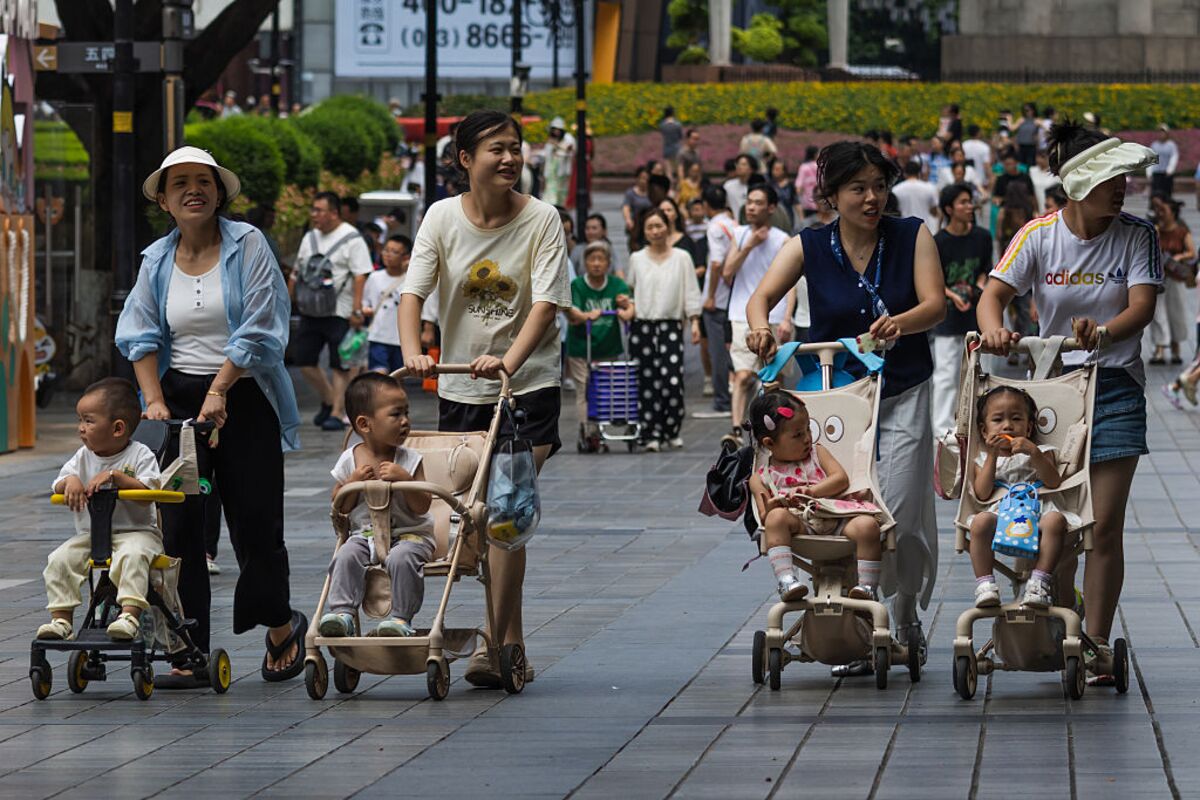
Beijing addresses the population challenge by distributing 3,600 yuan each child under three for the first time countrywide.
China is implementing its first national incentive to encourage families to have more children as the nation struggles with a growing population drop and growing child-rearing expenses.
For each child under three, parents will receive 3,600 yuan (about $500 or £375) per year starting this year, according to state broadcaster CCTV. About 20 million families may profit from the program, which was announced Monday and will take effect retrospectively on January 1, according to state media.
As part of a larger effort by the ruling Communist Party to reverse declining birth rates that have continued even after the one-child policy ended almost ten years ago, the reimbursement, which may amount to up to 10,800 yuan per child over three years, was made.
Under the program, families with children born in 2022–2024 can also receive partial subsidies.
The decision is made in the midst of numerous regional campaigns to encourage childbearing. The northern city of Hohhot started giving couples with at least three children up to 100,000 yuan each newborn in March. For families with a third child under three, Shenyang, in northeastern China, provides 500 yuan per month.
The top leadership of China has also called on local governments to increase the availability of free preschool instruction in order to lessen the financial strain on young families.
According to studies by the YuWa Population studies Institute, the average cost of raising a child in China until they are 17 years old is $75,700. This is a serious worry. This puts the cost of raising children in China among the highest in the world in relation to household income.
In 2024, 9.54 million babies were born, a tiny rise over the previous year, but the National Bureau of Statistics reports that China’s total population has continued to decline for the third year in a row.
With 1.4 billion people living in the country, who are increasingly aging and fewer being born, Beijing is under increasing pressure to change its policies before the demographic trend starts to affect social stability and long-term economic growth.