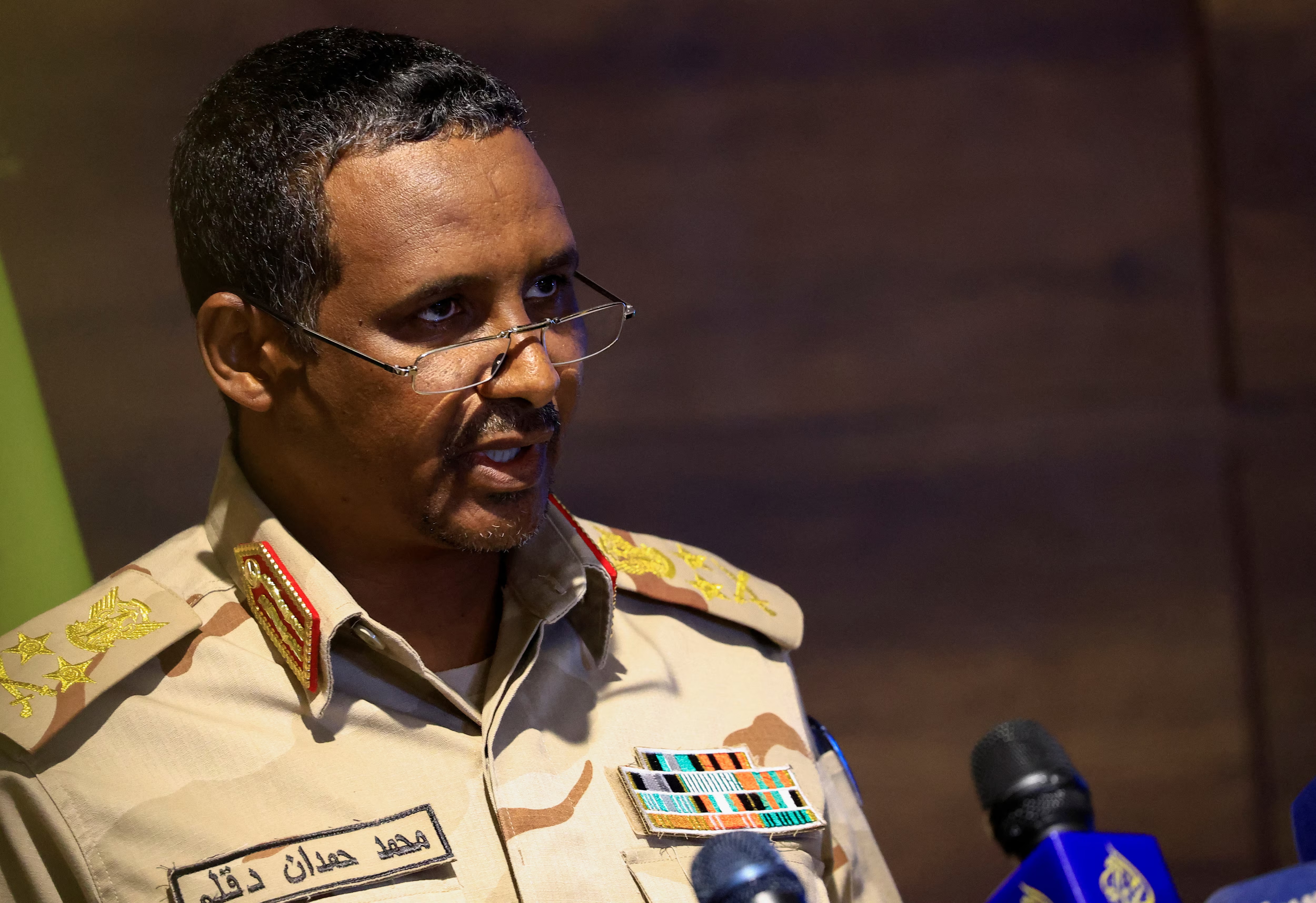
A group in Sudan, led by the paramilitary Rapid Support Forces, named the members of a parallel government on Saturday. The army, which is fighting a 27-month war against the coalition, is against the move, which could make the country even more split.
General Mohamed Hamdan Dagalo, leader of the RSF, was named head of the presidential council. Abdel Aziz al-Hilu, leader of the SPLM-N, one of the biggest rebel groups in the country, was named his deputy on the 15-person council.
A civilian politician named Mohamed Hassan al-Taishi as prime minister. Regional governors were also named at a news conference held in Nyala, the largest city in the Darfur region that the RSF controls.
The paramilitaries have been pushed out of the middle of the country by the Sudanese army. Meanwhile, fighting is still going on in the center-west Kordofan area and in al-Fashir, which has been Darfur’s traditional capital for a long time.
In February, the RSF and rebel groups and politicians that supported it decided to make a government for a secular “New Sudan.” Their goal was to question the legitimacy of the army-led government and make sure that advanced weapons would be sent there. The government that was named on Saturday includes governors for parts of the country that the army strictly controls.
The military, led by career army officer General Abdel Fattah al-Burhan, said they didn’t agree with the RSF’s plan to set up a separate government and said they would keep fighting until they took control of the whole country of Sudan. For years, Sudan has been a mess of wars, coups, poverty, and hunger.
In early 2018, the U.S. put sanctions on Dagalo, a former militia chief and one of Sudan’s richest people who goes by the name Hemedti. They did this because they accused him of genocide.
Burhan was punished by the U.S. in January because they said he chose war over talks to end the conflict that has killed tens of thousands of people.
After the ouster of experienced autocrat Omar al-Bashir in 2019, the two men shared power. But in 2021, a coup by both forces got rid of civilian leaders. This led to a war over troop integration during a planned change to democracy.
In the last few weeks, the army chose a prime minister and regular cabinet members. This is the first time since 2021 that the army has done this.
The ongoing war has destroyed Sudan and caused a humanitarian crisis on a scale that has never been seen before. According to the UN, half of the population is now at risk of spreading hunger and famine.