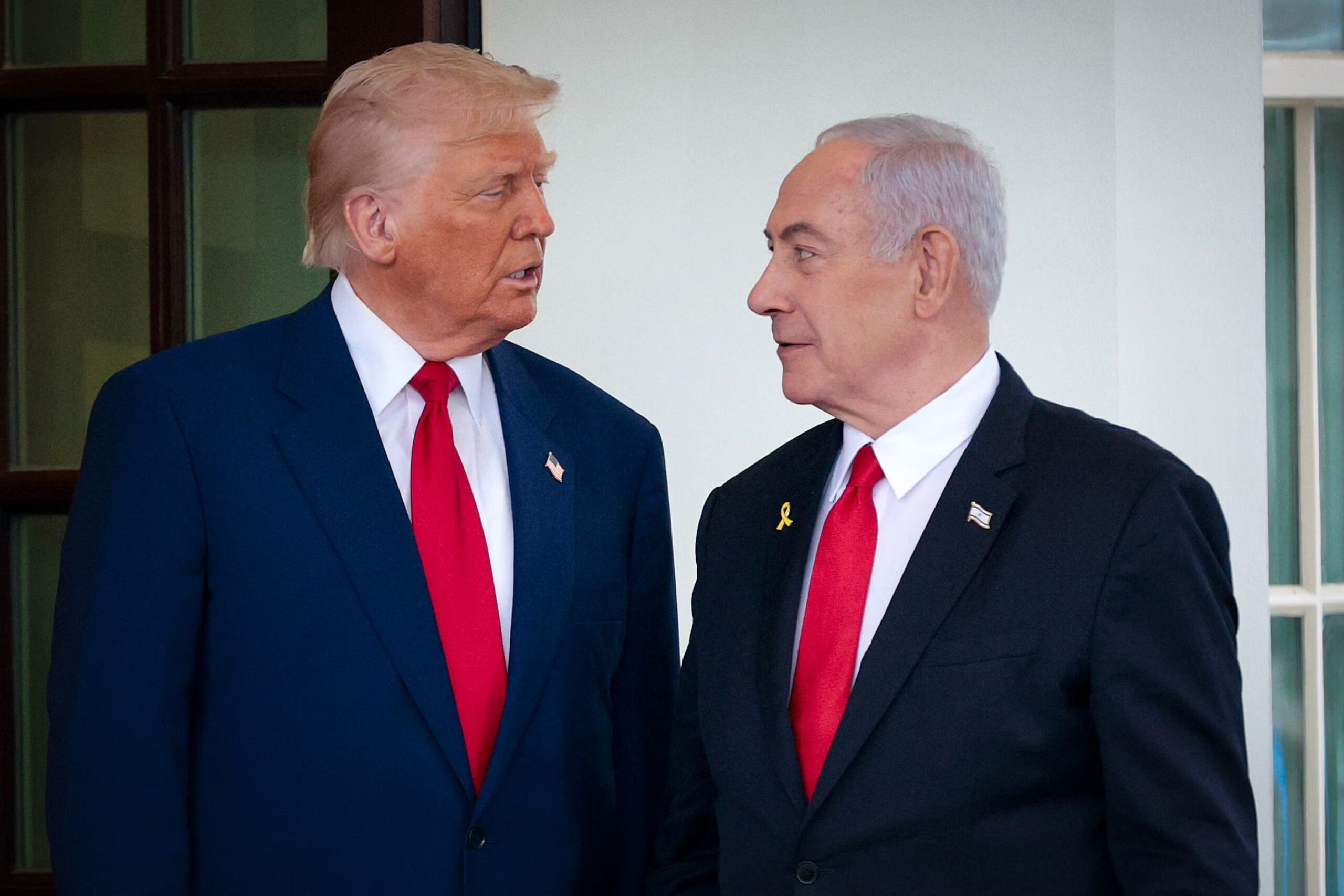
Trump and Netanyahu have reportedly put a stop to ceasefire negotiations in Gaza due to Hamas’ refusal to negotiate, despite the situation getting worse.
The ceasefire talks between Hamas and Israel were abruptly ended on Friday by both U.S. President Donald Trump and Israeli Prime Minister Benjamin Netanyahu, who stated that it was now evident that the Palestinian terrorists were not interested in a compromise.
Netanyahu claimed that in order to fulfill its objectives of repatriating its hostages from Gaza and removing Hamas from power in the enclave, where the majority of the population is displaced and famine is increasing due to extensive destruction, Israel is now considering “alternative” measures.
Trump told reporters that he thought Hamas officials will now be “hunted down,” adding that “Hamas really didn’t want to make a deal.” I believe they wish to pass away. And it’s terrible. And it must reach a point where you will need to complete the task.
At a time when the world is growing increasingly concerned about the deepening famine in war-torn Gaza, the comments seemed to leave little to no opportunity, at least in the short term, to resume negotiations for a halt in the hostilities.
Emmanuel Macron, the president of France, declared that Paris will be the first major Western country to recognize an independent Palestinian state in response to the worsening humanitarian situation.
After first stating that they were not yet prepared to do so, Britain and Germany joined France in demanding a quick ceasefire. Only in the context of a negotiated peace agreement will the British government recognize a Palestinian state, according to Prime Minister Keith Starmer.
Trump rejected Macron’s action. He declared, “What he says doesn’t matter.” He is an excellent man. That assertion doesn’t hold water, even though I like him.
The United States and Israel pulled their delegations from the ceasefire negotiations in Qatar on Thursday, only hours after Hamas sent in its answer to a proposal for a strike.
At first, sources on Thursday claimed that the Israeli pullout was merely for consultations and did not necessarily indicate that the negotiations had descended into a crisis. However, Netanyahu’s comments implied that Israel’s stance had become more rigid overnight.
Steve Witkoff, the U.S. envoy, blamed the deadlock on Hamas, but Netanyahu claimed Witkoff was correct.
In a Facebook post, senior Hamas official Basem Naim praised the discussions as fruitful and denounced Witkoff’s comments as being intended to put pressure on Israel.
He stated, “With complete awareness and understanding of the complexity of the situation, we believe what we have presented could lead to a deal if the enemy had the will to reach one.”
Qatar and Egypt, the mediators, reported that the most recent round of negotiations had seen modest progress. Suspensions are a natural part of the process, they added, and they are determined to keep working with the United States to attempt to achieve a ceasefire.
The proposed ceasefire would allow additional aid to enter Gaza, halt fighting for 60 days, and release some of the 50 hostages being held by terrorists in exchange for Palestinian inmates detained in Israel.
It has been delayed by disagreements about the extent of Israel’s troop withdrawal and what will happen after the 60 days if no long-term agreement is reached.
Netanyahu’s decision was praised by Itamar Ben-Gvir, the far-right national security minister in Netanyahu’s coalition, who called for a complete takeover of the enclave and a complete halt to aid to Gaza. He wrote on X: “Total annihilation of Hamas, encourage emigration, (Jewish) settlement.”