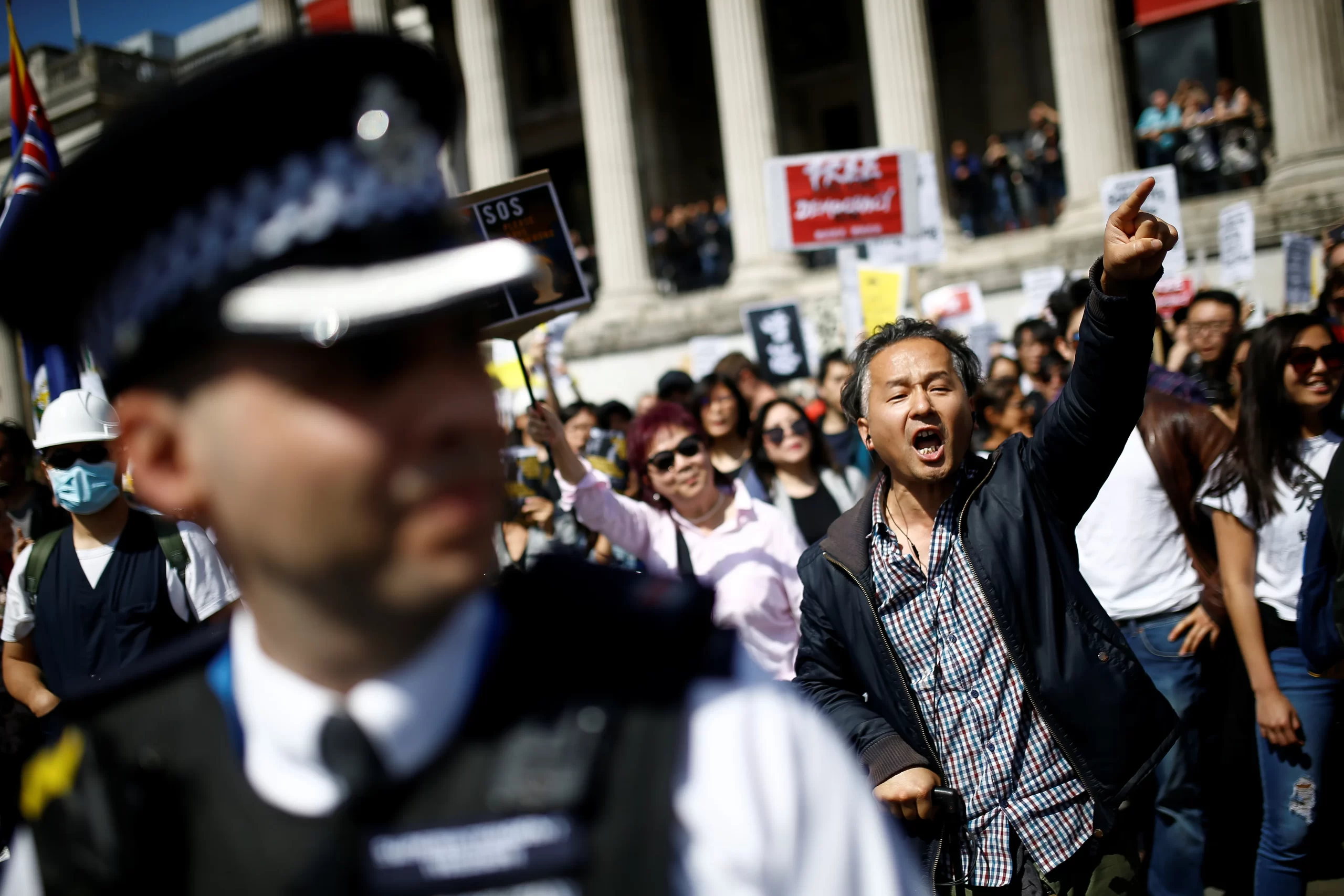
Britain doesn’t agree with Hong Kong’s attempts to get extradited activists back from exile, which have caused a lot of controversy.
Britain has criticized Hong Kong for putting bounty marks on pro-democracy activists living in exile, but at the same time, the UK government is taking steps to bring back an extradition deal with China.
Hong Kong’s national security police issued arrest warrants for 19 activists from other countries on Saturday, accusing them of rebellion under broad national security laws. This is the longest list of its kind ever.
The activists were reportedly organizing or running for office in the unofficial “Hong Kong Parliament” group, which the government says wants to write a new constitution and give people more freedom.
Police said the group’s goal was to “overthrow the governments of China and Hong Kong by unlawful means.” They also said they were looking into making more arrests.
The activists are from many places, including the UK, where authorities acted quickly to the news. Foreign Secretary David Lammy and Home Secretary Yvette Cooper spoke out against Hong Kong’s moves on Friday.
“The Hong Kong Police Force issuing more arrest warrants and bounty notices for people living in the UK. This is another example of transnational repression,” the statement said.
“This Government will always stand with the people of Hong Kong, even those who have moved to the UK.” We care a lot about keeping their rights, freedoms, and safety safe.
People have been given rewards of 200,000 to one million Hong Kong dollars, which is about $25,000 to $125,000, for information that leads to the activists’ arrest.
This is the fourth time that Hong Kong’s government has said they will pay money to capture exiled democracy activists. Western countries have strongly condemned these actions each time. In response, Beijing has said that the West is meddling in its internal matters.
A new plan by the UK Home Office to change extradition rules has made the situation even more complicated. The plan was made public in documents sent to Parliament on July 17 and confirmed in a letter to Shadow Home Secretary Chris Philp the next day. This has caused worry that it could make it possible to resume extradition talks with Hong Kong.
In a letter dated July 18, Security Minister Dan Jarvis said, “It is in our national interest to have effective extradition relationships so that criminals don’t get away with their crimes and the UK doesn’t become a haven for criminals.”
The Home Office also wants to bring back transfer agreements with Chile and Zimbabwe. Jarvis said that future cases involving Hong Kong and Zimbabwe would be looked at “case by case.”
The UK stopped sending people back to China for extradition in 2020, not long after China passed a strict national security law that critics say has limited basic freedoms in the city that used to be somewhat independent.
Article 23 is a new national security law that Hong Kong lawmakers passed earlier this year. It gives the government more tools to crack down on dissent by charging people with treason, espionage, sedition, and foreign meddling.
Since then, Hong Kong’s government has been after activists abroad even more, and many of them are facing charges related to their work in the pro-democracy movement.
The latest events have shown once more how far apart the UK and China are becoming over Hong Kong’s future. Hong Kong was a British colony until 1997, when it was returned to China under a deal called “one country, two systems.” This was done so that Hong Kong could keep its freedoms and independence.
Some people say that these promises have been slowly broken down in the years since Beijing started its war on national security.