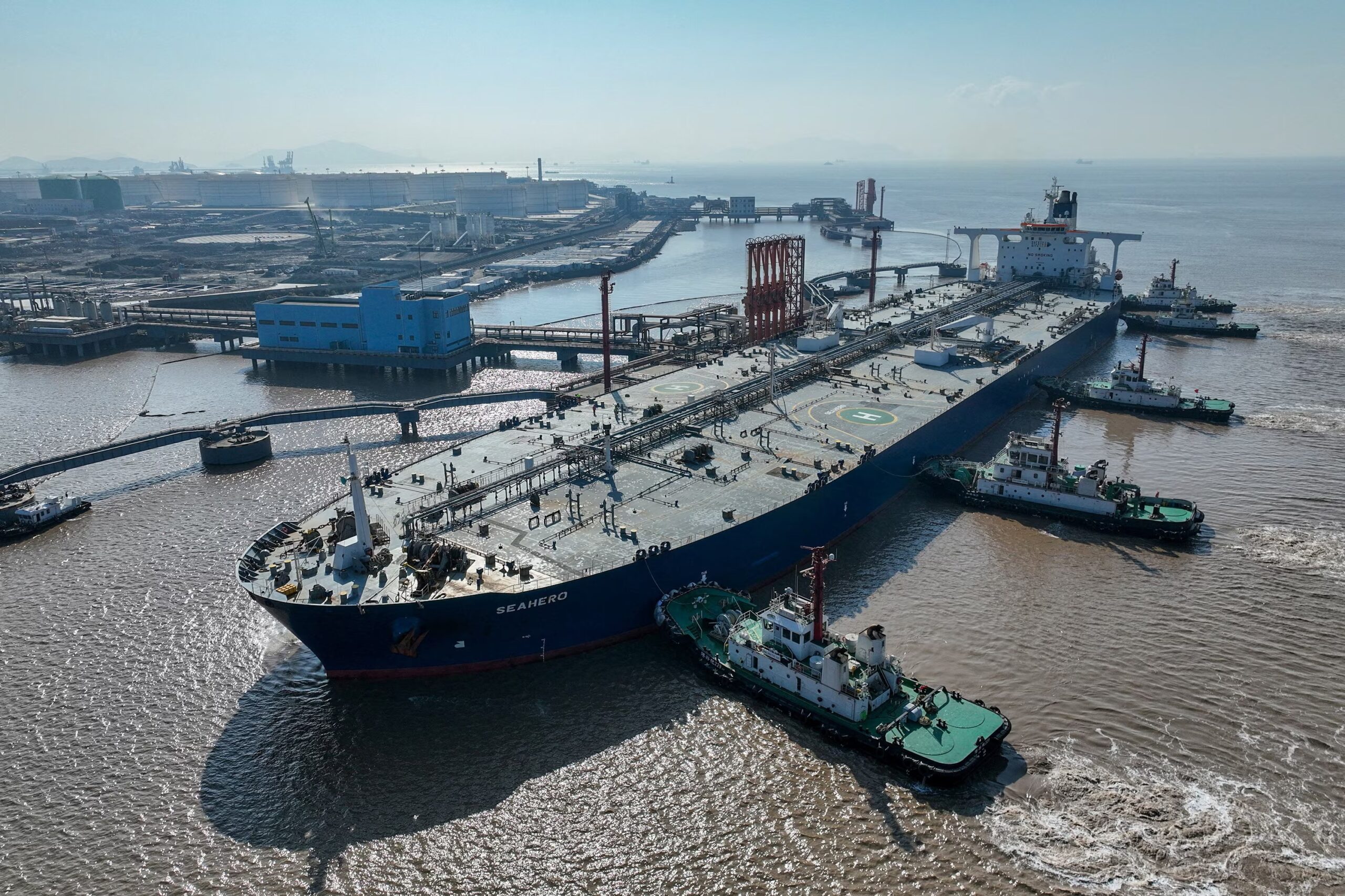
Wednesday saw minimal movement in oil futures as investors remain cautious ahead of a major producers’ meeting this week to decide on August output levels.
At 0124 GMT, Brent crude was up 1 cent at $67.12 per barrel, while U.S. West Texas Intermediate crude down 5 cents to $65.40 per barrel.
Analysts said a private-sector poll released on Tuesday revealed that manufacturing activity in China, the world’s largest oil importer, increased in June, boosting demand expectations.
With worries about supply disruptions in the Middle East producing region subsiding, Brent has fluctuated between a high of $69.04 a barrel and a low of $66.34 since June 25. This is after Iran and Israel stopped attacking one another after their 12-day conflict.
The Price Futures Group’s senior analyst, Phil Flynn, stated, “Oil prices appear to be in a tight range as we’ve seen a reduction in geopolitical risk and nerves about what OPEC may do in regards to raising production.”
Expectations that OPEC+, the Organization of the Petroleum Exporting Countries and its allies, including Russia, will increase its crude oil output in August by a sum comparable to the disproportionate increases agreed upon in May, June, and July have held prices in check.
When OPEC+ meets on July 6th, the group intends to increase output by 411,000 barrels per day, four OPEC+ sources told Reuters last week.
The market is already feeling the effects of the earlier OPEC+ hikes, as the largest oil exporter in the world, Saudi Arabia, increased its June shipments by 450,000 barrels per day from May, the highest level in almost a year, according to Kpler statistics.
According to reports quoting data from the American Petroleum Institute, crude oil stockpiles increased by 680,000 barrels in the United States during the previous week. On Wednesday at 10:30 a.m. ET, the Energy Information Administration is expected to release official figures.
The extent and timing of the Federal Reserve’s interest rate decreases in the second half of this year will be influenced by the U.S. non-farm payroll data that is due on Thursday, according to IG analyst Tony Sycamore.
Economic activity may be stimulated by lower interest rates, which would increase the demand for oil.
In addition, investors are keeping an eye on trade talks in front of the July 9 tariff deadline set by US President Donald Trump. On Tuesday, Trump declared that he has no intention of extending the deadline.