MTN Opens $120 Million Data Center in Lagos, Applauded by Communications Minister Tijani
In Lagos, MTN opened the biggest data center in West Africa. Bosun Tijani, Nigeria’s minister of communications, claims it will increase output.
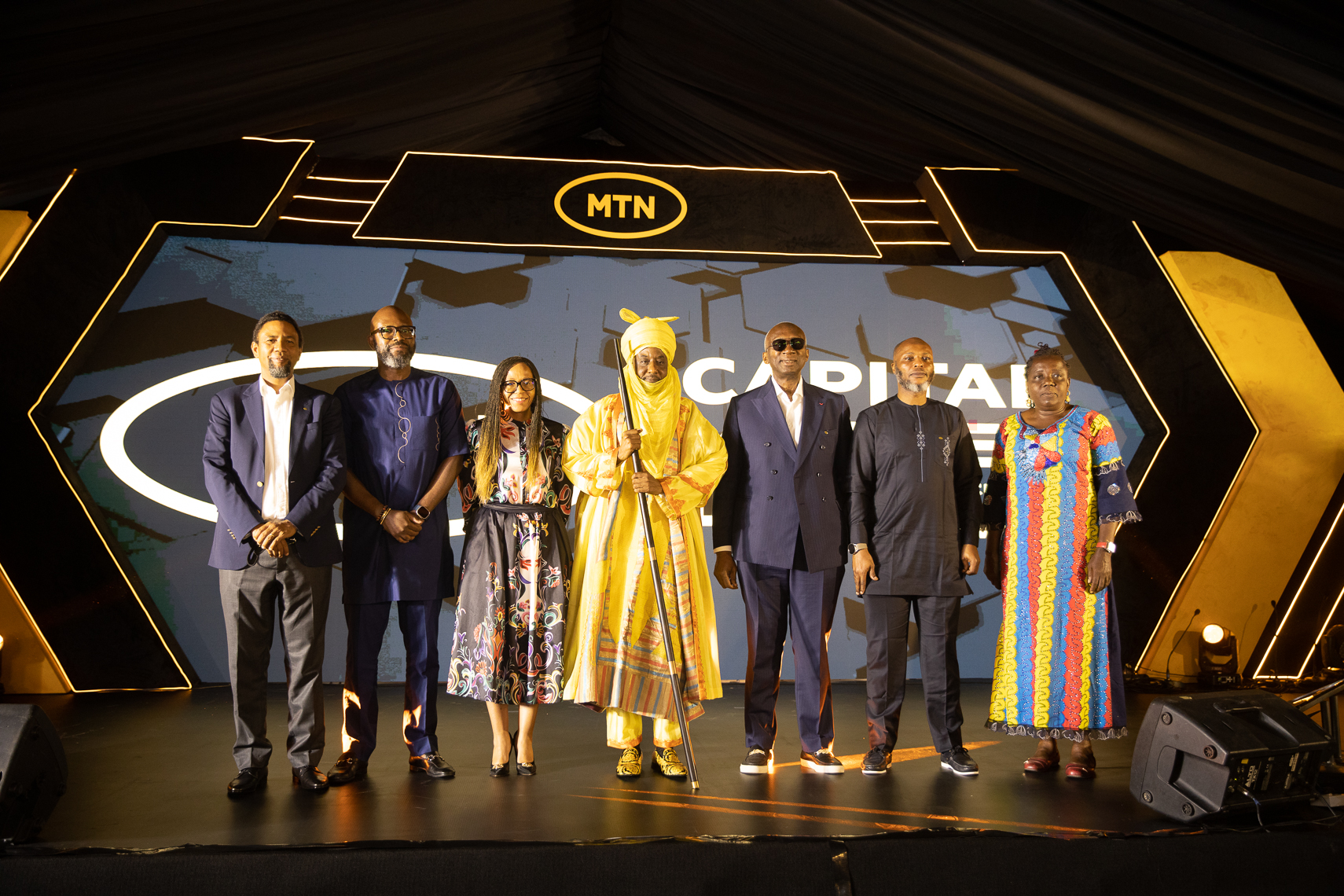
MTN In a major step that is anticipated to improve the nation’s digital infrastructure, increase access to cloud services, and lessen dependency on outside cloud providers, Nigeria has formally opened the first phase of what is currently the largest Tier III data center in West Africa. Top government representatives and tech executives attended the inaugural event on Tuesday in Ikeja, Lagos, and praised the development as a significant turning point for Nigeria’s digital and economic revolution.
Currently providing 4.5 megawatts of IT capacity, the building is named the Sifiso Dabengwa Data Centre in honor of the late CEO of MTN Nigeria. Depending on demand, it may eventually expand to 14 megawatts or even 20 megawatts. The entire project is expected to cost $235 million, with the first phase alone valued at $120 million. Additionally, the facility has $20 million worth of cloud infrastructure, which MTN claims competes with services offered by major international IT companies like Amazon, Google, and Microsoft.
Speaking during the ceremony, Karl Toriola, CEO of MTN Nigeria, stated, “We have always maintained that we at MTN Nigeria are here to stay, and this is another mark of our commitment to this country.” “With a 4.5 megawatt capacity, we are opening the largest data center in West Africa, and it will expand to 14 megawatts over the next 24 months,” Toriola stated.
President Bola Ahmed Tinubu’s drive to expand Nigeria’s economy to $1 trillion through innovation, enterprise, and diversification beyond oil has been aided by the center, according to Bosun Tijani, Nigeria’s Minister of Communications, Innovation, and Digital Economy.
According to Tijani, “the facility is a part of the digital foundation of that modern economy that we see.” “One that offers and will keep offering safe, dependable data processing and storage for both small and large businesses, including government data.” We can only genuinely promote sovereignty, trust, and national productivity with this type of infrastructure.
According to Tijani, the center is actively involved in national initiatives such as the planned installation of 7,000 communication towers in underserved areas and the 90,000-kilometer fiber optic rollout, which aims to link the 20 million Nigerians who do not currently have access to digital services.
Talent will always require platforms, as we are all aware. “Investments such as the MTN Data Center provide the foundation for our youth to flourish,” he said. “I applaud MTN for the initiative and the investment, and the facility is a testament to what can be achieved when private sector boldness meets national vision.”
Mohamed Abdullahi Yawo, who was speaking on behalf of the National Security Adviser, said that the construction of the data center also improves national security by guaranteeing that vital information is kept in Nigeria.
According to Yawo, “data is life.” “We can accomplish a lot with data. Data gives us power. And I don’t view this innovation from a business perspective, even if it’s happening right here in Nigeria. I also consider it from a security perspective.
He emphasized recent government initiatives to protect critical infrastructure, including President Tinubu’s signing of the Critical National Information Infrastructure Order, and said the National Cyber Security Coordination Center is developing a plan to protect assets like MTN’s new facility.
“Securing our own data within ourselves, within the nation, is crucial,” he stated. Our national security depends on it. This new idea has the approval and full backing of the National Security Advisor. In order to safeguard this vital asset from all national and international gateways, where several actors may potentially damage it, the Center for National Cyber Security Coordination Center is also creating a protection strategy for it.
According to MTN Nigeria’s Chief Enterprise Business Officer, Lynda Saint-Nwafor, the data center has Nigeria’s first self-orchestration cloud platform, which is the first of its kind in the country and enables companies to independently manage their computing and storage requirements, much like Microsoft Azure and Amazon Web Services.
She added that hosting data in Lagos results in lower latency and faster access, and that Nigerian entrepreneurs and enterprises no longer need to rely on international carriers. Additionally, charging in naira instead of simply accepting it offers companies a more reliable and cost-effective method of obtaining cloud services.
She emphasized that for Nigerian companies functioning in a very competitive digital market, MTN’s cloud platform offers a local substitute that levels the playing field.
The new center would strengthen Lagos’s position as Nigeria’s digital hub, according to Barrister Abimbola Salu-Hundeyin, Secretary to the State Government, speaking on behalf of Lagos State Governor Babajide Sanwo-Olu.
“The opening of the Dabengwa Data Center in Lagos not only demonstrates MTN’s steadfast dedication to funding Nigeria’s digital infrastructure, but it also highlights Lagos State’s strategic significance as a center of creativity and technology in our country. MTN is setting the standard for safe, scalable, and effective enterprise services with the Tier III Data Center facility, which is essential for startups, public services, companies, and international organizations alike, according to Sanwo-Olu.
The National Information Technology Development Agency’s (NITDA) Director General, Kashifu Inua Abdullahi, also spoke at the ceremony and characterized the development as a standard for Nigeria’s resilience and digital sovereignty.
“In particular, this infrastructure accelerates economic diversification through industrialization, digitization, and innovation, which is in line with President Tinubu’s Renewed Hope Agenda,” he stated. “Cloudification is now required; it is no longer an option. This clearly indicates that we are prepared to develop our own cloud infrastructure.
Abdullahi went on to say, “This is also aligning with President Bola Tinubu’s Renewed Hope Agenda and setting a benchmark for Nigeria to drive its robust, inclusive, and truly sovereign infrastructure.” Since we live in a world where digital is a way of life, where every organization prioritizes technology, and where every industry is digital, cloudification is not an option today. This is in line with the recent policy of Mr. President of the Nigerian Trust Policy, which encourages us to build for the future.
This will put us in a competitive position and allow Nigerian cloud providers to take on the hyperscalers. We are therefore prepared to develop our own cloud power if the hyperscalers are not yet ready.
He added that NITDA’s “9-0-2 drive” to transform Nigeria into a digitally empowered country is supported by the facility and reiterated the agency’s dedication to collaborating with MTN and other providers to develop standards that foster cloud infrastructure and AI innovation.
“At NITDA, we have a mandate to accelerate the 9-0-2 drive to make Nigeria a nationally empowered nation.” He said, “We have a focus on boosting digital equitable access to digital infrastructure and services, and we support inclusive economic diversification through technological innovation.”
MTN Nigeria has made a bold statement with the opening of the Sifiso Dabengwa Data Centre, demonstrating not just its dedication to Nigeria but also its determination to take the lead in Africa’s cloud and data revolution. In a world where technology is king, this facility is a strategic asset for both the public and commercial sectors, providing economic and security value as the need for digital services rises.