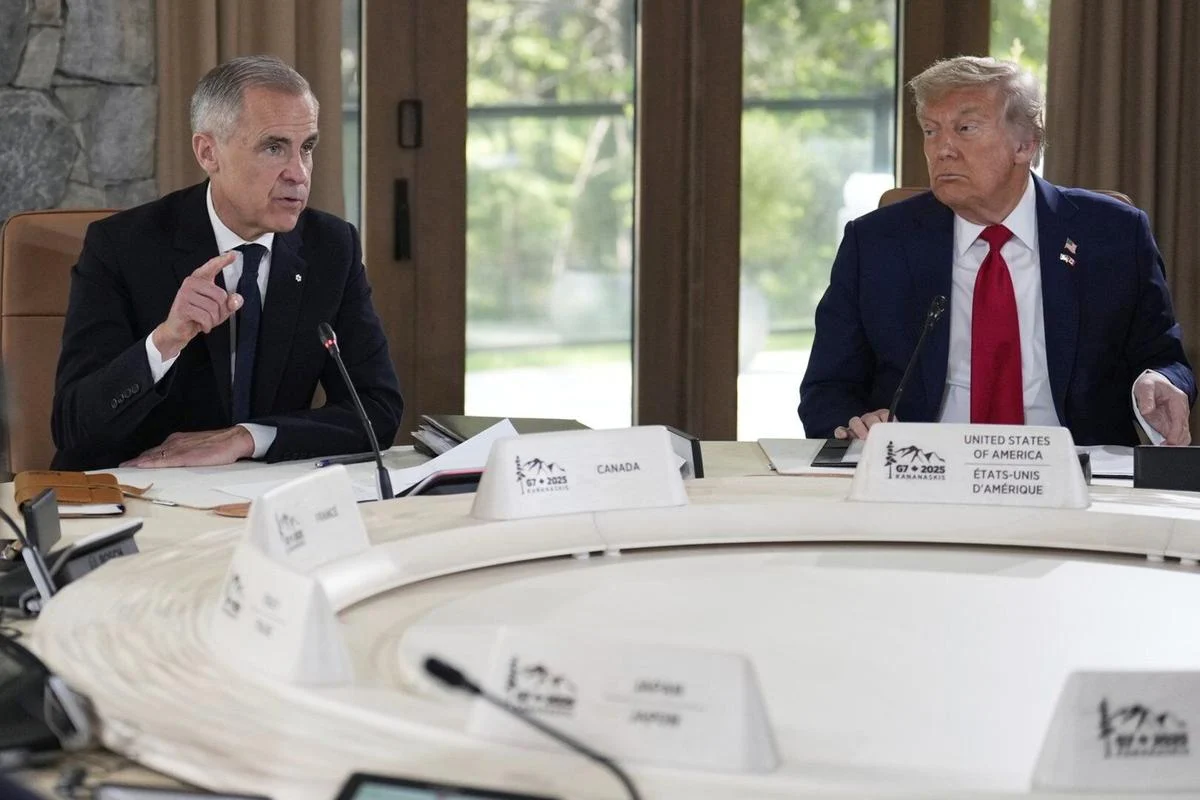
Canada aims to resume delayed cross-border trade talks by rescinding a digital tax that targeted US internet companies only hours before payments were due.
Hours before the first payments were due, Canada declared it would repeal a contentious digital services tax (DST) that targeted large US IT firms.
The ruling is an important step in calming tensions with Washington and resuming trade talks that have stalled.
US President Donald Trump abruptly canceled trade discussions on Friday, calling the tax a “blatant attack” and threatening to impose fresh tariffs on Canadian imports. This action follows his announcement. In retaliation, Canada said it would propose legislation to repeal the tax and stop the planned Monday collection.
When the tax was first suggested in 2020, it would have levied a 3% tax on Canadian profits that exceeded $20 million made by global internet companies like Apple, Amazon, Google, and Meta. Being retroactively imposed from January 2022, it was anticipated to cost the firms more than C$2 billion in its first year.
“The DST was announced to address the fact that many large technology companies operating in Canada may not otherwise pay tax on revenues generated from Canadians,” said an announcement from François-Philippe Champagne, Canada’s finance minister. Canada has consistently favored multilateral agreements.
The withdrawal was made in response to mounting American pressure. The levy is “egregious,” Trump wrote in a social media post, adding that “economically we have such power over Canada.”
The action, which US Commerce Secretary Howard Lutnick hailed as a “deal breaker avoided,” now opens the door for further economic talks. In his post, he expressed gratitude to Canada for its wise choice.
Canada anticipated that the DST will generate C$5.9 billion over the following five years. Nonetheless, Ottawa seems to have opted for economic stability over conflict, as three-quarters of its exports, worth over $400 billion annually, go to the US.
Both sides of the border’s business associations praised the announcement. Rick Tachuk, president of the American Chamber of Commerce in Canada, stated that the decision is positive and enables both nations to concentrate on enhancing their economic cooperation.
After months of conflict, the ruling also marks a change in US-Canada relations. Donald Trump made provocative comments about annexing Canada shortly after he took office and promised additional penalties. Tensions contributed to the unexpected election victory that saw Canada’s Liberal Party, now headed by former central banker Mark Carney, retake power.
Both countries had stated they hoped to achieve a new trade agreement by July 21 in recent weeks. Now that the DST has been eliminated, serious negotiations are anticipated to begin again.
According to a Canadian government source familiar with the negotiations, “maintaining one of the most significant trade relationships in the world is the goal here, and it goes beyond taxes.”
Discussions are anticipated to resume later this week.