The head of the UN nuclear agency indicates that Iran may be able to restart uranium enrichment for a bomb “within months,” even in light of recent airstrikes.
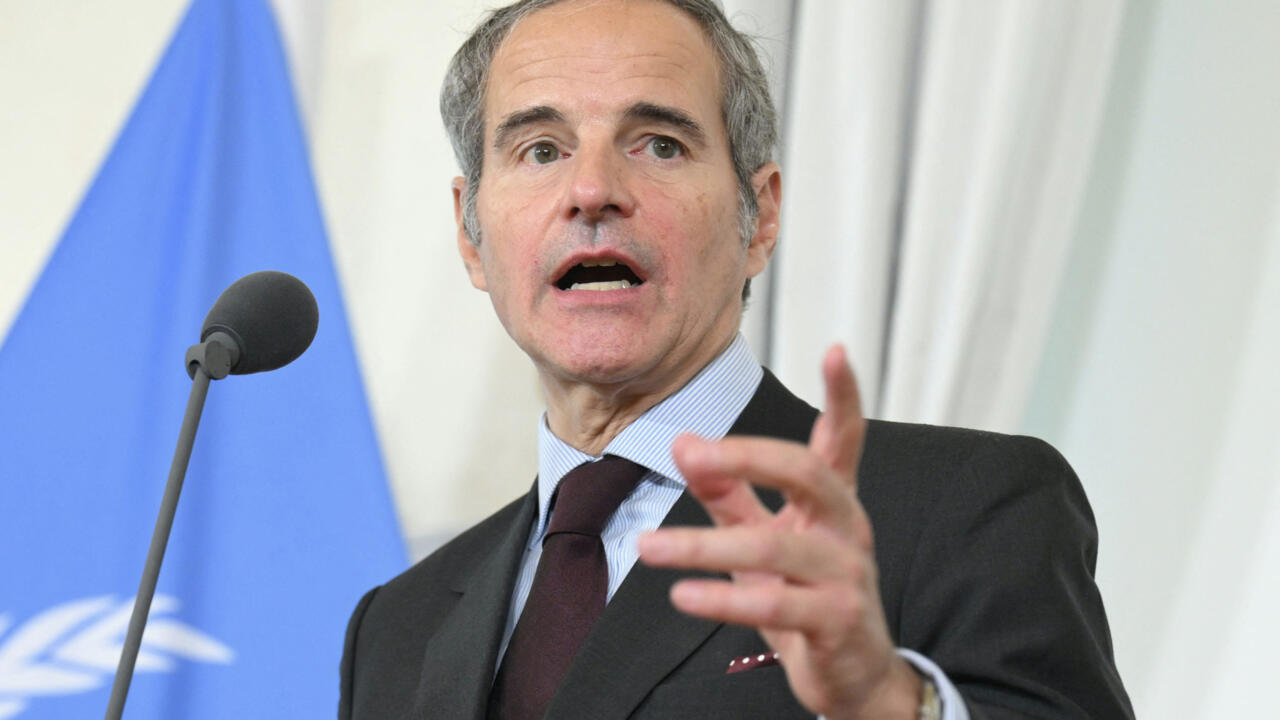
The head of the United Nations’ nuclear watchdog has cautioned that Iran could resume uranium enrichment for a potential nuclear weapon “in a matter of months,” countering assertions made by former US President Donald Trump that Iran’s nuclear programme had been entirely dismantled.
In an interview with CBS News on Saturday, Rafael Grossi, the Director General of the International Atomic Energy Agency (IAEA), stated that the recent US and Israeli strikes on Iranian nuclear sites resulted in considerable, though not complete, damage.
“To be honest, it is inaccurate to assert that everything has vanished and that nothing remains,” Grossi stated, directly challenging Trump’s claim that Iran’s nuclear facilities had been “totally obliterated.”
On 13 June, Israel initiated strikes on Iran’s nuclear and military facilities, claiming that Tehran was close to advancing its nuclear weapon capabilities. The United States subsequently became involved in the offensive, focusing on three essential nuclear facilities: Fordo, Natanz, and Isfahan.
Although the full scope of the damage is still uncertain, Grossi’s recent remarks indicate that Iran maintains significant capabilities. “They continue to possess the industrial and technological capabilities…” “If they desire, they can begin doing this once more,” he stated.
Grossi noted that Iran might be able to resume a limited cascade of centrifuges for uranium enrichment in a fairly brief period. This perspective aligns with a recent leaked Pentagon intelligence assessment, which determined that the strikes merely delayed Iran’s nuclear program by a few months.
Trump has rejected these evaluations as efforts to diminish what he characterized as “one of the most successful military strikes in history.” He has indicated that he would “absolutely” contemplate additional strikes if Iran returns to enriching uranium to alarming levels.
The account provided by Iran regarding the impact has been varied. On Thursday, Supreme Leader Ayatollah Ali Khamenei claimed that the strikes resulted in “nothing significant,” while Foreign Minister Abbas Araghchi acknowledged that “excessive and serious” damage had been caused.
Last week, Tehran’s already strained relationship with the IAEA worsened after the Iranian parliament passed a bill to halt cooperation with the UN agency. Lawmakers criticized the IAEA for allegedly aligning with Israel and the US after a resolution last month determined that Iran had violated its non-proliferation obligations for the first time in twenty years.
The action may lead to Iran pulling back inspectors, stopping reports, and ending surveillance of nuclear operations — a considerable setback for global monitoring.
Nonetheless, Grossi conveyed optimism that diplomacy might still triumph. “I need to engage with Iran and examine this matter, because ultimately, following the military strikes, we will require a sustainable resolution, which can only be achieved through diplomacy,” he stated.
Iran asserts that its nuclear programme is exclusively for civilian purposes; however, tensions with Western powers regarding its ambitions have continued for years.
According to the 2015 Joint Comprehensive Plan of Action (JCPOA), Iran was limited to uranium enrichment levels not exceeding 3.67% and prohibited from enriching at Fordo for a period of 15 years. After Trump withdrew the US from the deal in 2018 and reinstated sanctions, Iran started to violate the agreement’s terms, including the resumption of enrichment at Fordo in 2021.
The IAEA reports that Iran has accumulated sufficient uranium enriched to 60% purity, which could potentially enable the production of nine nuclear bombs if further enriched to weapons-grade levels.