Trump ends US-Canada trade negotiations, destroying hopes for tariff agreements
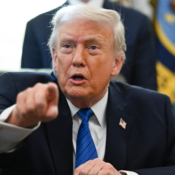
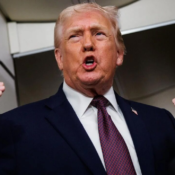
President Donald Trump of the United States unexpectedly ended trade negotiations with Canada on Friday due to a tax that targets American technological companies. He called the tax a “blatant attack” and promised to impose a higher tariff rate on Canadian goods within the next week.
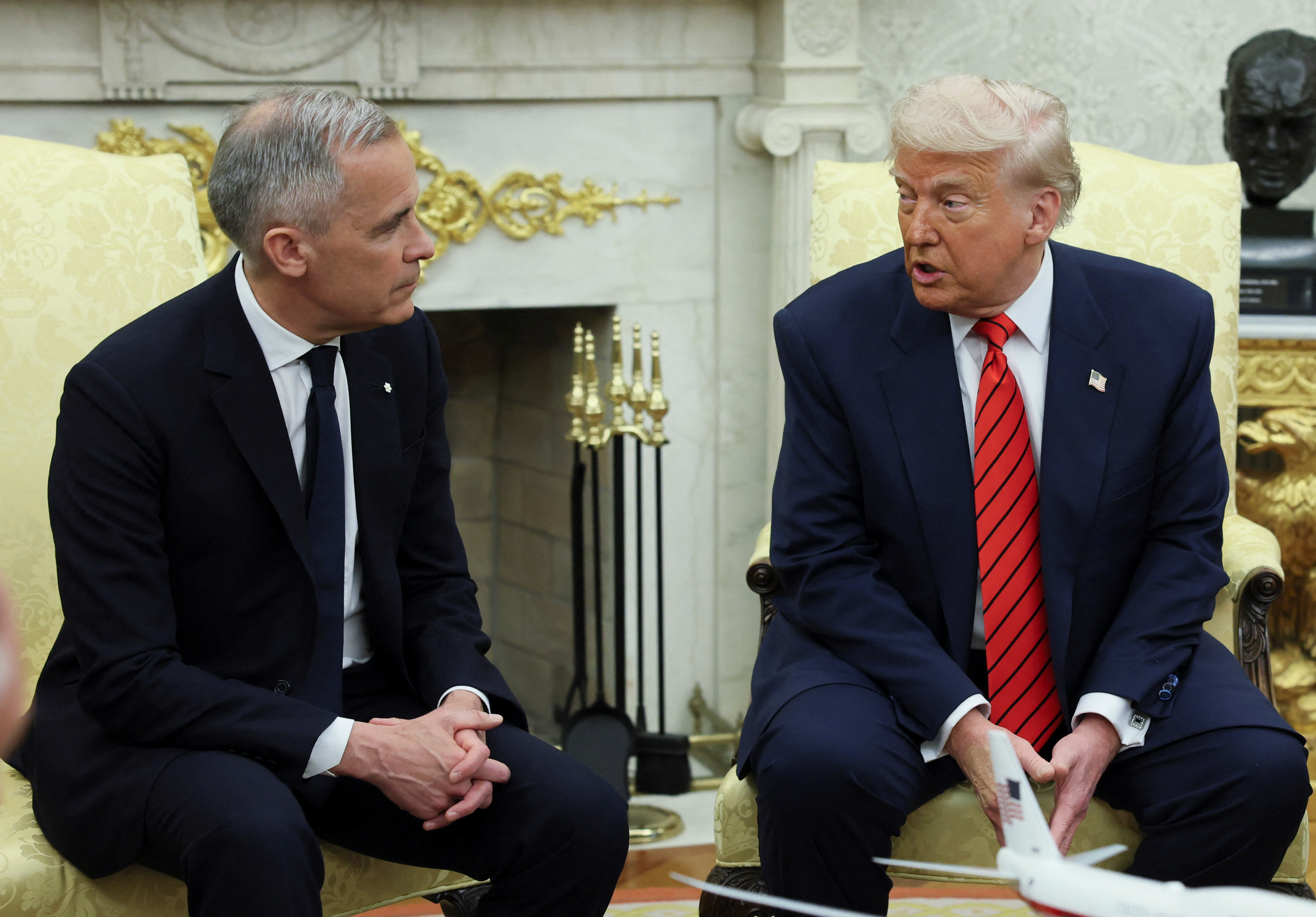
Following a period of relative quiet that featured a friendly G7 meeting in mid-June where Trump and Canadian Prime Minister Mark Carney vowed to finalize a new economic deal within 30 days, the action throws U.S.-Canada relations back into disarray.
It also occurred only hours after U.S. Treasury Secretary Scott Bessent gave a positive speech about trade, highlighting the progress made in other important tariff talks and with China on resuming the supply of vital minerals for the American industrial sector.
Since taking office this year, Trump’s import taxes have been implemented in an often chaotic manner, which has whipped financial markets and started to affect consumer spending, which is the cornerstone of the American economy.
His onslaught against Canada temporarily sent U.S. equities plunging, but the S&P 500 and Nasdaq ended the week at all-time highs.
Trump’s move comes as Canada prepares to start collecting a previously implemented digital services tax on U.S. technology companies on Monday, including Apple (AAPL.O), Amazon (AMZN.O), Meta (META.O), Alphabet’s Google (GOOGL.O), and others.
Payments will be retroactive to 2022, and the tax is 3% of the $20 million in digital services revenue a company receives from Canadian users in a calendar year.
Trump referred to the levy as “a direct and blatant attack on our country” and described Canada as a “very difficult country to TRADE with” in a post on his Truth Social social media platform.
“Based on this egregious Tax, we are hereby terminating ALL discussions on Trade with Canada, effective immediately,” declared President Trump. “We will let Canada know the Tariff that they will be paying to do business with the United States of America within the next seven-day period.”
In an interview with reporters at the White House, Trump stated that the U.S. has “such power over Canada” and that talks with Canada would not restart “until they straighten out their act.”
Canada is the biggest consumer of U.S. goods and the country’s second-largest trading partner after Mexico. According to figures from the U.S. Census Bureau, it exported $412.7 billion to the U.S. and purchased $349.4 billion worth of U.S. goods last year.
To Trump’s announcement, Carney’s office said, “The Canadian government will continue to engage in these complex negotiations with the United States in the best interests of Canadian workers and businesses.”
In an interview with CNBC, Bessent attempted to minimize the U.S.-Canadian conflict by claiming that U.S. Trade Representative Jamieson Greer would probably launch a Section 301 investigation into Canada’s digital tax, which would pave the way for tariff retaliation in the amount of harm to U.S. companies, which he estimated to be about $2 billion.
Similar reprisals against European nations that have implemented digital taxes have been planned by the United States. A request for comment was not immediately answered by a USTR official.
“WORKDAY WRAPPED UP”
Earlier Friday, Bessent cited discussions with 18 major trading partners and a new amendment to a pact with China to resume the flow of rare earth minerals and magnets as reasons why the Trump administration might complete its various trade agreements with other nations by the Labor Day holiday on September 1.
The Trump administration’s trade negotiations have resumed after a week in which the U.S. strike on Iran’s nuclear facilities and the large tax and spending plan in the U.S. Congress overshadowed tariffs.
India dispatched a group to Washington for additional negotiations, while the US sent a fresh proposal to the EU on Thursday.
On Fox Business Network, Bessent stated, “So we have countries approaching us with very good deals.”
“We have eighteen significant commercial partners…. “I believe we could have trade finalized by Labor Day if we can ink 10 or 12 of the important 18 relationships, as there are another important 20 relationships,” Bessent stated.
Although Trump stated at the White House that he may “make it shorter” or prolong the tariff deadline, he made no mention of altering the July 9 deadline for nations to reach agreements with the US or face higher tariffs.
“I’d like to just send letters out to everybody: Congratulations,” Trump said, adding that he would inform nations of their tariff rates within the next week and a half. It’s 25% that you must pay.
UPDATES TO U.S.-CHINA EXPORTS
Bessent further modified an agreement made in Geneva in May, saying the U.S. and China had settled disputes over the importation of Chinese rare earth minerals and magnets to the U.S.
China banned exports of a variety of vital minerals and magnets in response to new U.S. tariffs, disrupting global supply chains that are essential to automakers, aerospace manufacturers, semiconductor businesses, and military contractors.
Beijing promised to lift the restrictions put in place since April 2 at U.S.-China negotiations in Geneva in May, but Bessent said that those vital supplies were not progressing as quickly as agreed, so the U.S. implemented countermeasures.
“I am confident now that… as agreed, the magnets will flow,” Bessent stated, adding that these materials will be regularly provided to U.S. companies that had previously received them. He then stated that when the exports of rare earths resumed, the United States would start sending items to China that had been withheld.
China’s Commerce Ministry announced on Friday that the two nations had verified specifics of the framework for carrying out the agreement reached at the Geneva trade talks. According to the law, it stated that China will accept export applications for restricted goods. Rare earths were not mentioned.
On Friday, Trump administration representatives also had trade discussions with Japan and India, two other nations engaged in advanced talks with the United States.
In a statement, the Japanese government said that the two parties will keep trying to “reach an agreement that benefits both Japan and the United States.”